Most people buy the wrong moka pot size on their first try.
The “cup” printed on the box does not mean what it sounds like, and the difference between a 3-cup and a 6-cup changes more than just volume.
It changes how your coffee tastes, how long your brew takes, and whether that last sip still carries the thick, syrupy body you poured it for.
Picking the wrong size leads to weak, watery brews from half-filled pots or leftover coffee going cold on the counter every morning.
This guide breaks down the most common moka pot sizes with real milliliter outputs, matches each one to a specific household scenario, and covers the mistakes that lead to bitter or flat results.
Quick Answer
A moka pot “cup” equals roughly 60 ml (2 oz), about one Italian espresso serving. For one person, a 3-cup (about 200 ml) is the most practical starting point. For two regular coffee drinkers, go with a 6-cup (about 270 to 300 ml). Never half-fill a moka pot, as it ruins extraction and produces thin, sour coffee.
Keep reading for exact outputs, grams of coffee per size, brew times, and material differences.
Why Moka Pot Size Affects Coffee Quality
Smaller moka pots concentrate flavor into a denser, more aromatic shot that smells almost like dark chocolate melting on a warm stove.
A 1-cup or 3-cup pot pushes steam through a compact bed of grounds at relatively consistent pressure, pulling oils and dissolved solids into a concentrated brew.
Larger pots spread that extraction across a bigger water column, producing a lighter body with less intensity per sip.
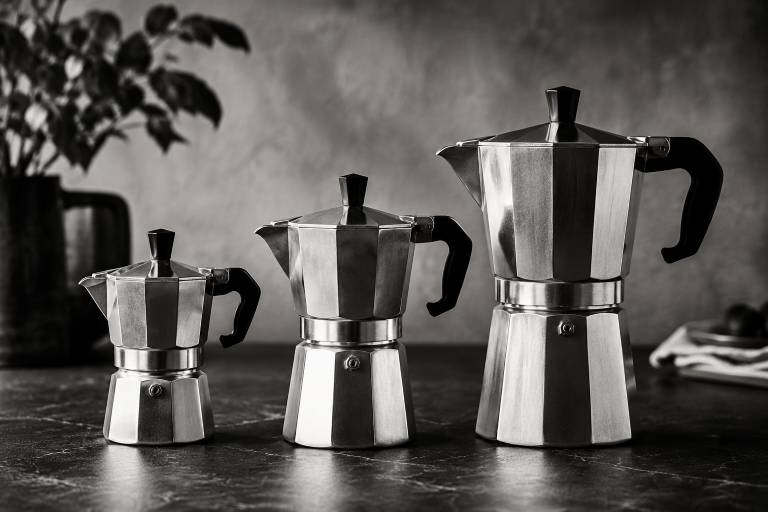
The Bialetti Moka Express, the most recognized stovetop brewer in the world, comes in sizes from 1-cup all the way to 18-cup for exactly this reason.
Brew time shifts with pot size, too.
A 1-cup heats in about two minutes on medium flame, and a 9-cup can take seven minutes or longer on the same burner.
That extra time on heat pulls more bitter compounds from the grounds, which is why larger pots sometimes taste harsher when left on the burner too long.
Remove the pot from heat the moment the stream turns pale and you hear a hissing sputter.
Picking the right size is less about raw capacity and more about controlling that narrow window between rich extraction and over-cooked bitterness.
The steam pressure inside a 3-cup pot builds and releases quickly, giving you a smaller margin of error but a brighter, cleaner flavor when you get the timing right.
A 9-cup stays on heat much longer, building more body and a heavier mouthfeel if the brew is pulled at just the right moment.
Filling the wrong size halfway ruins this balance entirely, a problem covered in detail below.
What “Cup” Means on a Moka Pot
A moka pot “cup” refers to a traditional Italian espresso serving, not an American coffee mug.
One cup equals roughly 60 ml, or about 2 fluid ounces.
In Italian, this serving is called a “tazza,” and it dates back to the original Bialetti design from the 1930s.
A 3-cup moka pot produces around 180 to 200 ml of concentrated coffee, which fills about three-quarters of a standard mug.
A 6-cup produces roughly 270 to 300 ml, closer to one full American coffee cup when poured straight.
| Moka Pot “Cups” | Approximate ml Output | Approximate fl oz |
|---|---|---|
| 1-cup | 60 ml | 2 oz |
| 3-cup | 180–200 ml | 6–6.5 oz |
| 6-cup | 270–300 ml | 9–10 oz |
| 9-cup | 420–550 ml | 14–18.5 oz |
| 12-cup | 775 ml | 25 oz |
The confusion trips up first-time buyers constantly.
Someone expecting a 6-cup pot to fill six full mugs ends up with barely enough dark liquid to share between two people.
If you drink your moka coffee black, the output is strong, concentrated, and meant to be sipped from small demitasse cups or diluted with hot water into an Americano-style drink.
Beginner Note If you are converting from drip coffee, think of the moka pot output as a base concentrate. A 3-cup brew mixed with an equal amount of hot water gives you one full mug at a strength similar to strong drip coffee.
Best Moka Pot Size for One Person
The 3-cup is the most popular solo size for a practical reason: it brews enough for one generous mug or two small espresso-style servings.
The whole process takes roughly three to four minutes on medium-low heat, and the warm, toasted-grain aroma fills a small kitchen before the coffee finishes rising into the upper chamber.
Quick Tip A 1-cup moka pot works if you only want a single demitasse shot, but you will need to brew again for a second serving. The 3-cup gives you flexibility without wasting grounds.
Some solo drinkers prefer the 6-cup for its extra volume, and that works well if you drink large Americanos or make milk-based drinks where the concentrated output gets stretched with steamed milk.
A 6-cup used by one person daily can leave leftover coffee sitting in the pot, and that extra liquid cools quickly, losing its rich crema-like layer within minutes.
The 1-cup is worth owning as a second pot for late-afternoon single shots or for cooking recipes that call for a splash of strong coffee, like tiramisu or an espresso-glazed sauce.
For most single-cup mornings, the 3-cup hits the right balance between volume and freshness.
A 3-cup Bialetti Moka Express costs under $30 at most retailers, making it one of the cheapest ways to get espresso-style coffee at home.
Best Moka Pot Size for Two People
Two coffee drinkers sharing a morning brew should start with the 6-cup.
Its 270 to 300 ml output splits neatly into two medium mugs, each carrying enough body and richness to taste like a proper coffee rather than a diluted afterthought.
A 3-cup pot between two people leaves each person with a very small, espresso-like portion that can feel unsatisfying if you prefer a longer, more mug-sized drink.
The 6-cup fits most standard stovetops and stores easily in a cabinet, standing about 22 cm (8.5 inches) tall.
If you and your partner drink coffee at different times, two smaller pots may work better than one 6-cup, since moka pots brew their strongest coffee when filled to capacity.
The bitter edge that shows up in half-filled pots disappears when the basket and water chamber are properly matched to each other.
Best Moka Pot Size for Groups and Entertaining
A 9-cup moka pot handles three to four servings comfortably, and the 12-cup stretches that to five or six mugs of strong coffee.
Weekend brunch with friends calls for the 12-cup, which produces about 775 ml of deep, smoky-scented brew in a single run.
That is enough for roughly three standard American coffee cups or twelve traditional Italian espresso servings.
The tradeoff with larger pots is time and cleanup.
A 12-cup takes noticeably longer to come to pressure, sometimes eight minutes or more on a standard gas burner.
Cleaning the larger filter basket and lower chamber takes more effort under the faucet compared to rinsing a compact 3-cup after a solo brew.
| Scenario | Recommended Size | Why |
|---|---|---|
| Solo drinker, one mug | 3-cup | ~200 ml, brews fast, easy cleanup |
| Solo drinker, large Americano | 6-cup | ~300 ml, good for diluting with water |
| Couple, morning routine | 6-cup | Splits into two medium mugs |
| Small household (3–4 people) | 9-cup | ~450 ml, covers the family |
| Brunch or dinner party | 12-cup | ~775 ml, minimal rebrew needed |
If you host guests only occasionally, buying a 9-cup or 12-cup just for those events may not be worth the cabinet space.
A 6-cup brewed twice back-to-back covers four people and keeps each batch fresh and hot.
For families where three or four people drink coffee every morning, the 9-cup is the sweet spot: enough output in one brew, with a manageable size that cleans up without much hassle.
The 12-cup is best reserved for households of five or more, or for anyone who regularly hosts weekend gatherings where coffee is part of the ritual.
Serving from a 12-cup feels different, too: the coffee pours with a slightly smoother, less punchy profile compared to a tighter 3-cup batch, which works well when guests add milk or sugar.
If you need something between the 6-cup and the 12-cup, the 9-cup offers a middle ground that brews roughly 450 ml without the bulk of the largest models.
Can You Half-Fill a Moka Pot?
No, and this is the single most common mistake new moka pot owners make.
A moka pot’s filter basket, water chamber, and upper chamber are sized to work together at full capacity.
Filling the water below the safety valve line reduces steam pressure, which means the water pushes through the coffee grounds unevenly.
The result tastes thin, sour, and nothing like the rich, velvety shot a properly filled pot produces.
Common Mistake Buying a 9-cup moka pot and filling it halfway “for just one person” creates extraction problems. The brew falls apart. Buy the right size for your daily volume instead.
Half-filled baskets create channels where steam bypasses the grounds entirely, leaving some coffee over-extracted and some barely touched.
The flavor becomes unpredictable from one brew to the next, swinging between watery and harsh depending on where the channels form.
If you own a pot that is too large for your daily needs, brew at full capacity and refrigerate the extra as a base for iced coffee or cold milk drinks.
That leftover concentrate stays drinkable for a day or two in the fridge, and it makes a surprisingly good afternoon cold brew alternative poured over ice with a splash of milk.
The aroma softens in the fridge, but the body and caffeine hold up well for a chilled drink the next day.
Some manufacturers sell reducer baskets that fit inside larger pots and allow smaller brew amounts, but these accessories are hard to find and produce inconsistent results.
The reducer changes the geometry of the filter bed, creating uneven water flow that leads to the same channeling problem you get with a half-filled stock basket.
If your morning routine shifts between one person and three, owning two different-sized pots is the cleanest solution.
A 3-cup and a 6-cup together cost less than $50 for aluminum models, and each one brews at its intended capacity every time.
Storing two small pots takes less space than one large pot that you never fill correctly.
The rule is simple: fill the basket, fill the water to the valve, and use the right size for the job.
How Coffee Grounds Change by Moka Pot Size
Each moka pot size needs a specific amount of ground coffee to fill the filter basket level without tamping.
The grind should feel like fine table salt between your fingers, coarser than espresso but finer than drip.
| Size | Coffee Grounds (approx.) | Grind Level |
|---|---|---|
| 1-cup | 7–9 g | Medium-fine |
| 3-cup | 14–18 g | Medium-fine |
| 6-cup | 20–25 g | Medium-fine |
| 9-cup | 30–35 g | Medium-fine |
| 12-cup | 40–50 g | Medium-fine |
Fill the basket to the rim and level it with your finger or a butter knife. Do not press or tamp the grounds.
Tamping compacts the coffee too tightly, blocking water flow and building dangerous pressure inside the lower chamber.
Grinding too fine produces a bitter, acrid taste with a metallic bite that lingers on the back of your tongue.
Too coarse, and the brew runs through fast like weak tea with almost no crema-like foam on top.
If you do not own a kitchen scale, a level basket filled to the brim with no compression gives you the right dose for any size pot.
The coffee should sit loosely, with tiny air pockets between the grains, so steam can pass through the bed evenly and extract the full range of flavor.
When buying pre-ground coffee, ask for “moka pot grind” or “medium-fine” at the counter to get the right texture.
Most grocery store “espresso grind” bags are too fine for a moka pot and will clog the filter, causing the safety valve to release or producing a harsh, over-extracted shot.
A burr grinder at home gives you the most control over particle size, and a decent hand grinder costs around $30 to $40.
Blade grinders work in a pinch but produce uneven particle sizes, with some grounds too fine and some too coarse in the same batch.
That inconsistency shows up in the cup as a muddy flavor that tastes sour and bitter at the same time, which is a sign the extraction hit two different speeds across the filter bed.
Fresh beans ground within two weeks of their roast date deliver the best aroma and flavor in a moka pot, and the difference between fresh and stale grounds is obvious from the first sniff of steam.
Moka Pot Size and Brew Time
Brew time scales predictably with pot size: a 1-cup finishes in about two minutes, a 3-cup in three to four, and a 6-cup in roughly five.
The 9-cup can run six to seven minutes, with the 12-cup sometimes reaching eight or more depending on flame size and whether you pre-heat the water.
| Size | Approx. Brew Time (medium-low heat) |
|---|---|
| 1-cup | ~2 minutes |
| 3-cup | 3–4 minutes |
| 6-cup | ~5 minutes |
| 9-cup | 6–7 minutes |
| 12-cup | 8+ minutes |
The smell shifts as the brew progresses: first a soft, sweet steam, then a sharper roasted scent that signals the extraction is nearly done.
Pull the pot off heat the instant you hear the first gurgling sputter.
Leaving it on the burner past that point cooks the remaining water through the spent grounds and turns the flavor harsh and ashy.
Quick Tip Starting with pre-heated water in the lower chamber cuts brew time by about a minute and reduces the chance of scorched, bitter flavors. Use water from a kettle, poured to just below the safety valve.
Larger pots benefit the most from pre-heated water, since the extra minutes they normally spend on the stove give heat more opportunity to damage the grounds sitting in the basket above the water chamber.
Pre-heating is optional for the 1-cup and 3-cup, where the short brew time already limits heat damage.
The timing of that first sputter matters more than the total minutes on the stove.
Aluminum or Stainless Steel by Moka Pot Size
Most classic moka pots, including the Bialetti Moka Express, are made from aluminum.
Aluminum heats fast, weighs less, and gives the brew a very faint sweetness that loyal moka pot users associate with the “authentic” Italian stovetop taste.
Stainless steel pots heat more slowly, weigh more, and produce a cleaner, more neutral flavor with no hint of that metallic warmth.
Aluminum moka pots do not work on induction cooktops without a separate adapter plate.
The adapter adds another layer between the heat source and the pot, slowing brew time and reducing heat control.
Stainless steel models like the Bialetti Venus or Bialetti Musa work directly on induction burners with no adapter needed.
For moka pot sizes 6-cup and larger, stainless steel holds its heat more evenly across the wider base, which can improve extraction consistency during longer brew cycles.
For 1-cup and 3-cup pots, the performance difference between materials is minimal, and aluminum’s faster heat response works in favor of small batches that benefit from speed.
Do / Don’t
- Do choose aluminum if you brew on gas or electric coil and want faster heat-up
- Do choose stainless steel if you use an induction cooktop or want easier long-term maintenance
- Don’t put an aluminum moka pot in the dishwasher, as it will oxidize and turn black permanently
- Don’t assume stainless steel always brews better; it depends on your stove type and pot size
Scientific studies show that the amount of aluminum that migrates into coffee during moka pot brewing is minimal, reaching a maximum of about 4% of the tolerable weekly intake with daily use.
The aluminum in Bialetti pots forms a natural oxide layer that prevents any meaningful transfer into your coffee, making daily use safe with no health concerns.
How to Tell What Size Moka Pot You Already Have
If the label or box is long gone, fill the lower chamber with water up to the safety valve line and pour it into a measuring cup.
A reading around 60 ml means a 1-cup, 130 to 200 ml means a 3-cup, 270 to 300 ml means a 6-cup, and anything above 400 ml is likely a 9-cup or larger.
- Fill the lower chamber to the safety valve line
- Pour the water into a measuring jug and note the ml
- Compare the reading to the volume chart above
- Measure the pot’s height as a secondary confirmation
You can cross-reference by height: a 3-cup Bialetti Moka Express stands about 16 cm (6.3 inches), a 6-cup about 22 cm (8.5 inches), and a 9-cup about 24 cm (9.5 inches).
Knowing your exact size matters for ordering replacement gaskets and filter plates, since a mismatched gasket lets steam escape and produces a thin, under-extracted brew that smells right but tastes hollow.
Choosing a Moka Pot Size for Your Stove and Kitchen
A powerful gas burner heats a 9-cup or 12-cup pot efficiently, keeping brew time in the five-to-eight-minute range.
A small electric coil or low-powered portable burner may struggle with anything above a 6-cup, dragging the brew time past ten minutes and increasing the risk of burnt, metallic-tasting coffee.
Counter and cabinet space matters, too.
A 12-cup Bialetti stands nearly 30 cm (about 12 inches) tall and takes up a noticeable footprint on a crowded stovetop.
Small apartments and travel setups favor the 1-cup or 3-cup for their compact storage and speed.
Beginner Note If you are new to moka pot brewing, start with a 3-cup. It brews fast, forgives small mistakes more easily than larger pots, and costs under $30 for most aluminum models. You can always add a larger pot later for weekends and guests.
Larger kitchens with daily multi-person brewing routines get more use out of a 6-cup that stays on the counter permanently, ready for the next morning’s first pour.
The best size is the one that matches how many cups you actually drink each morning, not the one that covers every possible scenario you can think of.
Camping and travel introduce a separate set of constraints: weight, packability, and stove compatibility.
For portable burners and camp stoves, a 1-cup or 3-cup aluminum pot is light enough to toss in a backpack and heats quickly on a low-flame portable gas setup.
A collapsible silicone handle protects against burns and saves packing space on trips where every centimeter counts.
Making Your Size Decision Count
Your ideal moka pot size comes down to one honest number: how many people drink coffee at the same time in your household, and how large each serving needs to be.
Match that answer to the volume chart above, and you will avoid the two most common regrets: buying too large and getting weak, over-extracted brews from a half-filled pot, or buying too small and running the pot twice every morning before the kitchen even warms up.
Start with the 3-cup if you are solo, the 6-cup if you share, and the 9-cup if your kitchen serves a crowd.
A $25 pot in the right size will outperform a $60 pot in the wrong size every single morning, and the difference shows up in every warm, crema-topped cup you pour.