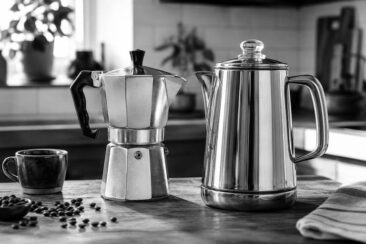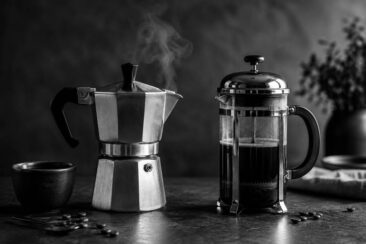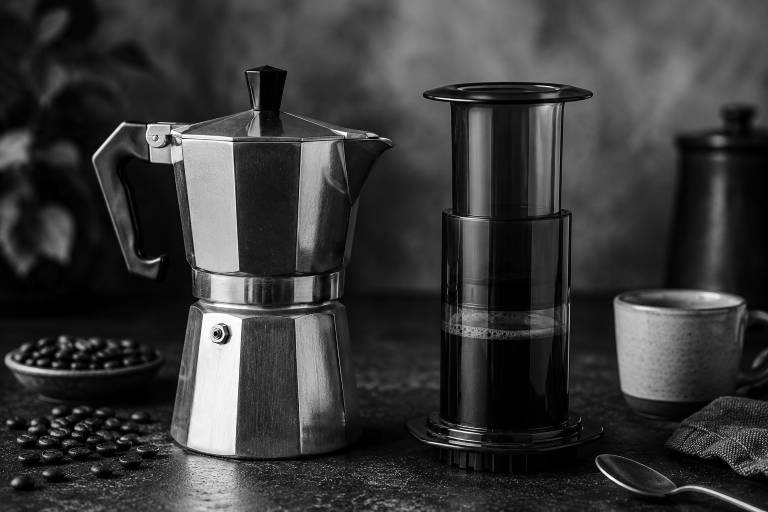
Two of the most popular manual coffee brewers sit at opposite ends of the experience spectrum.
The moka pot, invented in Italy in 1933 by Alfonso Bialetti, pushes steam through finely ground coffee on a stovetop to produce a thick, concentrated shot that smells like a dark Roman café.
The AeroPress, created by Alan Adler in California in 2005, uses hand-pressed air pressure and a paper microfilter to deliver a smooth, grit-free cup in about 90 seconds.
One rewards patience and ritual, the other rewards speed and control, and the right pick depends entirely on how you like your morning coffee to taste, feel, and fit into your schedule.
Quick Answer
The moka pot makes bold, intense, espresso-style coffee with a syrupy body, but it takes 5 to 8 minutes and demands attention on the stove. The AeroPress makes a cleaner, brighter cup in under 2 minutes with much more control over brew variables.
Pick the moka pot if you love strong, heavy coffee and brew for more than one person. Pick the AeroPress if you want speed, smoothness, and the freedom to experiment with different brew styles.
How a Moka Pot Brews Coffee on the Stovetop
A moka pot works by heating water in a sealed bottom chamber until the rising steam pressure, roughly 1 to 2 bars, forces hot water upward through a basket of finely ground coffee.
That pressurized water extracts oils, sugars, and soluble compounds from the grounds as it travels through a metal filter plate.
The brewed coffee then bubbles up through a central spout into the top chamber, filling the kitchen with a roasted, almost caramelized aroma.
Three parts make up every moka pot: the bottom water reservoir, the middle filter basket where grounds sit, and the upper collection chamber.
The pot is made from aluminum or stainless steel, with aluminum models heating faster and stainless steel models lasting longer without corrosion.
A small safety valve on the bottom chamber releases excess pressure if it builds too high.
Never fill water above the safety valve line, or the pot can sputter violently and send hot coffee across your stovetop.
The entire brew cycle takes about 5 to 8 minutes from a cold start, and removing the pot from heat at the first hissing sound is what separates a rich, sweet extraction from a bitter, burnt one.
Common Mistake Leaving the moka pot on high heat until it gurgles loudly will push overheated steam through already-spent grounds, producing a harsh, ashy taste that no amount of milk can fix.
How the AeroPress Brews Coffee with Air Pressure
The AeroPress uses a completely different approach: manual air pressure through a sealed plastic cylinder.
You place a paper microfilter (or a reusable stainless steel filter) in the detachable cap, add coffee grounds to the chamber, pour in hot water at your chosen temperature, stir for about 10 seconds, and press the plunger down.
That plunger pushes water through the grounds at roughly 0.35 to 0.75 bars of pressure, much lower than a moka pot, but enough to extract a concentrated, full-bodied cup.
The paper filter traps oils and fine sediment, so the coffee that drips into your mug tastes clean and bright with no grit at the bottom.
From start to cleanup, the whole process takes under 2 minutes.
The AeroPress is made from BPA-free Tritan plastic, weighs about 6.5 ounces without accessories, and fits inside most travel bags.
Moka Pot vs AeroPress: Side-by-Side Comparison
This table covers the major differences at a glance.
| Feature | Moka Pot | AeroPress |
|---|---|---|
| Brew method | Steam pressure on stovetop | Manual air pressure by hand |
| Pressure | 1 to 2 bars | 0.35 to 0.75 bars |
| Brew time | 5 to 8 minutes | 1 to 2 minutes |
| Grind size | Fine (near espresso) | Medium-fine (forgiving range) |
| Filter type | Built-in metal plate | Paper microfilter or reusable metal |
| Body and texture | Thick, oily, syrupy | Clean, smooth, bright |
| Capacity | 1-cup to 12-cup sizes | Single cup (up to 10 oz) |
| Material | Aluminum or stainless steel | BPA-free Tritan plastic |
| Approximate price | $30 to $65 (Bialetti models) | $40 (Original), $50 (Go) |
| Heat source needed | Gas, electric, or propane stove | None (just hot water from any source) |
| Cleanup time | 3 to 5 minutes (disassembly required) | About 10 seconds (pop and rinse) |
Taste Differences Between Moka Pot and AeroPress
Moka pot coffee hits your tongue with a thick, almost chewy body and a roasted bitterness that lingers at the back of your palate.
The metal filter lets natural coffee oils pass through, creating a cup that feels heavy and rich, closer to espresso than any other stovetop method can produce.
Some people taste caramel and dark chocolate notes in a well-brewed moka pot cup, with a slight smokiness from the high-temperature extraction.
AeroPress coffee, by comparison, tastes noticeably lighter and brighter.
The paper microfilter strips out most oils and all sediment, leaving a cup that highlights fruity, floral, and acidic notes in the beans.
A medium-roast Ethiopian coffee, brewed through an AeroPress, can taste like blueberries and citrus, and those same beans in a moka pot would deliver a much deeper, darker, more chocolatey profile.
Quick Tip If you want AeroPress coffee to taste closer to moka pot coffee, swap the paper filter for a reusable stainless steel filter. The metal lets more oils through, adding body and reducing brightness.
The moka pot wins on intensity. The AeroPress wins on clarity and flavor range.
Your preference for one or the other often comes down to whether you like your coffee to feel heavy or clean on the tongue.
Which Grind Size Works for Each Brewer
Grind size has a bigger effect on moka pot coffee than on AeroPress coffee.
The moka pot needs a fine grind, close to espresso but slightly coarser, about the texture of table salt.
Grinding too fine will clog the metal filter and create excessive back-pressure, which can make the safety valve release or cause a bitter, over-extracted brew.
Grinding too coarse will let water rush through without extracting enough flavor, leaving you with a thin, watery cup.
The AeroPress is far more forgiving with grind size.
A medium-fine grind works for most recipes, but you can go coarser for a longer steep or finer for a quicker, punchier shot.
| Brewer | Ideal Grind | Too Fine | Too Coarse |
|---|---|---|---|
| Moka Pot | Fine (table salt) | Clogged filter, bitter taste | Weak, watery cup |
| AeroPress | Medium-fine (between drip and espresso) | Slow press, potential over-extraction | Under-extracted, sour notes |
Do not use the same grind for these two brewers.
Using a moka pot grind in the AeroPress will over-extract and taste harsh.
Using an AeroPress grind in the moka pot may under-extract or block water flow entirely.
Brewing Time and How Much Attention Each Method Needs
A moka pot demands your presence at the stove for the full 5 to 8 minutes of brew time.
You need to monitor the heat level, listen for the first hiss or sputter, and pull the pot off the burner the moment coffee starts gurgling into the top chamber.
Walking away for even 30 extra seconds can push the brew from smooth to scorched, filling the kitchen with a sharp, acrid smell instead of the warm, toasty aroma of a properly timed extraction.
Consistency can vary from brew to brew, and the pot’s metal body and handle get dangerously hot during the process.
The AeroPress, by contrast, takes about 60 to 90 seconds of active time.
You boil water separately, pour it in, stir, wait briefly, and press.
The temperature stays constant from pour to press, and there is no stovetop to babysit.
A moka pot is a morning ritual that asks you to slow down and pay attention.
The AeroPress is a weekday workhorse that gets you from beans to cup before your toast pops.
Beginner Note If your mornings are rushed, the AeroPress will save you real time. A full AeroPress cycle, including boiling water in an electric kettle, cleanup, and pour, runs about 3 minutes total. A moka pot cycle runs closer to 10 minutes when you include heat-up, brewing, cooling, and disassembly.
Capacity: Brewing for One vs Brewing for a Group
The AeroPress brews one cup at a time, with a maximum output of about 10 ounces per press.
You can brew a stronger concentrate and dilute it with hot water to stretch it for two cups, but the device is fundamentally designed for a single serving.
Moka pots come in a wide range of sizes, from 1-cup models that produce about 2 ounces of concentrated coffee to 12-cup models that brew enough for a full table.
You cannot brew a partial pot in a moka pot.
The water chamber and filter basket are sized to work together, and underfilling either one leads to uneven extraction, channeling, and sour or bitter results.
If you regularly make coffee for 2 or more people at once, the moka pot’s multi-cup sizing gives it a clear advantage.
Solo brewers or couples who drink at different times will find the AeroPress faster and less wasteful.
Do this / Don’t do this:
- Do pick a moka pot size that matches your daily serving, not the biggest one available
- Do brew concentrated AeroPress shots and add hot water if you need a second cup in a hurry
- Don’t try to half-fill a 6-cup moka pot for a single serving, the brew will taste thin and sour
Cleaning and Maintenance for Moka Pot and AeroPress
AeroPress cleanup is one of its strongest selling points.
After pressing, you unscrew the filter cap, push the plunger forward to pop the compressed coffee puck straight into the trash, and rinse the chamber and plunger under running water.
The whole process takes about 10 seconds, and the smooth plastic surfaces resist coffee staining.
Moka pot cleaning takes more effort.
You need to wait for the metal body to cool down, unscrew the three chambers, dig spent coffee grounds out of the filter basket, and rinse every piece individually.
Never use soap or put an aluminum moka pot in the dishwasher, and always dry all parts completely to prevent oxidation and chalky buildup.
Over time, mineral scale from hard water can accumulate in the bottom chamber, and the rubber gasket seal will need replacing every 6 to 12 months depending on how often you brew.
The AeroPress has no gaskets to replace, no scale to descale, and no metal surfaces that oxidize.
Portability: Which Brewer Travels Better
The AeroPress weighs 6.5 ounces with its core parts (chamber, plunger, filter cap) and fits inside a backpack, suitcase, or even a large jacket pocket.
It needs no stove, no open flame, and no electricity, just hot water from any source: a campfire kettle, a hotel room coffee maker, or a gas station microwave.
The AeroPress Go model includes a built-in travel mug that holds all components inside it, making it one of the most compact manual brewers on the market.
A small 1-cup or 3-cup moka pot can travel with you to a campsite or vacation rental, but it adds weight (aluminum 3-cup models weigh around 12 to 14 ounces) and requires a compatible heat source.
Induction stovetops will not work with aluminum moka pots, and carrying a separate adapter plate adds bulk to your pack.
Gas burners, camp stoves, and propane work fine.
For backpacking, road trips, or hotel stays, the AeroPress is the better travel brewer by a wide margin.
For car camping with a portable gas stove, a small moka pot works well and gives you the ritual experience that many campers enjoy: the hiss of steam, the rising aroma of dark coffee mixing with morning air.
Best Coffee Types and Roasts for Each Brewer
The moka pot performs at its peak with medium to dark roast coffee.
Dark roasts bring out deep chocolate, nutty, and caramel tones that complement the pot’s heavy extraction style.
Italian espresso blends and French roast coffees were practically designed for stovetop brewing, and the thick body of moka pot coffee holds up well under milk, making it a strong base for homemade lattes and cappuccinos.
Quick Tip Pre-heat your water before adding it to the moka pot’s bottom chamber. Starting with hot water reduces total brew time and prevents the grounds from sitting over prolonged heat, which can add bitterness.
The AeroPress shines with light to medium roasts.
Single-origin beans from Ethiopia, Kenya, Colombia, or Guatemala reveal bright acidity, fruit-forward sweetness, and complex floral aromas when brewed through a paper filter at slightly lower temperatures (around 175°F to 185°F).
You can brew darker roasts in the AeroPress too, but the paper filter will remove some of the oily, heavy character that makes dark roasts satisfying.
| Roast Level | Better in Moka Pot | Better in AeroPress |
|---|---|---|
| Light roast | Can taste sour and thin | Bright, fruity, complex |
| Medium roast | Rich, balanced, smooth | Clean, sweet, well-rounded |
| Dark roast | Bold, chocolatey, ideal for milk drinks | Muted oils, less body than expected |
| Espresso blend | The natural pairing | Works, but loses intensity |
Versatility: How Many Drinks Can Each Brewer Make
The moka pot brews one style of coffee: a strong, concentrated, espresso-like shot.
You can dilute that shot with hot water for an Americano or steam milk for a latte, but the brewer itself does one thing.
The AeroPress can make espresso-style concentrate, regular filter-strength coffee, cold brew (using room-temperature water and a longer steep), and Japanese flash-brewed iced coffee by pressing hot coffee directly over ice.
An annual World AeroPress Championship showcases hundreds of creative recipes from baristas around the globe, and you can find winning recipes from every year online.
That level of recipe variety makes the AeroPress one of the most flexible manual brewers you can buy.
If your taste changes from day to day, or if you like to try a different recipe each week, the AeroPress gives you a playground.
If you want the same bold, familiar cup every single morning, the moka pot delivers that with satisfying consistency.
Which Brewer Should You Pick
The right choice between these two brewers comes down to four personal factors: taste preference, time, group size, and flexibility.
Pick the moka pot if you:
- Love thick, intense, espresso-style coffee with a heavy body
- Regularly brew for 2 or more people at once
- Enjoy the stovetop ritual and the smell of coffee slowly rising through the chambers
- Want a durable metal brewer that can last decades with minimal maintenance
- Prefer dark roasts and use your coffee as a base for milk drinks
Pick the AeroPress if you:
- Prefer clean, bright, smooth coffee with more flavor clarity
- Brew for yourself or one other person
- Want your coffee ready in under 2 minutes with 10-second cleanup
- Travel frequently and need a brewer that fits in a bag
- Like experimenting with different beans, temperatures, and recipes
You do not need to pick just one.
Many coffee lovers keep a moka pot on the stove for slow weekend mornings and an AeroPress in the cabinet for busy weekdays.
At roughly $40 each for the entry-level models, owning one of each costs less than a month of daily café visits, and the difference in flavor between them will teach you more about your own taste preferences than any brewing guide can.