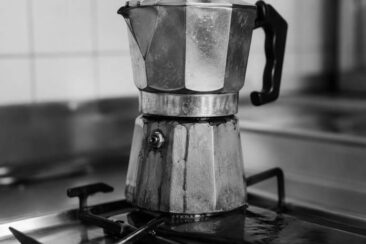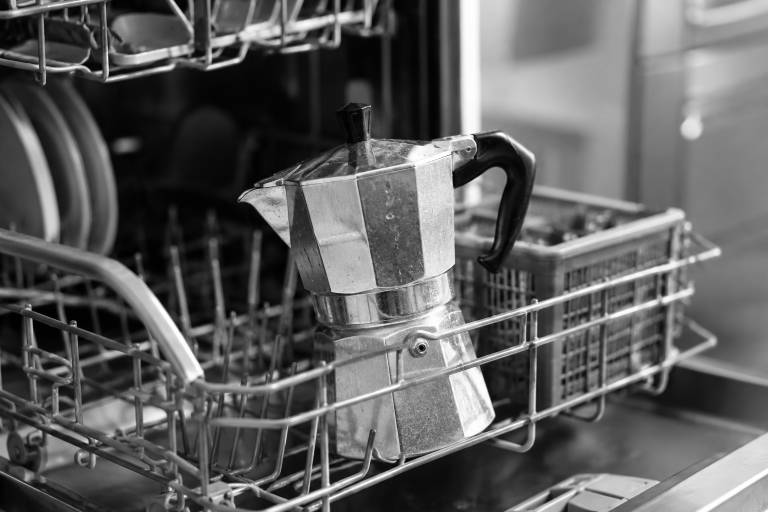
A moka pot sitting in the dishwasher rack looks harmless enough, but that single cycle can permanently change how your coffee tastes.
Most moka pots are made from aluminum, and aluminum does not survive dishwasher detergent without damage.
Stainless steel models handle the heat and soap better, yet they still lose something in the process.
This article breaks down which moka pot materials can handle a dishwasher, what goes wrong when they cannot, and how to hand wash yours correctly.
Why Most Moka Pots Cannot Go in the Dishwasher
The material your moka pot is made from determines whether it can survive a dishwasher cycle.
Aluminum, stainless steel, glass, and ceramic all react differently to high heat, pressurized water, and alkaline detergent.
Knowing the differences will save you from a ruined pot and a week of bad-tasting coffee.
Aluminum Moka Pots
Aluminum moka pots account for the large majority of stovetop espresso makers on the market, including the classic Bialetti Moka Express.
Dishwasher detergent is alkaline, and that alkalinity triggers a chemical reaction with the aluminum surface that leaves behind a dark, grimy residue.
High water temperatures inside the dishwasher speed up oxidation, which creates dull white or gray spots across the metal.
The pressurized spray can warp thinner aluminum walls over time, changing the pot’s seal and fit.
No harmful chemicals leach into your brewed coffee from normal use of an aluminum moka pot, but dishwasher exposure strips the protective layer that keeps your coffee tasting right.
Hand washing with warm water is the only safe approach for these models.
Stainless Steel Moka Pots
Stainless steel moka pots, like the Bialetti Venus, are built to resist corrosion and can survive dishwasher cycles without visible damage.
The nonporous surface of stainless steel does not react with alkaline detergents the way aluminum does.
Stainless steel moka pots offer clear advantages over aluminum in rust resistance, durability, and ease of cleaning.
For anyone who wants the convenience of tossing their moka pot into the dishwasher, a stainless steel model is the safer choice.
Glass and Ceramic Moka Pots
Glass and ceramic moka pots are less common, but they do exist.
High-quality glass or ceramic can handle dishwasher heat without cracking.
Check with the manufacturer before running yours through a cycle, since some models include plastic handles or silicone parts that soften under high heat.
Removing the pot’s rubber gasket and filter plate before washing is a good habit no matter what material your pot is made from.
The Seasoning Layer Inside Your Moka Pot
Every moka pot that gets regular use develops a thin coating of coffee oils on its inner walls.
This layer is called “seasoning,” and it is not dirt.
Seasoning acts as a buffer between the metal surface and your brewed coffee, reducing metallic taste and smoothing out bitterness.
Italian coffee tradition treats this dark film as a feature, not a flaw.
A single dishwasher cycle strips this seasoning completely, exposing bare metal and resetting your pot to the flavor profile of its very first brew.
Rebuilding the layer takes three to five batches of throwaway coffee, brewed and poured down the drain, before your pot produces its full flavor again.
The seasoning is one of the main reasons Bialetti and other manufacturers recommend washing moka pots with water only, never with soap or detergent.
What Happens When You Dishwash a Moka Pot
Running a moka pot through the dishwasher creates problems that go beyond cosmetic damage.
The combination of alkaline detergent, high heat, and pressurized water affects flavor, surface finish, and potentially your health.
Flavor Changes
Old coffee oils that coat the inside of your moka pot get stripped away by dishwasher detergent, and the bare metal underneath starts reacting with your next brew.
The result is a flat, metallic taste that can linger for several brewing cycles.
Alkaline residue from the detergent can cling to the rubber gasket and filter plate, adding a faint soapy note to your coffee.
Rinsing alone rarely removes all of this residue from the gasket’s porous rubber surface.
Your coffee will taste noticeably different until the pot rebuilds its internal seasoning layer through repeated use.
Aluminum and Health Concerns
Aluminum can migrate into coffee at trace levels during normal brewing, and this amount is considered safe by food safety standards.
After a dishwasher cycle strips the pot’s protective seasoning, the concentration of aluminum in the next brew may temporarily increase.
Studies referenced by the National Institutes of Health suggest that elevated aluminum intake over long periods may be linked to neurological conditions, so minimizing exposure is a reasonable precaution.
Keeping the safety valve clear of residue and coffee grounds matters here, too, since a clogged valve creates dangerous pressure buildup during brewing.
Surface Discoloration
Dishwasher detergent causes oxidation on aluminum moka pots, leaving behind white chalky spots and a dull gray film.
Stainless steel pots resist this reaction much better, but even they can develop water spots from mineral-heavy dishwasher cycles.
Visible discoloration on your moka pot does not always mean the pot is unsafe, but it signals that the surface chemistry has changed.
Soap residue left behind after dishwashing can make the exterior feel sticky or look cloudy once it dries.
Avoiding the dishwasher entirely is the simplest way to keep your pot looking clean and performing well.
How to Recover a Moka Pot After Dishwashing
Running your moka pot through the dishwasher once is not a death sentence.
Start by disassembling the pot and rinsing every part under warm running water for at least 30 seconds to flush away detergent residue.
Soak the rubber gasket separately in plain warm water for an hour, then squeeze it out and repeat, since rubber absorbs soap more readily than metal.
Press the safety valve gently with a toothpick to confirm it still moves freely and springs back into place.
If you notice white spots or a dull film on an aluminum pot, mix equal parts white vinegar and water and gently scrub the affected areas with a soft cloth.
To re-season the pot, brew three to five batches of inexpensive ground coffee and pour them straight down the drain.
Each batch rebuilds a thin layer of coffee oil inside the upper chamber and filter.
Taste your coffee on the fourth or fifth brew, and if it still carries a metallic or soapy edge, replace the gasket and run two more throwaway batches.
How to Clean a Moka Pot by Hand
The simplest cleaning routine is a warm water rinse after every brew.
Let the pot cool, then disassemble the three main parts: the bottom water chamber, the filter funnel, and the upper collection chamber.
Rinse each piece under running warm water and wipe away any lingering grounds with a soft cloth or paper towel.
Dry every component thoroughly before reassembling, since trapped moisture can encourage corrosion on aluminum surfaces.
For a deeper monthly cleaning, fill the bottom chamber with a 50/50 mix of white vinegar and water, let it sit for 20 minutes, then rinse with warm water.
Baking soda paste, made from equal parts baking soda and water, works well for scrubbing stubborn stains from the funnel or filter plate.
Fresh lemon juice is a gentler alternative that leaves a clean scent and cuts through oily buildup.
Skip the soap entirely if your pot is aluminum, and use only a mild unscented soap on stainless steel models when warm water alone is not enough.
How to Descale and Polish Your Moka Pot
Hard water leaves behind limescale, a white mineral crust that builds up inside the water chamber and around the safety valve over time.
Limescale restricts water flow, slows extraction, and can clog the valve, creating a pressure safety risk.
To descale your moka pot, dissolve two teaspoons of citric acid or lemon juice in a full chamber of hot water and let it soak overnight.
Brush the inside surfaces with a soft-bristled brush, drain the mixture, refill with a fresh batch, and run it through a full brew cycle on the stove.
Rinse all parts thoroughly once the descaling brew cools.
For polishing the exterior, make a paste of lemon juice and baking soda in equal parts, then buff the surface in small circular motions with a soft cloth.
This restores the original shine on aluminum pots without scratching the metal.
Stainless steel models can be polished with any non-abrasive metal cleaner, applied sparingly and buffed dry.
A descaling routine every two to three months keeps your moka pot performing at its best and prevents limescale from compromising the safety valve.
Final Thoughts
Putting a moka pot in the dishwasher is not recommended for aluminum models, and most moka pots on the market are aluminum.
Stainless steel moka pots can handle dishwasher cycles, making them the practical pick for anyone who values convenience.
Hand washing with warm water after every use takes less than two minutes and protects the seasoning layer that keeps your coffee tasting right.
The small effort of proper cleaning pays off in better-tasting coffee and a moka pot that lasts for years.
Check your manufacturer’s care instructions for specific guidance on your model.