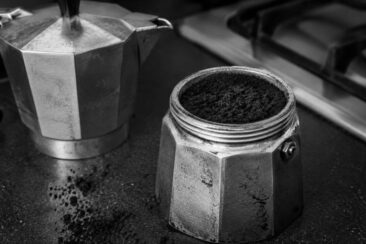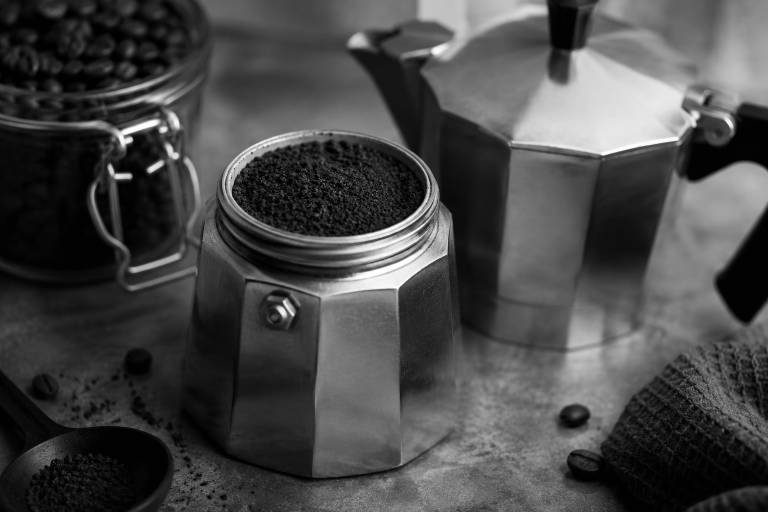
Tamping coffee grounds is second nature for espresso lovers, and it makes sense that moka pot owners would try the same approach.
The two brewers look similar, they each use pressure, and they each produce strong, concentrated coffee with that satisfying dark color and thick body.
But a moka pot operates under completely different physics than an espresso machine.
Packing grounds into a moka pot filter basket restricts water flow, traps heat, and creates the exact conditions that produce bitter, harsh coffee.
The fix is simple: never tamp a moka pot.
Quick Answer
No, you should not tamp coffee grounds in a moka pot. A moka pot generates only 1 to 2 bars of pressure, far too little to push water through compacted grounds the way an espresso machine does at 9 bars. Tamping causes over-extraction, channeling, bitterness, and in rare cases, dangerous pressure buildup. Fill the filter basket level, and skip the tamper entirely.
How a Moka Pot Brews Coffee Without Any Tamping
A moka pot has three chambers that work together through steam pressure.
The bottom chamber holds water, the middle filter basket holds loose coffee grounds, and the top chamber collects the finished brew.
As the bottom chamber heats up on the stove, steam builds and pushes hot water upward through the loose grounds in the filter basket.
That pressurized water passes through the coffee, absorbs flavor and oils, and rises into the upper chamber where you hear the familiar soft gurgle of a finished brew.
The entire process depends on water moving freely through the grounds.
A moka pot produces roughly 1 to 2 bars of pressure, and Bialetti’s own documentation puts the figure at about 1.5 bars.
An espresso machine, by comparison, generates around 9 bars of pressure, which is four to six times stronger.
| Feature | Moka Pot | Espresso Machine |
|---|---|---|
| Pressure | 1 to 2 bars | 9 bars |
| Water temperature | Near boiling (100°C / 212°F) | 92°C to 96°C (198°F to 205°F) |
| Grind size needed | Medium-fine | Fine |
| Tamping required | No | Yes |
| Brew time | 4 to 8 minutes | 25 to 30 seconds |
That pressure gap is the entire reason tamping makes sense for espresso and fails for a moka pot.
Espresso machines need compacted grounds to slow the water down at 9 bars of force.
A moka pot at 1.5 bars cannot push through that same resistance, so tamped grounds create a blockage instead of a controlled extraction.
What Happens When You Tamp Coffee in a Moka Pot
The most immediate result of tamping is over-extracted, bitter coffee.
Compressed grounds force the small amount of steam pressure to work harder, and the water spends far too long in contact with the coffee bed.
That extended contact time pulls harsh, astringent compounds out of the grounds, the same bitter flavors you taste when drip coffee sits on a hot plate for hours.
Common Mistake Tamping and then using a fine espresso grind in a moka pot is the worst combination. The compressed fine particles create an almost impenetrable puck that traps heat, scorches the coffee, and produces an undrinkable brew.
Tamped grounds create another problem called channeling.
When you press down on a mound of coffee, the areas with more height become more densely packed than the edges.
Water always follows the path of least resistance, so it carves narrow channels through the looser sections of the puck and ignores the denser areas.
The channeled sections get over-extracted, tasting harsh and burnt.
The bypassed sections get under-extracted, tasting sour and thin.
The result is a cup that tastes uneven, with no clean flavor profile at all, just a muddy mix of conflicting tastes.
Tamped grounds can restrict flow so severely that the brew takes far longer than it should.
A normal moka pot brew finishes in 4 to 8 minutes, but a tamped basket can stretch that to 12 minutes or more.
Every extra minute means more heat exposure, more bitter oils released, and a finished cup that smells burnt and acrid instead of smooth and rich.
Can Tamping a Moka Pot Cause It to Explode?
Moka pot explosions are rare, but they do happen, and tamping increases the risk.
When compressed grounds block water flow, pressure has nowhere to go.
The safety valve on the bottom chamber is designed to release excess pressure, but it has limits.
A clogged safety valve, combined with tamped grounds and an overfilled water chamber, creates a dangerous combination.
If steam cannot escape through the grounds or the valve, pressure builds until the weakest point gives way.
That failure can mean a cracked pot, a blown gasket, or in extreme cases, hot coffee and metal fragments spraying across your kitchen.
Your moka pot is at higher risk of a pressure failure when:
- The safety valve is clogged with old coffee residue or mineral buildup
- The water level sits above the safety valve
- The grounds are tamped and finely ground
- The gasket is old, cracked, or improperly seated
Quick Tip Check your safety valve before every brew. Press it gently with a toothpick or pin to confirm it moves freely. A stuck valve turns your moka pot into a sealed pressure vessel with no relief.
Keeping your moka pot safe means leaving the grounds loose, filling water below the valve, and replacing worn gaskets on a regular schedule.
How to Fill a Moka Pot Filter Basket the Right Way
The correct method involves no pressure at all.
Scoop your medium-fine grounds into the filter basket until they form a small mound above the rim.
Use your index finger to gently spread the excess grounds level with the top edge of the basket.
Do not press down, pat, or pack the grounds in any direction.
Run your finger around the outer rim of the basket to clear any stray grounds from the sealing edge.
Coffee particles stuck on the rim prevent the upper and lower chambers from sealing properly, which leads to steam leaks and weak extraction.
Some experienced Italian moka pot brewers slightly overfill the basket and then carefully screw the top chamber on, letting the assembly itself settle the grounds.
This approach works, but it can be messy and may leave grounds on the gasket.
The cleanest technique is the level-and-sweep method: fill to the rim, level with a finger, sweep the edges clean.
| Step | What to Do | What to Avoid |
|---|---|---|
| Fill | Add medium-fine grounds until they mound slightly above the rim | Packing grounds down with a spoon or tamper |
| Level | Sweep your finger across the top to create an even, flat bed | Pressing or patting the surface |
| Clean the rim | Brush loose grounds off the basket edge | Leaving particles on the sealing surface |
| Assemble | Screw the upper chamber on firmly | Overtightening so hard the gasket deforms |
How to Get Stronger Moka Pot Coffee Without Tamping
A bolder, more concentrated cup does not require compressing the grounds.
Four adjustments can make your moka pot coffee stronger without any tamping at all.
Adjust your grind size first.
A medium-fine grind sits between espresso and drip coffee, roughly the texture of table salt.
Going slightly finer within that range increases extraction and body, but going too fine crosses into espresso territory and creates the same blockage problems as tamping.
Switch to fresher beans.
Coffee beans lose their volatile aromatic compounds quickly after roasting, and beans older than three weeks taste noticeably flat.
Freshly roasted beans within 7 to 14 days of their roast date produce a richer aroma and a fuller, sweeter cup.
Choose a darker roast for your moka pot.
Traditional Italian moka coffee uses a medium to dark roast, which carries a bolder, smokier flavor that complements the brewer’s high-heat extraction method.
Lighter roasts can work, but they tend to taste brighter and thinner in a moka pot compared to pour-over or drip brewers.
Adjust your coffee-to-water ratio.
The standard moka pot ratio falls around 1:7 or 1:8 coffee to water by weight.
Using a slightly higher dose of coffee, say 1:6, produces a more concentrated brew with a thicker mouthfeel.
Dropping too much below 1:6 risks choking the flow and over-extracting, so make small adjustments and taste as you go.
Beginner Note The single biggest improvement most people can make to their moka pot coffee is using freshly roasted, freshly ground beans. Pre-ground coffee from a grocery store shelf has already lost most of its aromatic oils, and no brewing technique can bring those flavors back.
Why Some People Still Recommend Tamping a Moka Pot
The confusion traces back to the moka pot’s nickname: stovetop espresso maker.
Espresso machines require tamping, so the name alone suggests moka pots should get the same treatment.
Some home brewers report that a light press improved their cup, and their experience is genuine.
A gentle press can create slightly more resistance, which extends contact time and pulls more body from the grounds.
But that added resistance walks a fine line.
What feels like “more body” at a light press quickly becomes “bitter and harsh” at anything beyond a gentle touch, with no reliable way to control where that line falls.
Professional baristas and brewing guides almost universally recommend against tamping a moka pot.
Bialetti’s own instructions describe filling the basket and leveling the grounds without compressing them.
The best way to get the most from your moka pot is through grind size, bean freshness, roast level, and ratio adjustments, not through tamping.
Does a Light Tamp or Gentle Press Make a Difference?
A gentle press with the back of a spoon is not the same as a full espresso tamp, and some experienced brewers do use this technique.
The goal is to flatten the coffee bed without actually compressing it, creating a more even surface for water to contact.
This light leveling can marginally improve consistency, but it carries risk.
The moment you apply real downward pressure, you cross from leveling into tamping.
That transition is hard to feel, and the consequences show up in the cup: a slightly longer brew, darker liquid, and a sharp bitterness on the back of your tongue.
If you want to experiment, keep it to the lightest possible contact, barely touching the surface.
A better approach is to tap the side of the filter basket against your palm or countertop two or three times.
The vibration settles the grounds into a flat, even bed without compressing them.
You get the same surface uniformity that a light press offers, with none of the compression risk.
For a full walkthrough of every step in the brewing process, this guide on how to use a moka pot covers grind selection, water temperature, heat control, and timing from start to finish.
The Bottom Line on Tamping a Moka Pot
Your moka pot was designed to brew with loose, level grounds and 1.5 bars of gentle steam pressure.
Tamping fights that design at every step, blocking water, trapping heat, and turning good coffee bitter.
Fill the basket, level it with your finger, and let the brewer do its job.
The flavor difference between a tamped moka pot and a properly filled one is striking: clean sweetness and smooth body versus harsh bitterness and a burnt aftertaste.
Put the tamper back in the espresso drawer where it belongs.