Every coffee drinker eventually faces the french press vs drip coffee decision, and the answer depends on what you care about most in your morning cup.
These two methods sit at opposite ends of the brewing spectrum.
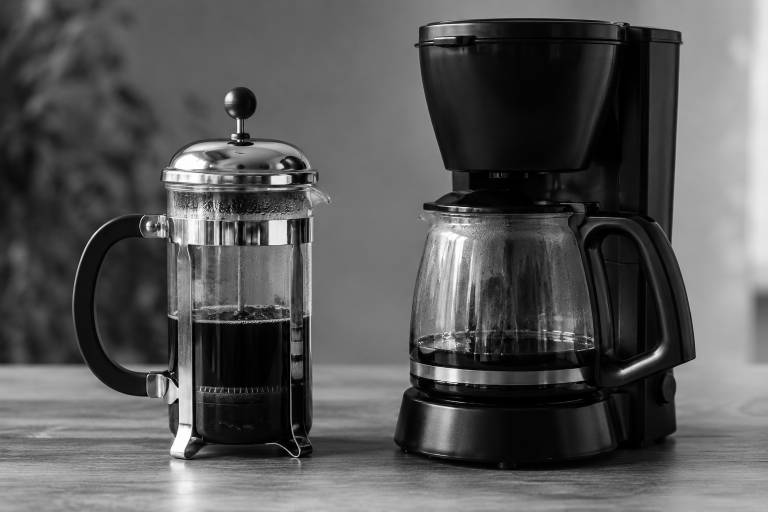
A french press steeps coarse grounds in hot water, then separates them with a metal mesh filter that lets natural coffee oils flow right into your mug.
A drip machine pours heated water over medium-ground coffee, pulling it through a paper filter by gravity and catching those oils before they reach the carafe.
Same beans, same kitchen, completely different cups.
One gives you a thick, velvety sip loaded with chocolate and caramel notes that coat your tongue.
The other gives you a bright, clean pour that tastes consistent every single morning.
Quick Answer
French press produces a richer, heavier cup with more body and natural coffee oils, making it ideal for 1 to 4 cups at a time. Drip coffee delivers a cleaner, lighter, more consistent cup and works better for households needing 6 or more cups each morning.
The biggest difference is the filter. A metal mesh filter (french press) lets oils and fine particles through for a full-bodied coffee experience. A paper filter (drip) removes them for a smoother, brighter finish.
Keep reading to see how they compare on caffeine, cost, health, grind size, and daily cleanup.
How French Press and Drip Coffee Brewing Actually Work
A french press uses immersion brewing, which means every coffee ground sits fully submerged in hot water for the entire steep time.
You add coarse grounds to the carafe, pour water heated to about 200°F, stir once, and wait four minutes.
Then you push the plunger down slowly, pressing the metal mesh filter through the liquid to separate grounds from brewed coffee.
That metal mesh filter is the defining feature of this method.
It catches large grounds but lets fine particles and natural oils pass straight into your cup.
Beginner Note Pour all the coffee out of the french press immediately after plunging. Leaving brewed coffee sitting on the compressed grounds continues extraction and turns the flavor bitter within 10 to 15 minutes.
Drip coffee works through percolation, a process where hot water passes through a bed of grounds using gravity.
The machine heats water in a reservoir, then releases it through a showerhead over the grounds basket.
As the water drips through, a paper filter catches oils, fine particles, and sediment before the coffee falls into the carafe below.
The paper filter is what gives drip coffee its trademark clean, bright character.
You load grounds, press a button, and walk away.
Which Method Produces Better Tasting French Press vs Drip Coffee
Tasting these two cups side by side reveals a dramatic difference, even when you use the same beans.
French press coffee has a heavy, coating mouthfeel that lingers on your palate.
The oils that pass through the metal mesh filter carry flavor compounds with deep chocolate, roasted nut, and caramel tones.
Your cup will have a slight haze and a thin layer of sediment at the bottom.
Drip coffee tastes lighter, cleaner, and more transparent.
Paper filtration strips out the oils that create heaviness, leaving a brighter acidity and crisper finish.
Fruity and floral notes that a french press would bury under oil come through clearly in a drip cup.
If you drink your coffee black and want to feel every sip, french press rewards that attention.
If you prefer a smooth, easy-drinking cup that pairs well with cream or sugar, drip coffee handles that role naturally.
| Flavor Quality | French Press | Drip Coffee |
|---|---|---|
| Body | Heavy, thick, coating | Light, clean, smooth |
| Mouthfeel | Oily, velvety | Crisp, thin |
| Dominant Notes | Chocolate, caramel, roasted nut | Bright fruit, mild sweetness |
| Acidity | Low, rounded | Moderate, clear |
| Finish | Lingering, rich | Clean, short |
| Sediment | Some at bottom of cup | None |
What Grind Size Does Each Brewing Method Need
Grind size is the single biggest variable that separates a good cup from a bad one in these two methods.
French press needs a coarse grind, roughly the texture of sea salt or raw sugar.
That larger particle size slows down extraction during the four-minute steep, preventing bitterness.
Fine particles from a too-small grind will slip through the metal mesh filter, making your cup taste muddy and gritty.
Drip coffee needs a medium grind, closer to the texture of sand.
This size lets water flow through the grounds bed at the right speed for even extraction across the basket.
Grind too coarse for a drip machine and the water drains too fast, producing a weak, watery result.
Grind too fine and the basket clogs, over-extracting the coffee into harsh, bitter territory.
- French press: Coarse grind, like sea salt
- Drip coffee: Medium grind, like sand
- Switching between methods: Adjust your grinder every time, never use the same setting for these two methods
Common Mistake Using pre-ground supermarket coffee in a french press almost guarantees a gritty, bitter cup. Pre-ground coffee is milled to a medium or medium-fine size for drip machines. A burr grinder set to coarse makes a noticeable difference on the very first brew.
How Caffeine Content Compares Between Methods
Caffeine levels in french press vs drip coffee are closer than most people expect.
An 8-ounce cup of french press coffee contains roughly 80 to 135 mg of caffeine, with most estimates centering around 107 mg.
An 8-ounce cup of drip coffee contains about 95 to 165 mg of caffeine, with many sources citing 95 mg as a common average for a standard brew.
The real variable is the coffee-to-water ratio you use, not the brewing method itself.
French press recipes often call for a 1:15 ratio (one gram of coffee per 15 grams of water), which puts more grounds in contact with water than many drip machine scooping habits.
A drip machine running a weaker ratio might deliver less caffeine per cup, but the same dose of coffee at the same ratio produces similar caffeine extraction in either method.
| Caffeine Factor | French Press | Drip Coffee |
|---|---|---|
| Typical range per 8 oz | 80 to 135 mg | 95 to 165 mg |
| Common average per 8 oz | ~107 mg | ~95 mg |
| Serving size tendency | 1 to 2 large mugs | Multiple cups from a full pot |
| What affects it most | Steep time, grind size, coffee dose | Machine temperature, coffee dose |
Which Brewing Method Costs Less Over Time
French press wins the cost comparison by a wide margin, especially over several years.
A quality glass french press from a brand like Bodum costs about $20 to $40.
A reliable drip coffee maker ranges from $30 for a simple model to $200 or more for an SCA-certified machine like the Breville Precision Brewer.
The ongoing expense gap matters even more than the upfront price.
French press brewing requires no paper filters, no electricity during brewing, and no replacement parts beyond an occasional $10 filter screen.
Drip machines need paper basket filters that cost roughly $0.02 to $0.05 per brew, adding up to $8 to $25 per year.
Automatic drip machines need descaling every one to three months, and the heating elements and internal parts eventually wear out.
- French press upfront cost: $20 to $40
- Drip machine upfront cost: $30 to $200+
- French press annual consumables: $0
- Drip machine annual consumables: $8 to $25 in paper filters
- French press lifespan: 5 to 10 years (stainless steel models last longer)
- Drip machine lifespan: 3 to 7 years before internal components degrade
Health Differences Between French Press and Drip Coffee
The health conversation around these two methods centers on a group of oily compounds called diterpenes: cafestol and kahweol.
These compounds are present in coffee bean oils, and they have been linked to raising LDL cholesterol when consumed in larger amounts.
A 2022 review published in the cardiology journal Open Heart noted this connection at six or more cups of unfiltered coffee per day.
Paper filters in drip machines trap the majority of these diterpenes before they reach your cup.
One cardiologist cited by HuffPost stated that the concentration of cafestol in french press coffee is about 300 times greater than in paper-filtered drip coffee.
That sounds alarming on its own, but the practical risk depends on how much french press coffee you drink each day.
Quick Tip If you love french press flavor but worry about cholesterol, limit yourself to one or two cups per day and consider alternating with drip-brewed coffee. Choosing a dark roast may lower diterpene concentration slightly compared to lighter roasts.
For most healthy adults drinking moderate amounts, coffee from either method fits comfortably into a balanced routine.
The FDA recommends keeping total caffeine intake at or below 400 mg per day, which works out to roughly three to four cups regardless of brewing method.
People with elevated LDL cholesterol or a family history of heart disease should talk to their doctor about whether paper-filtered coffee is a better fit.
How to Choose the Right Beans for Each Method
The brewing method you pick should influence the beans you buy, and the roast level matters more than the origin.
French press pairs naturally with medium to medium-dark roasts.
The immersion process and metal mesh filter amplify the deep, syrupy sweetness in darker roasted beans, pulling out chocolate, toasted walnut, and brown sugar flavors that coat your tongue.
Light roast single-origin beans can taste flat or muddy in a french press, their delicate floral and fruity notes buried under the heavy body and oil.
Drip coffee brings out the best in medium roasts and handles light roasts surprisingly well, especially on an SCA-certified machine that reaches proper brewing temperature.
The paper filter strips away heaviness and lets brighter, more complex acidity shine through.
A washed Ethiopian light roast that might taste muddled in a french press can reveal jasmine and citrus notes beautifully through a drip machine.
Do:
- Use medium or medium-dark roast beans in a french press
- Try light to medium roast beans in a drip machine
- Buy whole beans and grind fresh before each brew
Don’t:
- Force a delicate light roast through a french press and expect clarity
- Assume that darker roast always means stronger coffee
- Store beans in the bag for months after opening
Cleanup and Daily Maintenance for Each Method
Cleanup effort is similar for these two methods, but the type of work is different.
After brewing french press coffee, you have a puck of wet grounds sitting at the bottom of the carafe.
The best approach: add a splash of water, swirl, and dump the slurry into the trash or a compost bin.
Never rinse coffee grounds down the sink drain, as they accumulate in pipes and cause stubborn clogs over time.
Rinse the carafe, wipe down the plunger, and you are finished for the day.
Once a week, disassemble the plunger filter and scrub the mesh screen to remove oil buildup that can turn rancid and add stale, sour notes to your next brew.
Drip machine cleanup is faster on a daily basis: toss the paper filter and grounds, rinse the brew basket, and wash the carafe.
The hidden maintenance task is descaling.
Mineral deposits from tap water build up inside the heating element and tubing, gradually lowering the brew temperature and producing weaker, flatter coffee over time.
Descale your drip machine every one to three months depending on your local water hardness.
Common Mistakes That Ruin French Press and Drip Coffee
A few predictable errors cause most of the bad cups people blame on the brewing method itself.
In a french press, the most frequent mistake is using a grind that is too fine.
Pre-ground coffee designed for drip machines creates a silty, over-extracted mess in a french press within minutes.
The second most common french press error is letting the brewed coffee sit on the grounds after pressing.
That compressed puck continues extracting, and within 10 to 15 minutes the cup turns noticeably bitter and astringent.
With drip machines, the biggest problem is using a budget model that never reaches the SCA-recommended brew temperature of 195 to 205°F.
Many entry-level machines brew at 180 to 190°F, which under-extracts the coffee regardless of grind or dose.
The result is a flat, hollow, sour-tasting pot that no amount of cream can fix.
- French press fix: Use a coarse grind from a burr grinder, steep for exactly four minutes, and pour immediately
- Drip fix: Invest in an SCA-certified machine, or at minimum check that your machine reaches at least 195°F at the brew head
- Shared fix for these two methods: Buy fresh, roast-dated beans within 30 days of the roast date, as stale beans produce lifeless coffee no matter what brewer you use
Common Mistake Skipping descaling on a drip machine is the most overlooked reason coffee quality declines after the first year. Scale deposits lower brew temperature by several degrees, and the coffee gradually tastes weaker and more sour without any obvious cause.
When French Press vs Drip Coffee Makes More Sense
Choosing between these two methods comes down to your household size, your morning schedule, and how you want your coffee to taste.
French press is the better pick for solo drinkers or couples who brew one to four cups at a time and enjoy a hands-on ritual.
It costs less to get started, needs no electricity during brewing, travels easily, and produces a richer, more distinctive cup from fresh beans.
A weekend morning with a french press, a good grinder, and a warm mug has a deliberate, satisfying quality that an automatic machine cannot replicate.
Drip coffee is the better pick for families, busy mornings, and anyone who needs six or more cups ready without standing in the kitchen.
A programmable drip machine can be loaded the night before and set to brew before your alarm goes off.
That kind of convenience is genuinely hard to argue with when three people need coffee at 6:45 AM.
| Scenario | Better Method |
|---|---|
| Solo drinker wanting the best-tasting cup | French press |
| Couple who enjoys a slow weekend brew | French press |
| Family of four needing coffee by 7 AM | Drip coffee |
| Traveler or camper without electricity | French press |
| Office wanting a full pot ready all morning | Drip coffee |
| Beginner on a budget under $50 | French press |
| Someone who forgets to pour after brewing | Drip coffee |
There is no rule against owning and using these two methods on different days.
Many coffee lovers keep a french press for weekend mornings and a drip machine for the weekday rush, switching between full-bodied and clean cups depending on the pace of the day.
The best method is the one that gets you a cup you actually look forward to drinking.