Most people choose their coffee roast the same way they choose a movie on a Friday night: by the label, the color, and whatever feels right in the moment.
That instinct isn’t wrong, but it skips the parts that actually change what ends up in your cup.
When beginners compare light roast vs dark roast, they often focus on color alone. But coffee roast affects flavor, aroma, body, bitterness, acidity, and even how the coffee behaves when you brew it.
The difference between light and dark roast goes far beyond appearance, and the things beginners assume about each one are almost always backwards.
What Roasting Actually Does to a Coffee Bean
Before roasting, coffee beans are green, dense, and smell like cut grass.
Heat transforms them through a process that unfolds in stages, and the roaster decides when to stop that process.
Light roast beans reach what’s called “first crack,” a moment around 380 to 400°F when the beans expand and pop like popcorn.
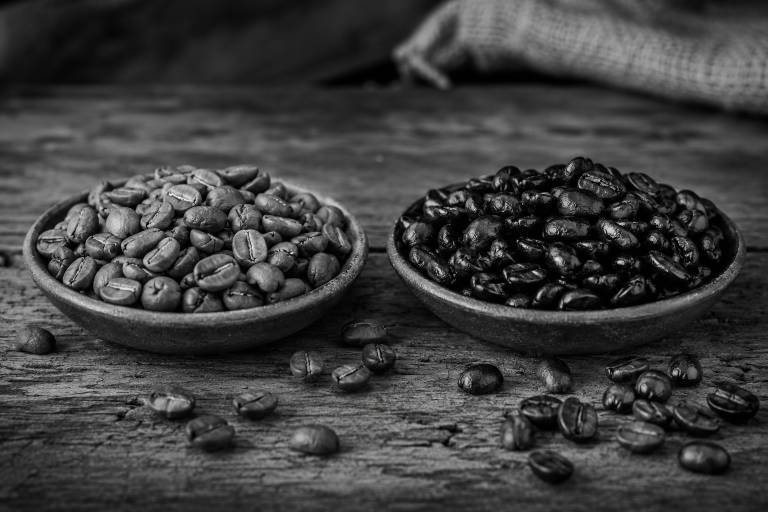
Roasters pull light beans shortly after this point, leaving them dense, dry on the surface, and full of the compounds that existed in the original seed.
Dark roast beans keep going well past first crack, sometimes reaching a second crack above 430°F.
By that point, the bean’s cell structure has broken down further, natural oils have risen to the surface, and much of the original chemical makeup has been replaced by new compounds created through heat.
That shiny, oily look on a dark roast bag isn’t a sign of freshness or quality.
It’s a sign of how far the roasting process went.
The Caffeine Myth That Refuses to Die
If you’ve heard that dark roast has more caffeine, you’re in good company, and you’ve been misled.
Bold flavor and deep color trick people into assuming a bigger caffeine punch, but roast level has very little effect on caffeine content.
Caffeine stays remarkably stable during roasting.
What changes is the bean’s size and density.
Dark roast beans puff up and lose moisture, so they weigh less per bean than light roast beans.
If you scoop your coffee by volume, a tablespoon per cup, light roast delivers slightly more caffeine: you’re packing more dense bean matter into each scoop.
Measured by weight, the difference nearly vanishes.
Your brewing method and the ratio of coffee to water will always affect your caffeine intake more than roast level ever will.
Where the Flavor Really Comes From
Light roast coffee tastes like the place it was grown.
That might sound abstract, but it’s one of the most practical things to understand about roast level.
Beans from Ethiopia tend to carry floral and citrus notes in a light roast.
A Colombian bean might express sweetness and stone fruit.
A Guatemalan single-origin could lean toward cocoa and spice.
Shorter roasting time preserves those origin characteristics, since the bean’s natural sugars and acids haven’t been cooked away.
Dark roasting does the opposite.
The longer a bean stays in the roaster, the more its original flavors fade and get replaced by flavors created through caramelization and carbonization: chocolate, toasted nuts, smoke, and a heavier sweetness.
That’s why two completely different beans, one from Brazil and one from Kenya, can taste surprisingly similar once roasted dark.
Neither style is superior.
Light roast rewards curiosity about where coffee comes from, and dark roast rewards people who want consistency and warmth in every cup.
Acidity Isn’t What You Think It Is
The word “acidity” confuses more coffee beginners than any other term.
In coffee, acidity refers to brightness, a lively, sometimes tangy quality on your tongue that makes the flavor feel sharp and complex.
It does not mean the coffee will burn your stomach.
Light roasts carry more of this brightness: the compounds responsible for it, chlorogenic acids, haven’t been broken down by prolonged heat.
Dark roasts lose most of their chlorogenic acid content during the extended roasting process, which is why they taste smoother, rounder, and less sharp.
Here’s the part that actually matters for your body: dark roast coffee produces a compound called N-methylpyridinium, which reduces stomach acid secretion.
If your stomach gets uncomfortable after coffee, a dark roast is genuinely the gentler option, regardless of how bold it tastes.
Light roast holds onto far more antioxidant compounds, though.
A 2020 study from the Slovak University of Agriculture found that light and light-to-medium roasts scored highest in total antioxidant capacity, with dark roast coming in at the lowest.
So the health question doesn’t have one clean answer: light roast wins on antioxidants, dark roast wins on stomach comfort.
Your Brewing Method Should Match Your Roast
This is the part most beginners skip entirely, and it’s the part that changes everything.
Light roast beans are dense and resist water penetration.
Their compounds extract slowly, which means they perform best with brewing methods that allow longer contact time: pour over, drip, and Chemex.
Water temperature matters too.
Light roasts benefit from hotter water, right around 200 to 205°F, to coax out sweetness and avoid sour, underdeveloped flavors.
Dark roast beans are porous and dissolve quickly.
They pair well with espresso machines, French presses, moka pots, and AeroPress, where shorter brew times and slightly lower temperatures (around 190 to 195°F) prevent bitterness from taking over.
Brewing a light roast in a moka pot often produces something thin and sour.
Running a very dark roast through a slow pour over can result in an ashy, over-extracted cup.
The mismatch between roast and method explains a lot of the “bad coffee” experiences beginners blame on the beans themselves.
The Real Beginner Mistake
It’s not choosing the wrong roast.
Plenty of people drink light roast happily for years, and plenty of others stick with dark roast and never look back.
The real mistake is treating all coffee the same once it’s in your kitchen.
Buying a light roast single-origin and brewing it with boiling water in a French press for six minutes will produce a cup that doesn’t represent what that coffee can do.
Grabbing a dark Italian roast and running it through a long pour over at maximum temperature won’t do it any favors either.
Once you start adjusting your grind size, water temperature, and brew time based on what’s actually in the bag, every roast gets better.
That one shift, matching your method to your roast, separates a decent cup from one that makes you pause mid-sip.
Where to Start If You’re Curious
Buy the same single-origin bean in two roast levels from the same roaster.
Brew each one using the method that suits it: pour over for the light, French press or moka pot for the dark.
Taste them side by side.
You’ll notice things no article can fully describe, how the same bean can taste like blueberry jam in one cup and dark chocolate in the next.
From there, you’ll stop asking which roast is “better” and start asking which roast fits the moment, the method, and the mood.
That’s when coffee at home starts getting genuinely fun.