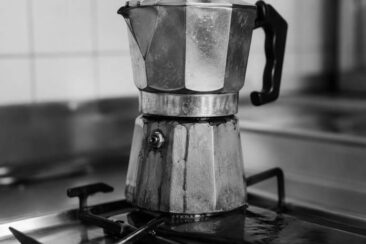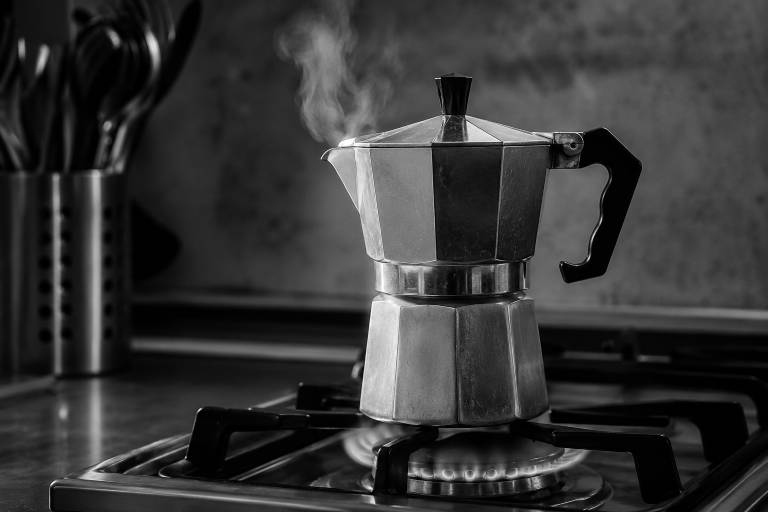
In April 2024, a retired teacher in Palermo, Italy, died after her moka pot exploded on the stove, ignited a fire, and left her with burns over 90% of her body.
That story is extreme, and incidents like it remain exceptionally rare.
Still, any device that builds internal pressure from steam can fail if it is neglected or misused.
A moka pot generates roughly 1 to 2 bar of pressure during a normal brew, far below the 9 bar of a commercial espresso machine, but more than enough to send scalding coffee across a kitchen if something goes wrong.
This article breaks down the specific causes behind moka pot explosions, the warning signs you can catch mid-brew, and the cleaning and maintenance habits that keep your morning coffee safe.
How Moka Pot Pressure Works
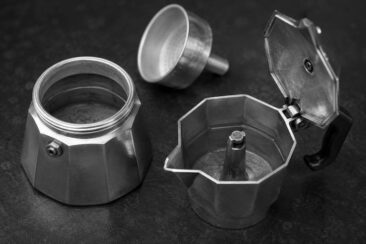
The lower chamber of a moka pot holds water that sits above a heat source.
As the water heats past 90°C, steam forms and pushes the remaining liquid upward through a funnel, through the coffee grounds in the filter basket, and into the upper chamber.
That upward push happens at roughly 1.5 bar of pressure, about 22 PSI, which is enough to force water through a bed of medium-fine grounds but not enough to extract a true espresso.
A small spring-loaded safety valve sits on the outside wall of the lower chamber.
If pressure climbs past the intended brewing range, the valve opens and vents steam outward with a sharp hiss, like a tiny pressure-cooker release.
Every moka pot depends on this valve as its only failsafe, which is why a blocked or corroded valve turns a harmless brewer into a potential hazard.
The connection between pressure and safety explains every explosion cause listed in the next section.
What Causes a Moka Pot to Explode
A moka pot can explode whenever internal pressure rises faster than the valve can release it, or when the valve cannot open at all.
Five specific failures account for nearly every recorded incident.
Clogged safety valve. Mineral deposits from hard water, called limescale, gradually coat the valve’s spring mechanism until it seizes shut.
Fine coffee grounds that fall into the lower chamber during assembly can lodge inside the valve opening and produce the same blockage.
Once the valve is sealed, pressure has nowhere to go except through the weakest joint in the pot, often the threaded connection between the two halves.
Coffee ground too fine. A grind finer than medium-fine, anything approaching espresso powder, compacts inside the filter basket and blocks water flow.
The steam keeps building underneath with no path through the coffee bed, and pressure spikes within seconds.
Tamped or overpacked filter basket. Pressing grounds flat with a spoon or finger mimics the tamp used on an espresso machine, but a moka pot lacks the 9-bar capacity to push through packed coffee.
The result is the same as grinding too fine: water stalls below the basket, and the pot becomes a sealed container of superheated steam with nowhere to go.
Water filled above the safety valve line. Every moka pot has a small screw or rivet on the inside wall of the lower chamber that marks the maximum water line.
Filling above this mark submerges the safety valve, preventing it from venting steam whether the spring works or not.
Worn or non-original gaskets. The rubber ring that seals the two halves of the pot degrades over time, and cheap replacement gaskets may not seat correctly.
A loose gasket can let pressure escape as a slow, unnoticed leak during most brews, then suddenly hold just enough pressure to cause a blowout under worse conditions.
| Cause | What Fails | Typical Result |
|---|---|---|
| Clogged safety valve | Valve cannot vent steam | Pot halves separate violently |
| Grind too fine | Water cannot pass through coffee | Coffee shoots from top like a geyser |
| Tamped grounds | Same blockage as fine grind | Pressure spike, possible seal failure |
| Overfilled water | Safety valve submerged | No venting, gradual pressure buildup |
| Worn gaskets | Seal integrity compromised | Unpredictable blowout at the seam |
Recognizing these causes is the first step, but catching the problem before it reaches a breaking point is even more useful.
Warning Signs That Your Moka Pot Might Explode
The brew itself tells you when something is wrong if you stay close enough to listen and watch.
Abnormally long brew time. A 3-cup moka pot on medium heat normally produces coffee in 4 to 5 minutes.
If 8 or 10 minutes pass with no coffee appearing in the upper chamber, a blockage is likely trapping pressure below the filter basket.
Hissing or spitting from the safety valve. A brief wisp of steam from the valve is normal on some pots near the end of a brew.
Sustained, loud hissing means internal pressure has exceeded the safe range and the valve is doing its job, barely.
Remove the pot from the heat immediately and run the base under cold water to halt the pressure cycle.
No sound at all. A working moka pot produces a low, steady gurgle as coffee rises into the upper chamber.
Complete silence after several minutes of heating can mean the water path is fully blocked, which is the most dangerous scenario of the five causes listed above.
Steam escaping from the seam. If you see tiny jets of vapor shooting from the threaded joint where the two halves meet, the internal pressure has already exceeded what the gasket can hold.
Turn off the heat, step back, and let the pot cool on its own before touching it.
Knowing these signals keeps you one step ahead, but the real safeguard is a maintenance routine that prevents the problem from developing in the first place.
How to Prevent a Moka Pot Explosion
Prevention comes down to four habits that take less than a minute each.
Use a medium-fine grind, never espresso-fine. On a Baratza Encore, that means a setting around 12 to 15, compared to the 7 or 8 you would dial in for a portafilter.
If you buy pre-ground coffee, look for bags labeled “moka pot” or “stovetop” rather than “espresso,” and avoid anything that feels powdery between your fingers.
Grind too coarse and the water rushes through too fast, producing a thin, sour cup that tastes burnt or bitter.
Grind too fine and you get the pressure blockage that leads to explosions.
Fill water to just below the safety valve. Look inside the lower chamber for the small metal rivet or bolt on the wall.
Pour room-temperature or pre-heated water until the surface sits about 2 to 3 millimeters below that marker.
Spoon grounds loosely into the basket. Level the surface with your finger by sweeping across the top, but do not press down.
The coffee bed should look like a flat pile of sand, not a compressed hockey puck.
Brew on low to medium heat. High flames cause water temperature to spike past 100°C too quickly, producing so much steam that the safety valve may not vent fast enough.
On a gas range, keep the flame small enough that it does not extend past the base of the pot.
On an electric coil, setting 4 out of 10 is a reliable starting point.
These four habits address the immediate brew, but the longer-term threat, limescale, needs its own cleaning routine.
How to Descale and Deep-Clean Your Moka Pot
Limescale is the white, chalky crust that forms inside the lower chamber when hard water evaporates and leaves behind calcium carbonate.
Over weeks, this residue coats the safety valve spring, narrows the funnel opening, and lines the filter basket holes.
A moka pot used daily in a hard-water area can accumulate enough limescale in two to three months to partially block the valve.
After every brew: Disassemble the pot once it cools, remove the filter basket and gasket, and rinse every piece under warm running water.
Wipe the inside of the lower chamber with a soft cloth to remove loose coffee oils before they turn rancid, which would add a stale, papery aftertaste to your next cup.
Every two to four weeks: Fill the lower chamber halfway with equal parts water and white vinegar.
Reassemble without coffee grounds, place the pot on low heat, and let the vinegar solution run through the full brew cycle.
The acetic acid dissolves limescale on contact, and you will see small white flakes floating in the upper chamber if deposits were present.
Rinse all parts three times with clean water afterward to flush vinegar residue.
Test the safety valve at every deep clean. Press the valve from the inside of the lower chamber with your fingertip.
It should push outward with light resistance and spring back when you release it.
If the valve feels stiff, soak it in vinegar for 30 minutes and test again.
A valve that will not move after soaking needs to be replaced before the next brew.
Do not put any moka pot, aluminum or stainless steel, in the dishwasher, since the harsh detergent strips the protective patina from aluminum and can warp gaskets.
Clean equipment is only half the equation; the pot itself needs to be the right build for safe, repeated use.
Choosing a Safe Moka Pot
The material, size, and brand of your moka pot affect how it handles heat and pressure over hundreds of brews.
Stainless steel and aluminum moka pots are the two standard materials, and each handles heat differently.
| Feature | Aluminum | Stainless Steel |
|---|---|---|
| Heat conduction | Fast, heats quickly | Slower, more even |
| Weight | Lighter | Heavier, sturdier |
| Durability | Softer, can dent | Resists dents and corrosion |
| Induction compatible | No (adapter required) | Yes |
| Price (3-cup) | $20 to $35 | $30 to $55 |
Aluminum pots from Bialetti, the company that invented the moka pot in 1933, have the longest track record for safe design.
Their Moka Express line has sold over 300 million units worldwide and uses a tested safety valve rated for the pressures the pot produces.
Off-brand pots sold for under $15 often use thinner walls, looser thread tolerances, and safety valves made from cheaper alloys that corrode faster.
A poorly machined thread means the two halves may not seal evenly, creating weak points where pressure can escape unpredictably.
Match the pot size to your actual use. Moka pots are designed to brew at full capacity, and underfilling the water chamber in a 6-cup pot to make only 2 cups changes the water-to-air ratio in ways that increase steam production without enough liquid to stabilize the brew.
If you regularly brew for one person, buy a 1-cup or 3-cup pot rather than underfilling a larger one.
Replace the gasket once a year, or sooner if it feels brittle. Pull the rubber ring from the underside of the upper chamber and flex it between your fingers.
A fresh gasket bends smoothly, like a thick rubber band.
A worn one feels stiff, cracks at the bend, or has visible flat spots where it was compressed against the rim.
If your pot and maintenance are solid, the odds of an explosion are near zero, but knowing what to do in the worst case still matters.
What to Do If Your Moka Pot Explodes
A moka pot explosion most often sends the two halves of the pot flying apart and sprays hot coffee, steam, and grounds across the stovetop and surrounding counters.
The coffee inside can be well above 100°C at the moment of failure, hot enough to cause second-degree burns on contact with skin.
Step 1: Turn off the heat source immediately if it is safe to reach the stove controls without stepping into the spray zone.
If a gas burner is still lit and coffee has splashed onto the flame, turn off the gas at the shutoff valve rather than reaching across the stovetop.
Step 2: Leave the area for 60 seconds to let steam dissipate and metal fragments cool below scalding temperature.
Step 3: Treat any skin burns under cool running water for at least 10 minutes before applying anything else.
Seek medical attention for burns larger than your palm or burns on the face, hands, or joints.
Step 4: Once the area is safe, put on oven mitts and pick up the large metal pieces with tongs.
Sweep smaller fragments and grounds with a broom, not a bare hand, since metal edges from a separated pot can be razor-sharp.
Step 5: Wipe down all nearby surfaces with a damp cloth, paying attention to grout lines, behind the range, and any spot where hot coffee may have splashed but is not immediately visible.
Coffee stains left on tile or painted surfaces for more than a few hours become permanent.
Step 6: Dispose of the broken pot in a rigid container labeled for metal waste, not a thin plastic bag that the fragments could puncture.
Do not reuse a moka pot that has exploded, cracked, or visibly warped at the seam.
Final Thoughts
A well-maintained moka pot is one of the safest and most reliable coffee brewers you can own.
Millions of people in Italy and around the world use one every single morning without incident.
The explosions that do happen trace back to a short list of preventable causes: a clogged safety valve, overly fine grounds, too much water, too much heat, or a worn-out gasket.
Test your safety valve every few weeks, descale the pot monthly if your water is hard, and never walk away from the stove during a brew.
Those three habits are the difference between a stovetop brewer you trust for years and a cautionary story about coffee on the ceiling.