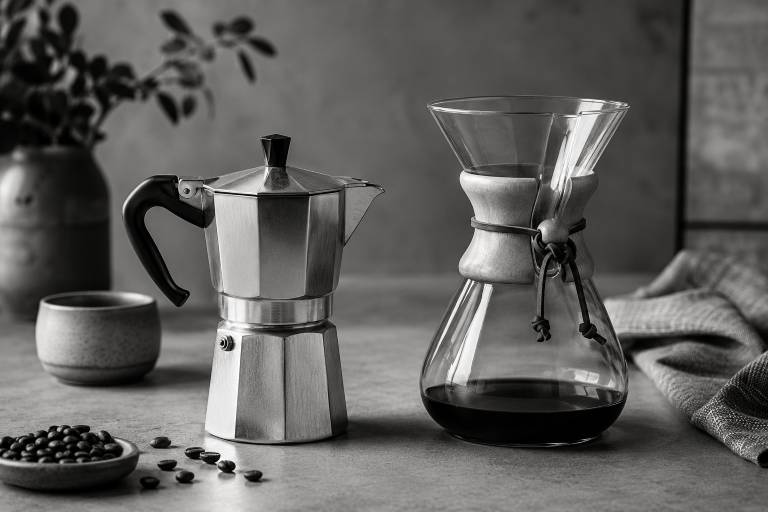
The Moka Pot and the Chemex sit at opposite ends of the home coffee spectrum, and picking the wrong one means months of coffee you never quite love.
One brews under pressure on the stove, pushing hot water through fine grounds to produce a dark, syrupy shot that smells like a Roman café.
The other lets gravity do the work, dripping hot water through a thick paper filter and into an hourglass glass carafe, leaving you with a bright, tea-like cup you can see through.
Choosing between them comes down to a few specific things: how strong you like your coffee, how much time you have in the morning, what grind size you want to deal with, and what you are willing to spend on filters over time.
This comparison breaks down every difference that matters, from flavor to cost to cleanup.
Quick Answer
The Moka Pot makes strong, concentrated, espresso-style coffee on the stovetop in about 5 minutes for under $35. The Chemex makes clean, bright, sediment-free pour-over coffee in about 6 to 8 minutes for around $40 to $50, with ongoing filter costs of roughly $10 per 100 brews.
Pick the Moka Pot if you want bold, full-bodied coffee with minimal accessories. Pick the Chemex if you prefer light, clear flavors and a smoother cup. Read on for the full breakdown of taste, grind, price, and daily convenience.
How These Two Brewers Actually Work
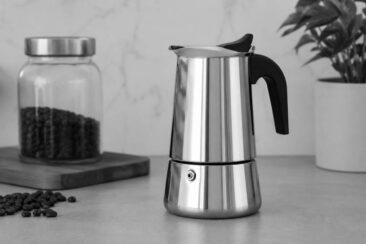
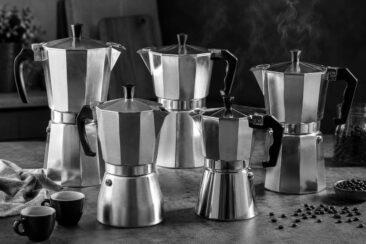
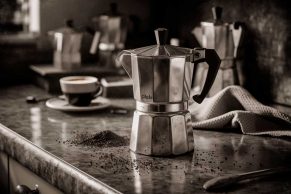
The Moka Pot is a three-chamber stovetop device invented in Italy in 1933 by Alfonso Bialetti.
Water sits in the bottom chamber, fine coffee grounds go in a metal filter basket in the middle, and brewed coffee collects in the upper chamber.
Heat from the stove creates pressure (roughly 1.5 bar) that forces water upward through the grounds.
You will hear a hissing, gurgling sound when the brew is nearly finished, and removing the pot from heat at that exact moment prevents the coffee from turning bitter and burnt.
The Chemex, created by German chemist Peter Schlumbohm in 1941, works on pure gravity.
You place a thick, bonded paper filter in the top of the glass carafe, add medium-coarse grounds, and pour hot water slowly in circles over the bed of coffee.
Water passes through the grounds and filter at its own pace, collecting in the lower half of the hourglass.
The process is quieter and more hands-on than a Moka Pot, and the total pour usually takes 4 to 5 minutes after you boil the water.
The Chemex now sits in the permanent collection of the Museum of Modern Art in New York, a nod to its clean, functional design.
Quick Tip Start with water just off the boil (around 200°F) for the Chemex. Boiling water poured directly onto the grounds can scorch lighter roasts and create a harsh, flat taste.
Taste and Flavor: Bold Intensity vs Clean Brightness
Flavor is where these two brewers diverge the most.
A Moka Pot produces a concentrated, full-bodied cup with visible oils floating on the surface and a heavy, velvety mouthfeel that coats your tongue.
The metal filter lets coffee oils and fine particles pass into the brew, which gives it a richness similar to espresso.
Dark chocolate, toasted nuts, and caramel are the notes you will most often pick up from a Moka Pot cup.
The Chemex strips all of that away.
Its bonded paper filters are 20 to 30 percent thicker than standard pour-over filters, and they trap oils, sediment, and fine particles before they reach the carafe.
The result is a cup that looks almost like tea, with a light body and bright, fruity, floral notes sitting clearly on your palate.
If you have ever wanted to taste the difference between a Kenyan and an Ethiopian single-origin bean, the Chemex will show it to you more clearly than almost any other home brewer.
| Feature | Moka Pot | Chemex |
|---|---|---|
| Body | Heavy, full, oily | Light, clean, silky |
| Flavor notes | Chocolate, caramel, toast | Fruit, floral, citrus |
| Bitterness | Higher if timing is off | Very low |
| Sediment | Some fine particles | None |
| Mouthfeel | Thick, coating | Thin, smooth |
What Grind Size Does Each Brewer Need?
Grind size is one of the biggest practical differences between these two methods.
The Moka Pot needs a fine grind, close to the texture of table salt or slightly coarser than espresso.
Grind too coarse and water rushes through without extracting enough flavor, leaving a weak, watery cup.
Grind too fine (espresso-level) and the pressure in the chamber builds too high, producing a scorched, metallic taste or even causing the safety valve to release.
The Chemex needs a medium-coarse grind, about the size of raw sugar or coarse sea salt.
Finer grinds slow the water flow through the thick filter to a frustrating crawl, turning a 5-minute brew into a 10-minute one and over-extracting the coffee into a harsh, astringent mess.
Common Mistake Using pre-ground “drip” coffee in a Moka Pot. Standard drip grind is too coarse for a Moka Pot and too fine for a Chemex. Neither brewer performs well with a middle-of-the-road grind, so a small burr grinder (starting around $30) pays for itself within a few weeks of better-tasting coffee.
Which Brewer Is Faster From Start to Cup?
The Moka Pot wins on speed by a comfortable margin.
Fill the bottom chamber, load the filter basket, screw on the top, set it on medium heat, and coffee starts flowing into the upper chamber within 3 to 5 minutes.
Total active time is about 90 seconds, since the stove does the rest.
The Chemex takes longer at every step.
You need to boil water separately (about 3 minutes with an electric kettle), rinse the filter to remove papery taste, add grounds, bloom them with a small splash of water for 30 seconds, then pour slowly for another 4 to 5 minutes.
Start to finish, expect 7 to 9 minutes with the Chemex, and about half of that time is active pouring.
For a rushed weekday morning, the Moka Pot is the faster path to a finished cup.
For a slower weekend ritual where the brewing itself is part of the experience, the Chemex rewards your patience with a different kind of coffee entirely.
Side-by-Side Comparison: Moka Pot vs Chemex
| Category | Moka Pot | Chemex |
|---|---|---|
| Brewing method | Steam pressure, stovetop | Gravity pour-over |
| Grind size | Fine | Medium-coarse |
| Brew time | 3 to 5 minutes | 7 to 9 minutes (including prep) |
| Coffee strength | Strong, espresso-style | Light to medium, filter-style |
| Filter type | Built-in metal screen | Disposable thick paper |
| Capacity | 1 to 12 espresso cups (1 to 18 oz) | 3 to 10 cups (15 to 50 oz) |
| Price range | $25 to $45 | $40 to $55 |
| Ongoing cost | None (no filters needed) | ~$10 per 100 paper filters |
| Portability | Compact, travel-friendly | Fragile glass, stays home |
| Material | Aluminum or stainless steel | Borosilicate glass |
| Invented | 1933, Italy | 1941, United States |
How Easy Is Each Brewer to Learn?
Beginners often find the Chemex more forgiving, and that surprises most people.
The pour-over method gives you a wide margin for error: if you pour a little too fast or too slow, the coffee still comes out drinkable.
You can see the water level, watch the bloom, and adjust in real time.
The Moka Pot looks simpler (fill, screw, heat), but timing the removal from heat takes practice.
Leave it on the stove 30 seconds too long and the coffee tastes burnt, ashy, and metallic.
Pull the pot off the heat the instant you hear sputtering and run cold water over the base to stop extraction immediately.
That technique, called the cold-water stop, is the single most useful Moka Pot trick for beginners, and skipping it is the main reason first-time users assume Moka Pot coffee is supposed to taste bitter.
Getting the grind right for a Moka Pot involves more trial and error than the Chemex, since small grind adjustments produce big flavor swings under pressure.
Do / Don’t for Moka Pot beginners:
- Do use medium-low heat. High heat brews faster but scorches the coffee.
- Do fill water to just below the safety valve, never above it.
- Do remove from heat at the first sputter and cool the base under running water.
- Don’t tamp or press the coffee grounds into the basket.
- Don’t leave the pot on the stove after brewing finishes.
Cleaning and Daily Maintenance
The Moka Pot disassembles into three pieces (base, filter basket, upper chamber) and rinses clean under warm water in about 60 seconds.
Never use soap or detergent, since it strips the thin layer of coffee oil that seasons the aluminum over time and protects the metal from oxidation.
A gentle wipe with a soft cloth is all it needs.
Every few months, check the rubber gasket and the metal filter plate for wear, and follow proper care and maintenance steps to keep the seal tight and the brew clean.
Replacement gaskets cost about $5 and take less than a minute to swap.
The Chemex is a single piece of glass with a removable wooden collar and leather tie.
After brewing, lift out the paper filter with the used grounds and toss it.
Rinse the glass carafe with warm water.
The hourglass shape makes it tricky to reach the narrow center section, so a long-handled bottle brush (around $8) is worth buying if you want to clean it thoroughly.
Glass does not absorb odors, so rinsing alone keeps it fresh for most daily use, with a deep vinegar soak once a month to remove any staining.
Handle the Chemex carefully when wet, since borosilicate glass is heat-resistant but still shatters on a hard floor.
Serving Size and Capacity Options
Moka Pots come in sizes measured in espresso cups, not standard coffee mugs.
A “6-cup” Bialetti Moka Express produces about 10 ounces of concentrated coffee, which fills roughly two regular mugs if you dilute it with hot water (the way many Italians drink it as a caffè americano).
The largest standard size is the 12-cup, producing about 18 ounces of coffee.
You must brew a full pot each time, since partial fills throw off the water-to-coffee ratio and pressure balance, resulting in weak, under-extracted coffee.
Sizes range from the 3-cup (15 ounces) to the 10-cup (50 ounces), and you can brew any amount up to the brewer’s maximum capacity without changing the results.
This makes the Chemex a better pick for entertaining or households where coffee consumption varies day to day.
If you are the only coffee drinker in your home, a 3-cup Moka Pot paired with an espresso machine gives you the widest flavor range without clutter.
What Does Each Brewer Actually Cost?
The Moka Pot is the more affordable option upfront and over time.
A Bialetti Moka Express 6-cup runs about $30 to $40 at most retailers.
No paper filters, no electricity, and no accessories beyond coffee grounds and a stove.
The only recurring cost is a replacement gasket and filter plate every 12 to 18 months (about $5 to $8).
Over five years of daily brewing, total ownership cost for a Moka Pot lands around $50 to $60, excluding coffee beans.
The Chemex 6-cup Classic costs between $40 and $55.
On top of that, you need Chemex bonded paper filters, which run about $10 for a box of 100.
Brewing once a day means a new box every three months, adding roughly $40 per year in filter costs alone.
Over five years, total Chemex ownership lands around $240 to $260, making it four to five times more expensive than the Moka Pot over the long run.
| Cost factor | Moka Pot (5-year total) | Chemex (5-year total) |
|---|---|---|
| Brewer purchase | $30 to $40 | $40 to $55 |
| Filters | $0 | ~$200 |
| Replacement parts | $15 to $25 | $0 to $10 (collar/tie) |
| Accessories needed | None | Gooseneck kettle (~$25) |
| Estimated total | $50 to $65 | $265 to $290 |
Which Roast Styles Work Best With Each Method?
The Moka Pot pairs naturally with medium and dark roasts.
Pressure extraction pulls deep, smoky, chocolatey flavors out of darker beans in a way that lighter roasts cannot match under the same method.
Light roasts in a Moka Pot often taste sour and thin, missing the sweetness that higher brewing temperatures and longer contact times would bring out.
If you love Italian-style espresso blends, Brazilian naturals, or Indonesian Sumatrans, the Moka Pot makes them sing.
The Chemex is the opposite.
Its thick filter and slower gravity extraction bring out the high, bright, acidic notes that define single-origin light and medium roasts.
An Ethiopian Yirgacheffe, a Kenyan AA, or a Colombian from Huila all taste distinctly different through a Chemex than through any other home brewer.
Dark roasts through a Chemex can taste flat and one-dimensional, since the filter strips the oils that carry much of a dark roast’s body and smoky richness.
For the best Chemex results, look for beans labeled “filter roast” or “light-medium roast” from specialty roasters.
These roasts are developed specifically for pour-over extraction temperatures and contact times, and the flavor difference compared to a generic grocery store bag is dramatic.
Beginner Note If you only buy one type of coffee and want it to work in a Moka Pot or Chemex, choose a medium roast. It is the most forgiving roast level across brewing methods, giving you acceptable results from pressure and pour-over alike.
How to Pick the Right Brewer for Your Morning
Your daily habits matter more than any spec sheet.
If you wake up, stumble to the kitchen, and want strong coffee in five minutes with zero fussing, the Moka Pot was designed for mornings like yours.
It runs on a gas stove, an electric burner, a camping fire, or a portable butane burner, and it fits in a backpack for travel.
After years of daily use, the aluminum darkens and the flavors deepen, rewarding consistency.
If you treat your morning cup as a 10-minute ritual, weighing beans, heating water to a precise temperature, and watching coffee bloom and drip through glass, the Chemex turns that routine into something meditative.
It rewards attention to detail with a cup that is genuinely different from what you can get anywhere else at home.
Pick the Moka Pot if you want:
- Strong, concentrated, espresso-style coffee
- The fastest brew time for stovetop coffee
- No recurring filter costs
- A brewer that travels with you
- A simpler alternative to an electric moka pot or full espresso machine
Pick the Chemex if you want:
- Clean, bright, sediment-free coffee
- Full control over pour speed and water temperature
- A brewer that handles large batches for guests
- A way to taste the difference between single-origin beans
- A pour-over experience that differs from other methods
The Right Brewer Depends on the Cup You Crave
Every brewing method makes a trade-off, and the Moka Pot and Chemex trade in opposite directions.
The Moka Pot sacrifices clarity for intensity, handing you a thick, dark, punchy cup that needs no apology.
The Chemex sacrifices intensity for transparency, giving you a window into every subtle flavor the bean has to offer.
Neither brewer is better in absolute terms.
The best one is the one that makes you look forward to your next cup, and the worst choice is the one that collects dust on a shelf.
If you are still unsure, buy the cheaper one first (a 3-cup Moka Pot for about $25), brew with it for a month, and decide whether you want something different before spending more.