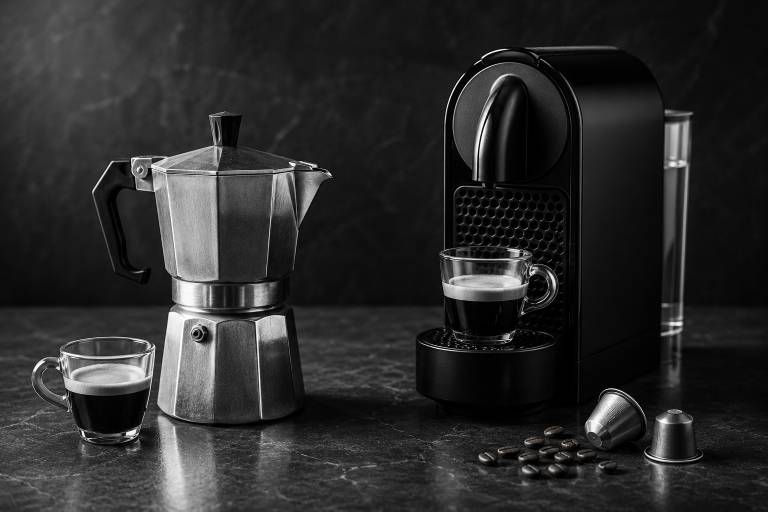
A $30 aluminum pot and a $200 capsule machine sit on opposite ends of the coffee counter, and they brew coffee in completely different ways.
One demands your attention, rewards your patience, and fills the kitchen with a rich, almost smoky aroma that clings to the morning air.
The other finishes before you can set down your phone, delivering a clean, crema-topped shot with zero guesswork.
That is the real Moka Pot vs Nespresso decision: hands-on control or push-button speed, bold stovetop flavor or polished capsule consistency.
This guide breaks down brewing methods, taste, cost per cup, portability, maintenance, and environmental impact so you can pick the right brewer without second-guessing the decision.
Quick Answer
A moka pot brews strong, full-bodied coffee at 1 to 2 bars of pressure on your stovetop for about $0.10 to $0.25 per cup, but it takes 5 to 10 minutes and some practice. A Nespresso machine delivers a consistent, crema-topped shot in under 2 minutes at the push of a button, but capsules cost $0.40 to $1.50 each. Pick the moka pot if you want richer flavor and lower long-term cost. Pick Nespresso if speed and consistency matter more.
How a Moka Pot Brews Coffee
The moka pot works on a simple principle: heat creates steam, steam creates pressure, and pressure pushes hot water up through a bed of ground coffee.
Fill the bottom chamber with water up to the safety valve, drop the filter basket in, and add medium-fine grounds without packing them down.
Screw the upper chamber on tight, set the pot on your burner at low to medium heat, and wait.
As the water heats, steam pressure builds in the sealed lower chamber, forcing hot water upward through the coffee grounds and into the upper collection chamber.
A moka pot generates roughly 1 to 2 bars of pressure during brewing, far less than the 9 bars required for true espresso.
That lower pressure, combined with water temperatures at or above 100°C, produces a concentrated, espresso-style coffee that sits somewhere between drip coffee and a real espresso shot.
Listen for a hissing, gurgling sound.
That signal means the chamber is nearly empty and brewing is finished.
Remove the pot from heat immediately at that point, or the remaining steam will push through dry grounds and add a harsh, burnt edge to the cup.
The finished brew is strong enough to drink on its own, use as a base for cappuccinos, or dilute with hot water for an Americano-style drink.
Common Mistake Leaving the moka pot on the burner after the gurgling starts is the most frequent cause of bitter, metallic-tasting coffee. Pull it off the heat at the first sputter.
How a Nespresso Machine Brews Coffee
Nespresso machines replace the entire manual process with a single button press and a pre-measured capsule.
Insert a pod, close the lever, and press the brew button.
Nespresso’s OriginalLine machines use a 19-bar pressure pump that pierces the foil top of the capsule and forces heated water through the finely ground coffee inside.
VertuoLine machines take a different approach, spinning the capsule at 7,000 RPM using a technology Nespresso calls Centrifusion, which blends water and grounds through rapid rotation rather than high-pressure pumping.
The OriginalLine process takes roughly 20 to 30 seconds and produces a shot topped with crema.
VertuoLine models read a barcode printed on each capsule, then automatically adjust water volume, temperature, and spin speed to match that specific blend.
Nespresso sells more than two dozen varieties of pods across intensity levels, single-origin coffees, flavored options, and lungo (long pour) sizes.
Third-party manufacturers like Starbucks, Peet’s, and Lavazza sell compatible pods for OriginalLine machines as well, which widens your options and often lowers the per-cup price.
Reusable stainless steel pods exist for OriginalLine machines too, letting you fill them with your own ground coffee, though the results tend to be lighter and less consistent than pre-sealed capsules.
Taste and Strength Compared
Flavor is where these two brewers diverge the most.
Moka pot coffee tastes bold, thick, and slightly bitter, with a syrupy body that coats your tongue.
The high water temperature and slower extraction pull out deep, roasty notes that lean toward dark chocolate, toasted nuts, and caramel.
Grind size, coffee-to-water ratio, and heat level all change the final cup, which means the flavor profile shifts from brew to brew.
That variability is part of the appeal for people who like experimenting with their coffee.
Nespresso delivers a cleaner, smoother cup with less bitterness and more predictable results.
The sealed capsules lock in freshness and standardize the dose, so Monday’s espresso tastes the same as Friday’s.
OriginalLine shots produce a layer of crema on top that adds a velvety texture, and the higher pressure extraction captures brighter, more delicate flavor notes that a moka pot often cooks away.
| Category | Moka Pot | Nespresso |
|---|---|---|
| Body | Thick, full, syrupy | Medium, smooth, clean |
| Bitterness | Moderate to high | Low to moderate |
| Crema | Minimal or none | Visible layer (OriginalLine) |
| Flavor Notes | Dark chocolate, roasted, earthy | Balanced, bright, varied by pod |
| Consistency | Varies by technique | Highly consistent |
| Pressure | 1 to 2 bars | 19 bars (OriginalLine) or Centrifusion (Vertuo) |
Cost Breakdown: Upfront and Per Cup
The moka pot wins on sticker price and keeps winning over time.
A quality aluminum Bialetti Moka Express costs $25 to $40, and stainless steel models from brands like Grosche or LuxHaus run $30 to $60.
After that, your only recurring cost is ground coffee, which works out to roughly $0.10 to $0.25 per cup depending on the beans you buy.
A good moka pot can last decades with nothing more than an occasional gasket replacement, which costs a few dollars.
Nespresso machines range from about $130 for an entry-level Essenza Mini up to $500 or more for models with built-in milk frothers.
Nespresso’s own pods cost between $0.80 and $1.50 per capsule, and third-party compatible pods drop that to $0.40 to $0.70.
For a daily single-cup drinker, Nespresso pods add up to $150 to $550 per year at full retail pricing.
Moka pot coffee for the same daily habit costs $35 to $90 per year.
Over a five-year span, a moka pot drinker can save $500 to $2,000 compared to a Nespresso user buying official capsules.
| Cost Factor | Moka Pot | Nespresso |
|---|---|---|
| Machine Price | $25 to $60 | $130 to $500+ |
| Cost Per Cup | $0.10 to $0.25 | $0.40 to $1.50 |
| Yearly Cost (1 cup/day) | $35 to $90 | $150 to $550 |
| Replacement Parts | Gaskets, ~$5 every 1-2 years | Descaling solution, ~$10 every 3-6 months |
| Lifespan | 10 to 30+ years | 5 to 10 years |
Brewing Speed and Convenience
Nespresso owns this category by a wide margin.
From a cold start, most Nespresso machines heat up in 15 to 30 seconds, then brew a full shot in under a minute.
Total time from pressing the brew button to holding a finished cup: roughly 60 to 90 seconds.
A moka pot needs 5 to 10 minutes from flame-on to finished pour, depending on pot size, stove type, and whether you pre-heat the water.
You need to measure coffee, fill the chamber, assemble the pot, monitor the heat, listen for the gurgling signal, and remove it at the right moment.
Starting with pre-boiled water cuts a few minutes off that time and helps avoid over-extracting the grounds.
For rushed mornings, a Nespresso machine removes all friction from the process.
For weekend mornings when the ritual itself is part of the pleasure, a moka pot turns coffee into a slow, sensory experience.
Quick Tip Pre-heating water in a kettle before pouring it into the moka pot’s lower chamber reduces brew time and helps produce a smoother, less bitter cup.
Versatility and Customization
The moka pot gives you complete control over every variable: grind size, coffee origin, roast level, water temperature, and brew time.
You can use any brand of ground coffee, adjust the dose up or down, and fine-tune your technique over dozens of brews to land on a recipe you love.
Different moka pot sizes let you brew anywhere from one to twelve cups per session.
Weighing the pros and cons of using a moka pot usually comes down to how much you enjoy that hands-on control versus how much patience you have for the learning curve.
Nespresso limits you to pre-portioned capsules, which constrains grind size, dose, and roast selection to whatever Nespresso and third-party manufacturers offer.
That said, the capsule range is broad: espresso, lungo, ristretto, decaf, single-origin, flavored, and iced coffee options all exist within the lineup.
VertuoLine machines add larger pour sizes (5 oz, 8 oz, and 14 oz), which the OriginalLine and moka pots cannot match without dilution.
Reusable OriginalLine pods partially close the customization gap by letting you fill them with any ground coffee, but extraction quality drops compared to the factory-sealed capsules.
Portability and Travel
A moka pot is one of the most portable brewers you can own.
It needs no electricity, no batteries, and no special accessories.
If you have access to any heat source, whether a gas burner, electric stove, camp stove, or even an open flame, you can brew coffee.
The compact size fits easily inside a backpack or suitcase, and the all-metal construction handles the bumps and jostling of travel without breaking.
Electric moka pots add a built-in heating element and a plug-in cord, making them a good choice for hotel rooms or offices that lack a stovetop.
Nespresso machines are countertop appliances that need an electrical outlet, a water tank, and a supply of capsules.
They work well in home kitchens, offices, and Airbnb kitchens, but packing one for camping or a road trip is not realistic.
Nespresso does sell a small portable model (the Nespresso Nomad), but it still requires pre-heated water and capsules, making it far less self-contained than a stovetop moka pot.
Maintenance and Cleaning
Moka pots are simple to clean: disassemble, dump the spent grounds, rinse all three chambers under warm water, and let them air dry.
Soap is generally unnecessary and some moka pot enthusiasts avoid it entirely, claiming a thin layer of coffee oils seasons the pot over time and improves flavor.
Replace the rubber gasket and filter plate every year or two, or whenever you notice a weaker seal or steam escaping from the sides during brewing.
Nespresso machines handle cleanup differently.
After each brew, the used capsule drops into an internal container that you empty every 8 to 10 shots.
The drip tray slides out for rinsing.
Every 3 to 6 months, you need to run a descaling cycle using Nespresso’s official descaling solution to remove mineral buildup from the internal water lines, a process that takes about 15 to 20 minutes.
Models with built-in milk frothers or steam wands need cleaning after every use to prevent dairy residue from clogging the system.
- Moka pot daily cleanup: 2 minutes, no tools
- Nespresso daily cleanup: 1 minute (empty capsule bin, wipe drip tray)
- Moka pot long-term maintenance: Gasket swap every 1 to 2 years (~$5)
- Nespresso long-term maintenance: Descaling every 3 to 6 months (~$10 per kit)
Sustainability and Environmental Impact
The moka pot is the greener choice by a large margin.
It produces no single-use waste at all: no pods, no paper filters, no plastic capsules.
The pot itself is made from aluminum or stainless steel, materials that last for decades and are fully recyclable at end of life.
A well-maintained Bialetti can survive 20 to 30 years of daily use, which means one pot replaces thousands of disposable capsules.
Nespresso capsules create measurable waste.
The company sells over 14 billion pods per year globally, and each aluminum capsule is a single-use item.
Nespresso runs a recycling program that accepts used capsules by mail or at retail drop-off points, but participation rates remain low.
Beginner Note If you choose Nespresso and want to reduce waste, sign up for the free recycling bag program through Nespresso’s website. They send prepaid bags you can fill with used capsules and drop at any UPS location.
Capsules that reach a landfill take decades to decompose.
Nespresso machines consume more electricity than a stovetop moka pot, which runs on gas or induction heat with no idle energy use.
For buyers who weigh environmental impact heavily, the moka pot is the clear winner.
Who Should Choose a Moka Pot?
The moka pot fits best if you enjoy the process of making coffee as much as drinking it.
It rewards patience, experimentation, and a willingness to learn a short set of techniques.
Budget-conscious buyers get the most value here, since the upfront cost is low and the per-cup cost stays minimal for years.
Travelers, campers, and anyone who brews in places without reliable electricity will appreciate the portability.
People who prefer a bold, thick, intensely flavored cup and do not mind some batch-to-batch variation will find moka pot coffee more satisfying than capsule-brewed alternatives.
Who Should Choose Nespresso?
Nespresso makes sense when speed and consistency are your top priorities.
If your mornings are too rushed for a stovetop ritual, a Nespresso machine delivers good coffee in under two minutes with no skill required.
Households where multiple people drink different styles of coffee benefit from the capsule variety: one person can brew a ristretto and another can make a lungo, back to back, with no setup change.
Office environments are a natural fit for Nespresso: the capsule system requires zero training and produces zero mess beyond the used pod.
Buyers who prefer a smoother, less bitter flavor profile, or who want the convenience of switching between dozens of blends without storing bags of ground coffee, will get more enjoyment from the Nespresso system.
Anyone who dreads cleaning up coffee grounds after every brew will appreciate that Nespresso capsules eject into a sealed bin with no loose mess.
Final Verdict
The moka pot and Nespresso machine solve the same problem, a good cup of coffee at home, through opposite philosophies.
One is analog, affordable, and durable, built around a brewing ritual that has stayed the same since 1933.
The other is digital, fast, and consistent, designed to remove every point of friction between you and your first sip.
Neither is objectively better.
The right choice depends on whether you value the ritual of brewing or the convenience of automation, whether you are optimizing for flavor depth or for speed, and whether long-term cost or upfront ease matters more to your daily routine.