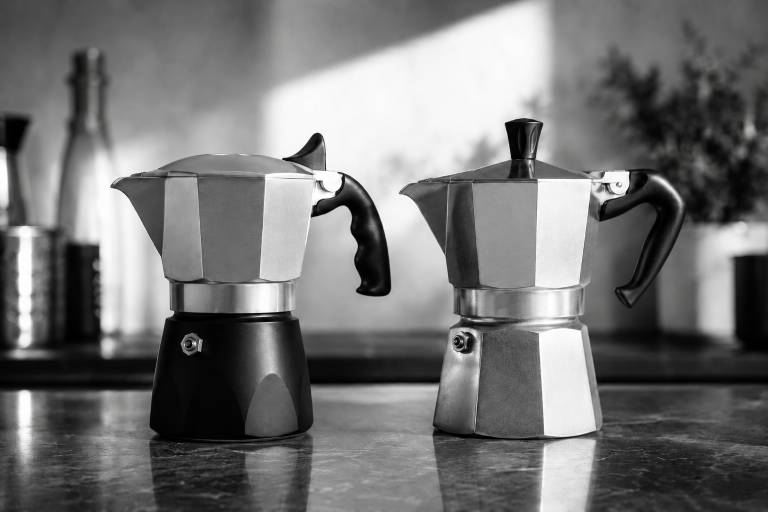
The Brikka sits next to the Moka Express on store shelves, wearing the same Bialetti logo and the same mustachioed little man, and at first glance the two pots look like siblings.
They share a stovetop brewing method, an aluminum body, and decades of Italian heritage behind them.
One difference sets them apart: a silicone pressure valve inside the Brikka that changes how water pushes through the coffee grounds, how fast the brew finishes, and what lands in your cup.
That single valve creates a split between a pot built for speed and crema and a pot built for simplicity and range.
Everything below breaks down exactly where these two models separate, where they overlap, and which one fits the way you actually make coffee at home.
Quick Answer
The Moka Express is the better pick for most home brewers: it comes in eight sizes, costs less, and produces bold, full-bodied coffee with almost no learning curve.
Choose the Brikka if you want a frothy crema layer on your stovetop coffee and prefer medium-to-dark roasts brewed in small batches of 2 or 4 cups.

- The original moka coffee pot: Moka Express is the original stovetop espresso maker, it provides the…
- Made in Italy: it is Made in Italy and its quality is enhanced by the patented safety valve which…


- Thick Crema for a Rich Espresso: Bialetti Brikka is the only stovetop espresso maker delivering an…
- Easy Coffee Preparation: Use the measuring cup, fill the boiler with water, add coffee to the…
How the Brikka and Moka Express Brew Coffee Differently
The Moka Express uses the same three-chamber system Bialetti introduced in 1933: water heats in the bottom chamber, steam pressure forces it up through a basket of ground coffee, and the finished brew collects in the top chamber.
Pressure inside a standard Moka Express reaches roughly 1 to 1.5 bar, enough to push water through the grounds but not enough to generate real crema.
The Brikka adds a weighted silicone valve at the top of the upper funnel that blocks the coffee from flowing until pressure builds higher than a standard moka pot allows.
Once that threshold breaks, coffee bursts through the valve in a short, forceful surge that traps oils and air into a foamy layer on the surface.
This mechanism mirrors the pressurized filter baskets that home espresso machines have used since the 1990s, restricting output flow to simulate the crema you would get from a commercial portafilter.
In a timed comparison using two-cup models on the same burner, the Brikka finished in about 2 minutes and 36 seconds, and the Moka Express finished in about 3 minutes and 50 seconds.
That speed gap comes directly from the valve: the Brikka holds back the brew under building pressure, then releases it all at once, and the Moka Express lets coffee trickle up gradually.
Beginner Note You do not need to tamp the coffee grounds in either brewer. Fill the filter basket evenly, keep the grounds level, and avoid pressing down.
Coffee Flavor and Crema Compared
The flavor difference between these two pots is more than cosmetic.
Brikka coffee tastes denser and more concentrated: the valve forces water through the grounds under higher pressure before releasing it, extracting more dissolved solids in a shorter window.
Moka Express coffee tastes bolder in a different way: the slower, gentler extraction pulls more of the roast’s body and bitterness forward, producing a cup closer to strong drip coffee than to espresso.
Crema on the Brikka is visible and frothy, sitting on top of the shot for 30 to 60 seconds before thinning out.
It looks like espresso crema at a glance, but the texture is more bubbly and less persistent than what a 9-bar or 15-bar pump machine produces.
The Moka Express produces little to no crema at all, with maybe a thin ring of foam around the edges of the cup on a good brew.
For milk drinks like lattes and cappuccinos, the Brikka’s concentrated, crema-topped output works well as a base, since its intensity holds up when mixed with steamed milk.
The Moka Express works better for drinkers who prefer their coffee black and appreciate a wide range of flavor notes from lighter roasts.
Grind consistency matters more in the Brikka than in the Moka Express, so investing in a decent burr grinder pays off faster with the pressure-valve brewer.
| Feature | Brikka | Moka Express |
|---|---|---|
| Crema | Thick, visible, lasts 30-60 seconds | Minimal to none |
| Body | Dense, concentrated | Bold, full-bodied |
| Extraction style | Higher pressure, fast release | Gradual, slower percolation |
| Best black or with milk? | Strong base for milk drinks | Better for black coffee |
Sizes, Stovetop Compatibility, and Portability
Size range is one of the biggest practical differences between these two brewers.
The Moka Express ships in eight sizes: 1-cup, 2-cup, 3-cup, 4-cup, 6-cup, 9-cup, 12-cup, and 18-cup, with each “cup” equaling about 2 oz (60 ml) of brewed coffee.
The Brikka is limited to two sizes: a 2-cup model that produces about 3.4 oz (100 ml) and a 4-cup model that produces about 5.7 oz (170 ml).
If you regularly brew for three or more people, the Moka Express is the only option that can handle that volume in a single batch.
The Moka Express works on gas, electric, and ceramic stovetops but is not compatible with induction cooktops, since the body is aluminum.
The Brikka shares that aluminum construction and the same induction limitation: it requires an adapter plate (sold separately by Bialetti) to work on an induction hob.
Portability runs about even between the two pots since they share a similar footprint and weight in matching sizes.
The two-cup models from each line pack easily into a travel bag and work on camp stoves, making them solid options for coffee on the road.
Price tends to favor the Moka Express, which runs $25 to $40 depending on size, and the Brikka sits between $35 and $50 for its two available sizes.
That price gap narrows in the 2-cup and 4-cup range where the two models compete head to head.
The Moka Express line includes stainless steel options (like the Venus and the Moka Induction) for buyers who want something tougher than aluminum, but the Brikka is only available in aluminum.
Color choices tell a similar story: the Moka Express comes in silver, red, black, green, blue, and other finishes depending on the series, and the Brikka comes only in silver with a matte black base or all-black.
Build Quality and How Long Each Pot Lasts
Aluminum construction gives the Moka Express and the Brikka similar lifespans when maintained properly.
The Moka Express has fewer parts, which means fewer failure points: its three-piece design (lower chamber, filter basket, upper chamber) relies on a rubber gasket, a filter plate, and the safety valve.
The Brikka adds the silicone pressure valve assembly on top of that standard design, introducing one more component that could eventually need attention.
Bialetti sells replacement gaskets and filter plates for the Moka Express and the Brikka, and swapping them every 6 to 12 months keeps either pot performing well.
Handles on current versions of the Brikka use a burnproof thermoplastic design that sits comfortably in the hand even when the aluminum body is scorching hot.
Proper care of either model, including hand-washing only and complete drying before storage, can push the working life of either pot past a decade.
Cleaning and Maintenance for Each Model
Cleaning a Moka Express is as simple as disassembling the three pieces and rinsing each one under warm water after every use.
Bialetti recommends no soap and no dishwasher for either model, since detergents strip the seasoned layer inside the aluminum and can leave a residue that changes how the next brew tastes.
The Brikka’s cleaning routine adds one extra step: the silicone valve at the top of the upper chamber needs periodic inspection for trapped coffee residue or oil buildup.
You can unscrew the valve assembly by hand, rinse the silicone membrane, and wipe the surrounding metal clean before reassembling.
Descaling with a vinegar-and-water solution every few months keeps mineral deposits from building up inside the boiler, especially in hard-water areas.
Do Rinse all parts with warm water immediately after each use and let them air dry completely before reassembling.
Don’t Put either pot in the dishwasher, use steel wool on the aluminum, or store the pot with wet grounds still in the basket.
Stubborn stains on the aluminum body respond well to a paste of baking soda and water applied gently with a soft cloth.
Owners who brew daily should expect to replace the rubber gasket roughly once a year, since a worn seal lets steam escape and weakens the pressure that drives the brew.
A full breakdown of long-term upkeep lives in our guide on how to take care of a moka pot.
Which Roasts Work Best in Each Brewer
Roast selection plays a bigger role in flavor quality than most buyers expect when choosing between these two pots.
The Brikka’s higher-pressure extraction and concentrated output pair best with medium and dark roasts, especially blends that include some Robusta beans for extra body and crema stability.
Light roasts brewed in a Brikka can taste harsh and overly acidic, since the rapid, pressurized extraction amplifies brightness without giving the subtler flavors room to develop.
The Moka Express handles a wider roast spectrum more gracefully: its slower percolation pulls flavor evenly from light, medium, and dark beans, making it the more flexible brewer if you like rotating between different coffees.
A medium-fine grind works well in the Moka Express, and the Brikka performs best with a grind slightly finer than that, closer to what you would use for an espresso machine but not as powdery as true espresso grind.
- Brikka best roasts: Medium, medium-dark, dark, Italian blends with Robusta
- Moka Express best roasts: Light, medium, dark (all work, adjust grind to taste)
Common Brikka Problems and How to Fix Them
The most frequent complaint from new Brikka owners is weak or absent crema, which almost always traces back to the valve or the funnel rather than the coffee itself.
Some Brikka units ship with a funnel that has a tiny defect near the punch mark on the side wall, creating a small hole that lets water bypass the grounds and loop back into the lower chamber.
That leak drops internal pressure below the threshold needed to trigger the valve, and the brew comes out looking and tasting like a regular moka pot.
Replacing the funnel with a Bialetti spare funnel (available on Amazon and through Bialetti directly) fixes this problem immediately, since the replacement design eliminates the punch marks entirely.
In a pinch, a 6-cup Moka Express funnel can fit inside a 2-cup Brikka as a temporary workaround.
The silicone valve itself can stick after the first several uses, especially if coffee oils build up around the seal.
A quick rinse and gentle flex of the silicone membrane after each use prevents sticking, and if the valve feels stuck during brewing, a light shake of the pot can help it release.
Bialetti redesigned the valve completely in 2020, so reviews written before that date may describe problems that no longer apply to current production units.
If your Brikka produces coffee that tastes burnt or metallic, the issue is almost certainly heat management rather than the pot itself: reduce the stove setting to medium-low and remove the pot from the burner the instant the stream starts sputtering.
Over-tightening the upper chamber can cause the same kind of problems by compressing the gasket unevenly, which leads to uneven pressure and inconsistent crema.
Common Mistake Leaving the Brikka on the heat source after the coffee finishes flowing will burn the remaining liquid and scorch the grounds. Remove the pot from heat as soon as the flow sputters, or run the base under cold water to stop extraction instantly.
Which One Should You Choose?
The right pick depends on what you care about most in your morning cup.
Choose the Moka Express if you want a brewer that comes in every size from a solo shot to an 18-cup party pot, works with any roast, costs less upfront, and has been the default Italian kitchen coffee maker for over 90 years.
Its simplicity means fewer parts to clean, fewer parts to replace, and almost nothing that can go wrong mechanically.
Choose the Brikka if crema matters to you, if you drink medium-to-dark roasts almost exclusively, and if you brew in small batches of 2 or 4 cups.
The Brikka’s concentrated, crema-topped output makes a stronger base for lattes and cappuccinos than the Moka Express can deliver.
A higher caffeine punch per ounce and faster brew time sweeten the deal for anyone who wants the closest thing to espresso from a stovetop pot.
If you already own a Moka Express and wonder whether adding a Brikka is worth it, consider how often you drink milk-based coffee: daily latte drinkers will notice and appreciate the Brikka’s thicker output.
Black coffee purists who enjoy rotating through light and dark roasts will get more range from the Moka Express they already have.
Price should not be the deciding factor here, since the difference between the two pots in matching sizes is usually less than $15.
Pick the one that matches the coffee you actually drink, not the one with the more impressive-sounding feature list.
If neither the Brikka nor the Moka Express sounds right, you might prefer a completely different brewing method: see how the Moka pot compares to drip coffee, the Moka pot vs. Chemex, or the Moka pot vs. AeroPress for other options worth considering.