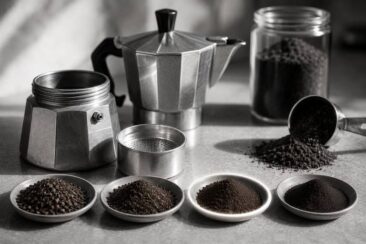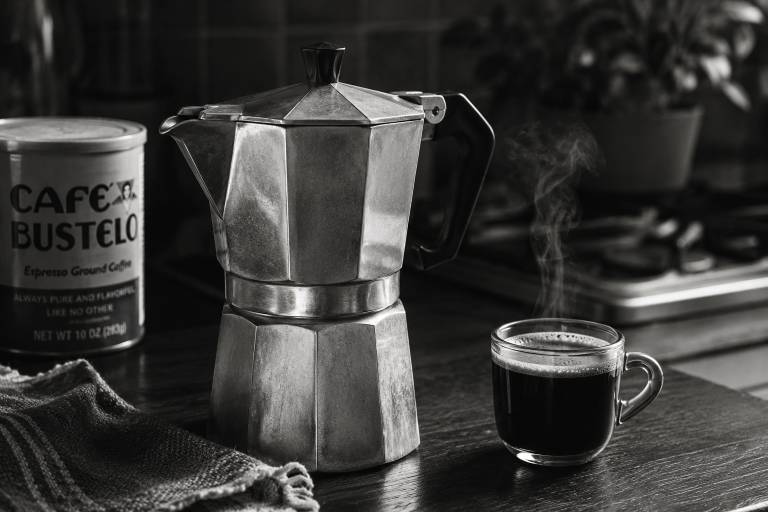
Café Bustelo ground coffee and a stovetop Moka Pot produce some of the thickest, most syrupy espresso-style coffee you can make at home for under a dollar a cup.
That deep bittersweet punch, somewhere between dark chocolate and toasted walnut, pours out of a $25 aluminum brewer in about five minutes flat.
This guide covers the full process from measuring your first scoop to pouring a finished cafecito, with fixes for the most common mistakes and two traditional recipes at the end.
Why Café Bustelo and a Moka Pot Belong Together
Gregorio Menéndez Bustelo, a Spanish immigrant born in the Asturias region of Spain, founded Café Bustelo in East Harlem, New York in 1928 after years spent traveling through Cuba and Latin America.
He brought back an espresso-style dark roast ground fine enough to brew in a small stovetop pot, and that pairing between a concentrated grind and a pressure-driven brewer has stayed at the center of the brand for nearly a century.
A Moka Pot works by heating water in a sealed bottom chamber until steam pressure forces it upward through a basket of tightly packed grounds and into a top collection chamber.
That pressure, roughly 1 to 2 bars compared to the 9 bars inside a commercial espresso machine, still creates a concentrated shot with a thin layer of golden espuma on the surface.
Café Bustelo’s pre-ground coffee ships at a fine, powdery consistency close to what a Moka Pot demands, so you can skip the grinder entirely and scoop straight from the can.
The combination delivers a cup that smells like a Cuban cafetería counter: smoky, caramel-edged, with a lingering roasted sweetness that clings to the inside of the cup long after you finish drinking.
Before you measure your first scoop, knowing which Café Bustelo blend to pick changes the flavor of your final cup more than any other single variable.
Café Bustelo Original vs Supreme for Moka Pot Brewing
The Original blend and the Supreme blend taste different from each other, and they respond to Moka Pot brewing in distinct ways.
| Café Bustelo Original | Café Bustelo Supreme | |
|---|---|---|
| Bean Type | Robusta and Arabica blend | 100% Arabica |
| Roast Level | Dark | Medium-dark |
| Flavor Profile | Heavy body, bitter bite, toasted tobacco and dark cocoa notes | Smoother body, lower bitterness, dried fruit and caramel notes |
| Caffeine Content | Higher (Robusta beans carry more caffeine) | Lower |
| Best For | Traditional cafecito with sugar, cortadito, strong espresso-style shots | Sipping black, café con leche, lighter palates |
| Moka Pot Behavior | Can turn harshly bitter if overheated; needs careful temperature control | More forgiving; less likely to over-extract |

- CONTAINS: One 11-oz. bag of Café Bustelo ground coffee
- DARK ROAST COFFEE: Smoky and complex with roasted notes

- Contains 1 – 32 oz. bag of Supreme Bustelo Whole Bean coffee.
- A medium dark roast coffee with exotic, roasted flavor and complex aroma.
Most grocery stores stock the Original blend in the recognizable yellow-and-red 10-ounce can, and it remains the standard choice for Cuban-style coffee.
The Supreme blend works better if you prefer drinking your Moka Pot coffee black, without sugar, and want a softer finish.
The Original’s Robusta content gives it a thicker crema-like foam when brewed in a Moka Pot, which is the foundation of the espuma you need for a proper cafecito.
Picking the right blend is the first decision; the steps that follow turn that choice into a finished cup.
Step by Step: Brewing Café Bustelo in a Moka Pot
Brewing Café Bustelo in a Moka Pot takes about five minutes once you have hot water ready, and the method stays the same whether you own a 3-cup or a 6-cup pot.
- Boil water separately in a kettle, then let it rest for 30 seconds until it drops to roughly 200°F (93°C). Starting with pre-heated water shortens the time the grounds sit on a hot stove, which prevents the scorched, ashy taste that comes from overheating fine coffee.
- Pour the hot water into the bottom chamber up to the line just below the safety valve. Going above that valve blocks the only pressure release the pot has, which can cause dangerous steam buildup.
- Fill the filter basket with Café Bustelo grounds until the coffee sits level with the rim of the basket. Spread the grounds flat with a finger or the back of a spoon, but do not press them down hard. Tamping too firmly restricts water flow and produces a choked, under-extracted shot that tastes sour rather than strong.
- Wipe any loose grounds off the rim of the filter basket and the threading of the bottom chamber. Stray grounds in the seal cause leaks and a weaker brew.
- Screw the top chamber on firmly using a towel or oven mitt to grip the hot bottom chamber.
- Set the Moka Pot on a burner at medium-low heat and leave the lid open so you can watch the coffee rise. A gentle, honey-colored stream means the temperature is right. A sputtering, pale spray means the heat is too high.
- Remove the pot from heat the moment you hear a gurgling, hissing sound. That noise signals the bottom chamber is nearly empty, and any coffee extracted after that point carries harsh, burnt flavors from superheated steam hitting dry grounds.
The entire brew should pour out in a steady stream over about 60 to 90 seconds once it starts flowing.
A rushed, violent eruption means your heat was too high; a slow drip that takes three or more minutes means the grind is packed too tightly or the flame is too low.
Getting those variables dialed in matters, and the next section covers the five mistakes that throw them off.
Five Mistakes That Ruin Your Café Bustelo Moka Pot Brew
Each of these errors changes the taste of your cup in a specific, recognizable way, so you can diagnose the problem by what you taste.
1. Using Cold Water in the Bottom Chamber
Cold water forces the Moka Pot to sit on the burner for an extra two to three minutes before brewing begins.
During that wait, the grounds bake inside the metal basket, releasing acrid compounds that turn the finished cup into something closer to burnt rubber than espresso.
Pre-boiling your water and letting it cool to about 200°F is the single biggest improvement most people can make to their Café Bustelo Moka Pot routine.
2. Grinding or Choosing Too Fine a Setting
Café Bustelo pre-ground coffee already sits at the fine end of the spectrum, right between true espresso and drip grind.
If you grind your own Café Bustelo whole beans and go finer than the pre-ground consistency, the water cannot push through the packed basket, and the pot chokes.
The result is a tiny amount of dark, oily liquid that tastes astringently bitter, like chewing on a coffee stem.
3. Overfilling the Filter Basket
Coffee piled above the rim of the basket gets pressed against the rubber gasket when you screw the chambers together.
That compressed ring of grounds blocks water from flowing evenly, and it channels all the pressure through one small gap instead of distributing it across the full bed.
You end up with a cup that is somehow sour and bitter at the same time, with a thin, watery body.
4. Brewing on High Heat
A Moka Pot on full blast pushes water through the grounds too fast, at a temperature well above 205°F.
At that speed, the water pulls out harsh tannic acids and overwhelms the caramel and chocolate notes you actually want.
Medium-low heat gives the water time to saturate the grounds evenly, pulling out the sweetness that makes Café Bustelo taste like dark toffee instead of charcoal.
5. Leaving the Pot on the Burner After Gurgling Starts
That hissing, sputtering sound at the end of the brew means the chamber is almost dry.
Any remaining water flashes into superheated steam and scorches the grounds, dumping a wave of smokiness into an otherwise clean cup.
Pulling the pot off the heat the second you hear that gurgle protects the last few drops of coffee from tasting like the bottom of a campfire percolator.
Avoiding these five errors gives you a clean, strong base to build on, and the two recipes below show you what to do with it.
Two Classic Recipes: Cafecito and Café con Leche
A straight Moka Pot shot of Café Bustelo is good on its own, but the two most traditional ways to drink it add sugar and milk in specific sequences that change the texture completely.
Cafecito (Cuban Espresso with Espuma)
This is the drink that made Café Bustelo famous in Miami ventanitas and East Harlem bodegas.
- Brew a 3-cup Moka Pot of Café Bustelo Original using the steps above.
- Place 2 to 3 tablespoons of white or raw sugar in a small metal pitcher or sturdy ceramic cup.
- As soon as the first drops of coffee trickle into the top chamber, pour about one tablespoon of that initial extract over the sugar.
- Beat the sugar and coffee together vigorously with a spoon for 60 to 90 seconds until the mixture turns into a pale, creamy foam called espuma.
- Once the Moka Pot finishes brewing, pour the remaining coffee over the espuma.
- Stir once, pour into demitasse cups, and serve immediately.
The espuma should float on top like a thick, tan cap, sweet and frothy against the dark, bittersweet espresso underneath.
Skipping the beating step and just stirring sugar into the finished coffee will dissolve the sweetness, but you lose that airy foam layer that defines a real cafecito.
Café con Leche
This recipe stretches a single Moka Pot brew into a larger, milder drink with a creamy sweetness that softens the roast’s sharper edges.
- Brew a 3-cup Moka Pot of Café Bustelo using the steps above.
- Prepare the espuma with sugar using the same technique from the cafecito recipe.
- Heat one cup of whole milk in a small saucepan until steaming but not boiling, roughly 150°F (65°C).
- Pour the brewed coffee into a large mug first, then add the hot milk.
- Top with espuma and stir gently.
The coffee should taste creamy and warm, with the Café Bustelo’s cocoa-like roast peeking through the milk rather than punching through it.
Pouring milk before coffee dilutes the espuma and produces a flat, washed-out drink, so the order matters.
These recipes turn a Moka Pot brew into a full café experience, and the cost of that experience might surprise you.
What a 10-Ounce Can of Café Bustelo Actually Costs You
A 10-ounce can of Café Bustelo Original retails between $6 and $10 at most grocery stores, depending on your region and whether you catch a sale.
That single can holds roughly 30 tablespoons of ground coffee.
A standard 3-cup Moka Pot brew uses about 3 tablespoons, meaning one can yields approximately 10 full Moka Pot brews.
At a $8 average purchase price, each brew costs you about $0.80.
Compare that to a single cafecito at a Miami ventanita, which runs $1.50 to $2.50, or a large café con leche, which can reach $5 to $6 at a sit-down café.
A 10-ounce can, paired with a Moka Pot that costs $20 to $40 and lasts for years, pays for itself within the first week of daily brewing.
The Moka Pot itself requires no paper filters, no pods, and no electricity beyond your stovetop, which makes it a strong base for lattes and other drinks with zero recurring costs beyond the coffee and milk.
Final Thoughts
Café Bustelo and a Moka Pot have worked together since long before specialty coffee shops lined every block, and the pairing still produces one of the most satisfying cups you can make at home.
Get the water hot before it touches the pot, keep the heat low, pull it off the stove at the first hiss, and you will taste dark chocolate and burnt caramel instead of ash.
The cafecito recipe alone, with its hand-whipped espuma and concentrated sweetness, is worth learning the method for.