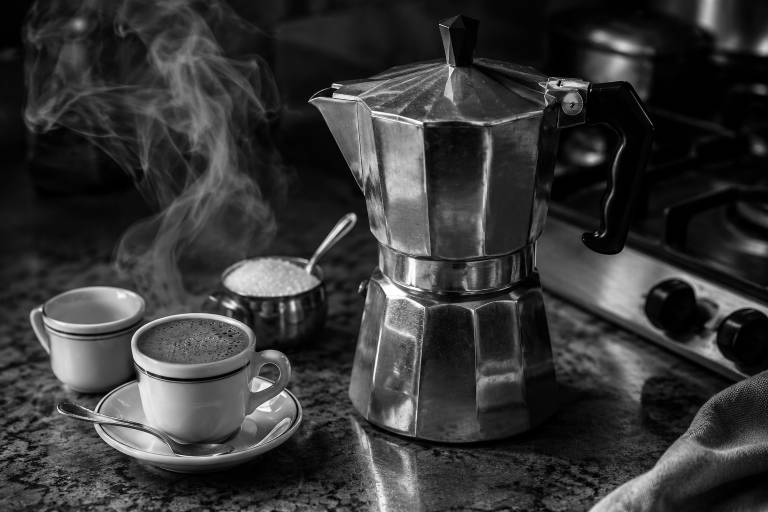
The first sip of a real cafecito hits your tongue with bittersweet, almost burnt-caramel intensity, followed by a syrupy sweetness that lingers for a full minute after you set down the cup.
Cuban coffee is more than a strong espresso shot poured over sugar.
It is a centuries-old ritual built around a stovetop moka pot, a handful of dark-roasted grounds, and a whipping technique that transforms plain white sugar into a golden foam called espumita.
This recipe guide walks through every step of making Cuban coffee in a moka pot at home, from choosing the right beans to troubleshooting a flat, foamless brew.
What Is Cuban Coffee and Why Does It Taste Different
Cuban coffee, called cafecito or café cubano, is a small, concentrated espresso-style drink sweetened during the brewing process rather than after.
That timing distinction matters: the first drops of brewed espresso are whisked with sugar when they are still scorching hot, which partially caramelizes the sucrose and produces a thick, tan-colored foam (espumita) that floats on top of the finished cup.
The result tastes noticeably sweeter and more full-bodied than a regular espresso with sugar stirred in at the table.
Coffee first arrived in Cuba in 1748, when José Antonio Gelabert planted the island’s first crop near Havana using seeds from Santo Domingo.
Production exploded after 1791, when French planters fleeing the Haitian Revolution settled in Cuba’s Sierra Maestra mountains and brought advanced cultivation techniques with them.
Cuban coffee culture evolved under economic constraints that limited access to dairy, which pushed home brewers toward sugar-based sweetening methods instead of milk.
The stovetop moka pot, created by Alfonso Bialetti in Italy in 1933, became the standard brewing device across Cuba, the Caribbean, and much of Latin America.
A moka pot forces steam-pressurized water (roughly 1 to 2 bar of pressure) upward through finely ground coffee, producing a dark, concentrated brew that sits between drip coffee and true espresso in strength.
That concentrated output is exactly what makes the espumita technique work, since weak coffee cannot dissolve enough sugar to create the foam.
A drip coffee maker will not produce the right concentration for a proper cafecito, which is why every recipe in this guide starts with a moka pot or stovetop espresso maker.
Once you understand the role of that pressure-driven brew, picking the right beans becomes the next decision.
Best Coffee Brands and Beans for Cuban Coffee
Dark roast beans ground to a fine or medium-fine consistency are the non-negotiable starting point for authentic café cubano.
Cuban coffee gets its signature bittersweet punch from a blend of Arabica and Robusta beans roasted until they are nearly black and oily on the surface, which strips away bright acidity and pushes forward smoky, chocolatey depth.
Three brands dominate kitchen counters across Miami and Cuban-American households:
| Brand | Roast Level | Bean Blend | Flavor Profile |
|---|---|---|---|
| Café Bustelo | Medium-dark | Arabica + Robusta | Bold, earthy, low acidity |
| La Llave | Dark | Arabica + Robusta | Smoky, intense, heavy body |
| Pilon Espresso | Dark | Arabica + Robusta | Bittersweet, slightly nutty |
Buying whole beans and grinding them yourself right before brewing produces the freshest, most aromatic cup.
If pre-ground is your only option, look for an espresso or “Cuban-style” grind on the label, which will be close to the fine texture needed for a moka pot.
Choosing between these brands is partly a matter of personal taste: La Llave runs the darkest and smokiest, Pilon sits in the middle with a rounder body, and Café Bustelo is the most widely available and slightly less intense.
All three produce good espumita, so let your palate and your grocery store’s shelf decide the rest.
The beans matter, but so does the rest of your setup.
Ingredients and Equipment You Need
A proper cafecito requires only three ingredients and a short list of tools you may already own.
Ingredients:
- Dark roast espresso-ground coffee (15 to 20 grams for a 3-cup moka pot)
- White granulated sugar (1 tablespoon per 2 demitasse servings)
- Filtered water (enough to fill the moka pot’s lower chamber to just below the safety valve)
Brown sugar and Demerara sugar work as substitutes and add a slightly deeper, molasses-edged sweetness, but white granulated sugar produces the lightest, most traditional espumita foam.
Equipment:
- Stovetop moka pot (3-cup or 6-cup)
- Small metal creamer cup or glass measuring cup (for whisking the espumita)
- Spoon
- Demitasse cups or small espresso cups
- Burr grinder (if using whole beans)
A creamer cup with a narrow base and tall walls gives you the best control for rapid whisking, which is the physical motion that builds the foam.
Skip the wide-mouth cereal bowl; the sugar-and-coffee mixture spreads too thin and never thickens.
With your tools and ingredients staged on the counter, the actual brewing process takes less than ten minutes from start to pour.
How to Make Cuban Coffee in a Moka Pot
Follow these steps in order, and pay close attention to the espumita timing in Step 5, which is the make-or-break moment of the entire recipe.
Step 1: Heat your water first.
Boil water in a kettle, then pour it into the moka pot’s lower chamber until it reaches just below the safety valve.
Starting with hot water prevents the moka pot from sitting on the stove too long, which overheats the grounds in the filter basket and produces a scorched, ashy taste.
Step 2: Fill the filter basket.
Spoon your finely ground coffee into the basket until it reaches the rim, then level it off with your finger.
Do not tamp or press the grounds down; compacting them blocks water flow, creates uneven pressure, and results in a bitter, over-extracted brew.
Step 3: Assemble the pot.
Using a towel to grip the hot lower chamber, screw the upper chamber on tightly.
A loose seal lets steam escape sideways instead of pushing through the grounds, which means weaker coffee and a louder, sputtering mess on your stovetop.
Step 4: Set the heat to medium.
Place the moka pot on a burner set to medium heat and leave the lid open so you can watch the coffee rise.
Cranking the heat to high forces water through the grounds too fast, under-extracts the coffee, and gives you a thin, sour shot instead of the thick, dark concentrate you need.
Step 5: Capture the first drops for espumita.
As the pot heats, measure 1 tablespoon of sugar into your creamer cup.
The moment you see the first dark drops of coffee bubble into the upper chamber, remove the pot from heat and pour about 1 teaspoon of that first concentrated coffee directly onto the sugar.
Return the moka pot to the burner immediately so the rest of the brew keeps flowing.
Step 6: Whisk the sugar and coffee.
Using the back of a spoon, beat the sugar and coffee drops together with fast, aggressive strokes for 60 to 90 seconds until the mixture turns into a pale, caramel-colored paste with the consistency of wet sand.
If it still looks grainy and dry after a minute, add another half-teaspoon of coffee and keep beating.
Step 7: Pour and combine.
Once the moka pot finishes brewing (you will hear a gurgling, hissing sound), slowly pour the remaining espresso over the sugar paste.
Stir gently, and the espumita will rise to the surface as a golden-tan foam layer about 3 to 5 millimeters thick.
Step 8: Serve immediately.
Pour the finished café cubano into demitasse cups and drink it within minutes, before the foam collapses and the crema loses its silky texture.
Getting the foam right is the part that separates a decent cup from a great one.
How to Make Espumita: The Signature Sugar Foam
Espumita is the golden crown that sits on top of every authentic cafecito, and getting it right takes practice plus a few specific details most recipes gloss over.
The technique works by combining sugar with the hottest, most concentrated drops of espresso, then aerating the mixture through rapid whisking until the sugar partially dissolves and traps tiny air bubbles in a thick paste.
Those trapped bubbles are what float to the surface when you add the rest of the coffee, creating a crema-like foam that looks and feels like the top of a pulled espresso shot.
Three variables control whether your espumita is thick and golden or thin and disappointing:
- Coffee concentration: The first drops out of a moka pot are the strongest. If you wait too long and pour mid-brew coffee onto the sugar, it is too diluted to dissolve and caramelize the sugar properly.
- Whisking speed and duration: You need at least 60 seconds of aggressive, rapid stirring. Gentle swirling will not incorporate enough air.
- Sugar-to-coffee ratio: One tablespoon of sugar to one teaspoon of first-drop espresso is the baseline. More sugar gives a sweeter, thicker foam; less gives a lighter cap.
A common beginner mistake is adding too much coffee to the sugar at once, which floods the mixture and turns it into sweet coffee liquid instead of a stiff paste.
Start with a single teaspoon of espresso, build the paste, and add more only if the texture refuses to thicken.
Once you can reliably produce a 3-millimeter foam cap, the remaining tips are about fine-tuning flavor and strength.
Tips for Brewing a Stronger Café Cubano
The difference between a flat, underwhelming cafecito and one that makes you close your eyes mid-sip usually comes down to ratios, heat control, and grind consistency.
Sugar-to-coffee ratio: The traditional Cuban ratio is 1 tablespoon of sugar for every 2 demitasse cups (about 60 ml of espresso).
If you prefer less sweetness, cut the sugar to 2 teaspoons, but going below that will thin out the espumita layer noticeably.
Coffee-to-water ratio: A 1:7 to 1:10 coffee-to-water ratio by weight produces the best results in a moka pot.
For a 3-cup pot, that means roughly 15 to 20 grams of ground coffee and 130 to 150 ml of water.
Going above 1:12 dilutes the brew enough that espumita formation becomes difficult.
Grind size: Aim for a fine to medium-fine grind, similar in texture to table salt.
Grinding too coarse lets water rush through the basket without extracting enough flavor, and your coffee will taste watery with a sour edge.
Heat management: Keep the burner at medium, never high.
For dark roasts specifically, water temperature in the range of 185 to 195°F (85 to 90°C) extracts the smoky, chocolatey notes without pulling out harsh, acrid bitterness.
Brew time: From the moment you place the pot on heat to the final gurgle, the entire brew should take 4 to 5 minutes.
If it finishes in under 2 minutes, your heat is too high and the extraction is too shallow.
A kitchen timer is worth keeping next to the stove until you develop an instinct for the timing.
Even experienced brewers run into problems, and the next section covers the most frequent ones.
Common Cuban Coffee Mistakes and How to Fix Them
Every café cubano failure can usually be traced to one of these five errors, each with a straightforward correction.
| Mistake | What Happens | Fix |
|---|---|---|
| Tamping the coffee in the basket | Water cannot pass through evenly; brew is bitter and sputtery | Fill and level with your finger, never press down |
| Using cold water in the lower chamber | Grounds overheat as the water slowly heats to boil; burnt, ashy taste | Start with pre-boiled water from a kettle |
| Pouring mid-brew coffee onto sugar | Espumita stays thin and watery; the coffee is too diluted at that point | Capture only the very first teaspoon of concentrated drops |
| Heat set too high | Coffee brews in under 2 minutes; thin, sour, under-extracted | Medium heat, 4 to 5 minute total brew time |
| Letting the pot gurgle for too long | The final sputtering steam pushes bitter compounds into the upper chamber | Remove from heat the moment you hear a sustained hissing or gurgling |
If your espumita still refuses to thicken after fixing these issues, try switching sugar brands.
Some very coarse or raw cane sugars resist dissolving quickly enough, and fine white granulated sugar from any standard grocery brand performs the most reliably.
Once your base cafecito is consistently good, the variations below open up a wider range of Cuban coffee drinks using the same moka pot brew.
Cuban Coffee Variations Worth Trying
The cafecito is the foundation, but Cuban coffee culture builds at least four distinct drinks on top of that same dark, sweet base, and a moka pot handles all of them using the same traditional recipes.
Café Con Leche
This is the everyday breakfast drink across Cuba: a strong shot of Cuban espresso combined with an equal part of hot, steamed whole milk, sweetened to taste.
Pour your moka pot brew into a large mug, heat milk on the stove until it steams (around 150°F / 65°C), and combine them in a 1:1 ratio.
The milk transforms the sharp bitterness into something that tastes closer to a smoky, sweet latte with a heavier body.
Cortadito
A cortadito is a single shot of cafecito “cut” (cortado in Spanish) with a small splash of steamed whole milk, served in a demitasse cup.
The milk-to-coffee ratio is roughly 1:3, just enough to soften the bite without diluting the espumita layer.
This is the standard mid-morning or post-lunch pick-me-up in Cuban households.
Café Bombón
Café bombón replaces milk with sweetened condensed milk in a 1:1 ratio, creating a dessert-like drink with a thick, creamy texture and a caramel-toffee sweetness that coats your entire mouth.
Pour the warmed condensed milk into a clear glass first, then slowly add the brewed espresso on top to create a dramatic two-tone layered effect.
Colada
A colada is Cuban coffee made for sharing: a larger batch of cafecito brewed in a 6-cup moka pot, poured into a tall cup (traditionally a styrofoam cup in Miami), and served alongside small plastic tacita cups so everyone can pour their own shot.
The sugar ratio runs slightly higher for a colada, roughly 2 tablespoons of sugar for a 6-cup pot, since the flavor needs to stay bold after dividing it among four to six people.
Coladas are a social ritual more than a recipe; in South Florida, picking one up from a ventanita (walk-up coffee window) and sharing it with coworkers is an afternoon tradition that has survived for decades.
With a batch of coffee brewed and shared, the question of leftover storage comes up more often than you might expect.
How to Store Leftover Cuban Coffee
Brewed Cuban coffee does not hold well at room temperature or in the refrigerator.
After about 30 minutes, the sugars in the espumita begin to break down, the foam collapses entirely, and the coffee develops a stale, metallic bitterness that no amount of reheating can fix.
The best rescue for leftover café cubano is to pour it into ice cube trays and freeze it immediately.
Those coffee cubes can then go into a glass of cold milk for an instant iced café con leche, or into a blender with milk and ice for a Cuban-style coffee shake.
Never reheat day-old cafecito on the stove; the sugar scorches at the bottom of the pot and the entire cup tastes burnt.
If you know you will brew more than you can drink, make a colada-sized batch and freeze the surplus right away, when the flavor is still at its peak.
Final Thoughts
A good cafecito starts with dark, oily beans ground fine, brewed through a moka pot at medium heat, and finished with an espumita that took a full minute of aggressive whisking to build.
Invest in a 3-cup Bialetti, a bag of La Llave or Café Bustelo, and a small creamer cup, and you have everything needed to produce the same thick, sweet, golden-capped cafecito that has been poured in Cuban kitchens for generations.
Try the base recipe twice before adjusting the sugar ratio, and keep the creamer cup close: the window between the first concentrated drops and a diluted mid-brew pour is only a few seconds.