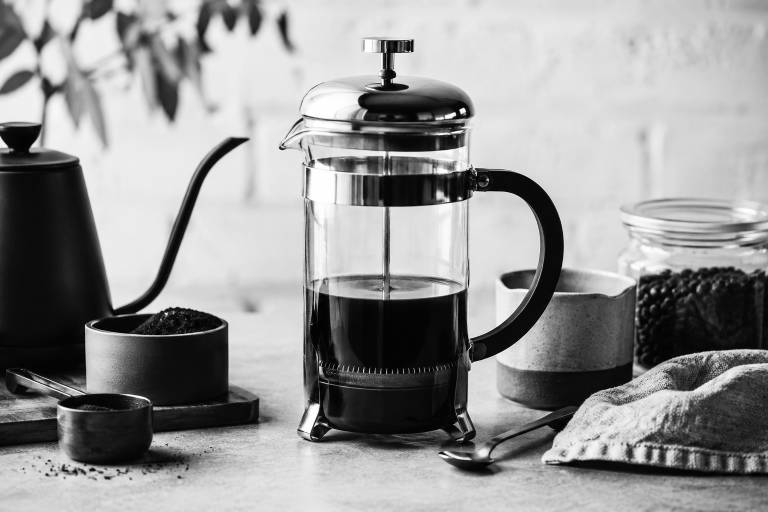
A French press can produce a cup as clean as any pour-over, or it can leave grit at the bottom of every mug.
The difference rarely comes down to the coffee itself.
It comes down to a handful of french press habits that separate a bright, clear cup from a muddy one.
Below are eight french press habits worth building into your routine, starting with the grind.
Quick Answer
The cleanest French press cups come from a coarse, even grind, a 1:15 coffee to water ratio, a short bloom, and a slow plunge followed by an immediate pour.
Skipping any one of these steps, especially decanting right away, lets fine particles and oils keep extracting and turns a clean cup bitter or gritty within minutes.
The eight habits below cover grind size through cleaning, so a full brew routine change isn’t necessary, just a few adjustments.
1. Grind Coarse and Keep the Particles Even
Grind size decides more about your final cup than any other single variable in French press brewing.
Aim for grounds the texture of coarse sea salt or rough breadcrumbs, not sand.
A burr grinder produces this even texture; a blade grinder chops beans unevenly, leaving large chunks and coffee dust in the same batch.
On a Baratza Encore, a setting between 28 and 32 lands in the right range for most French press brewers.
Skip this step and even a careful ratio can’t rescue the cup, since fine grounds turn bitter within the first minute of contact.
Quick Tip Test your grind by rubbing a pinch between your fingers. It should feel gritty and coarse, never powdery or smooth.
2. Set a Coffee to Water Ratio and Weigh It
A French press without a set ratio turns into guesswork, and guesswork swings the cup between watery and harsh from one morning to the next.
A 1:15 ratio of coffee to water gives a balanced starting point for most roasts, meaning 30 grams of coffee for 450 grams of water.
A kitchen scale removes the doubt that a measuring spoon can’t fix.
Coffee lovers who want a bolder cup can tighten the ratio to 1:12, and those who want something lighter can loosen it to 1:17.
| Water | Coffee | Roughly Serves |
|---|---|---|
| 350g | 23g | 1 large mug |
| 450g | 30g | 2 mugs |
| 900g | 60g | 4 mugs |
3. Bloom the Grounds Before the Full Pour
Fresh coffee releases carbon dioxide the moment hot water touches it, and that gas pushes water away from the grounds instead of letting it soak in.
Pour about twice the weight of the coffee in water first, just enough to soak every ground.
Let that first pour sit for 30 to 40 seconds before adding the rest.
Watch the surface swell and bubble during this pause; that reaction is the coffee degassing.
Give the grounds one gentle stir with a chopstick or spoon so no dry clumps float above the waterline.
Pour in the remaining water once the bloom settles and start the full steep.
Common Mistake Pouring all the water in at once. Skipping the bloom traps carbon dioxide against the grounds and blocks even extraction, leaving some particles sour and others over-extracted.
4. Steep at the Right Temperature for Four Minutes
Water between 195°F and 205°F pulls sugar and oil out of the grounds without scorching the surface.
Bring your kettle to a full boil, then let it rest for 30 seconds before pouring; that short pause drops the water into range without a thermometer.
Four minutes gives most medium roasts enough contact time to develop full flavor.
Set a timer instead of guessing, since a rushed steep tastes thin and a long one turns bitter fast.
- Water at a full rolling boil: risks scorching delicate aromatics.
- Water under 195°F: the cup tastes flat and sour.
- Water over 205°F: the cup tastes scorched and harsh.
- Water in the 195 to 205°F range: the cup tastes balanced and sweet.
5. Keep the Lid On During the Steep
Set the lid on top with the plunger pulled all the way up as soon as the bloom finishes.
A covered French press loses heat far slower than an open one, and steady heat keeps extraction even from the first minute to the last.
Glass presses lose warmth fastest, often ten degrees or more within the first fifteen minutes.
A towel wrap or cozy helps if your kitchen runs cold and you’re brewing in a glass carafe.
Stainless steel double-walled presses hold their heat far longer and rarely need any extra wrap.
Quick Tip If your coffee tastes different in winter than summer, heat loss during the steep is often the reason. A double-walled press fixes this year-round.
6. Skim the Crust Before You Press
A layer of foam and floating grounds forms on top of the coffee by the time four minutes pass.
Break that crust gently with a spoon, then skim off as much foam and loose grounds as you can reach.
This single habit removes a good share of the fine particles that would otherwise slip through the mesh and cloud your cup.
It takes under fifteen seconds and makes a visible difference in how clear the coffee looks once it’s poured.
Beginner Note Skimming is optional if you already decant into a separate carafe, since a slow pour leaves most of the crust behind in the press.
7. Plunge Slowly, Then Decant Immediately
Push the plunger down over 15 to 20 seconds with steady, gentle pressure, not a hard shove.
A fast plunge stirs up the fines that settled at the bottom and forces them back through the mesh into your cup.
Strong resistance under the plunger usually means the grind ran too fine.
Almost no resistance usually means the grind ran too coarse.
Pour every drop of finished coffee into a carafe or your mug within moments of pressing, and leave the grounds behind in the press.
Coffee left sitting on the grounds keeps extracting, and within ten minutes the same cup that tasted balanced turns dry and bitter.
Do:
- Press slowly and evenly.
- Decant into a separate vessel right away.
Don’t:
- Force the plunger down fast.
- Let coffee sit on the grounds after pressing.
8. Clean the Filter Assembly After Every Brew
Coffee oil clings to the mesh screen and the walls of the carafe after every brew.
Left alone, that oil turns rancid within a week or two.
That rancid film is the reason a French press that tastes fine on Monday can taste muddy and stale by Friday, even with fresh beans.
Take the plunger apart down to its screens after each use and rinse every layer under warm water.
A quick daily rinse keeps the deeper cleaning sessions short and easy.
| Frequency | Task |
|---|---|
| Every use | Rinse and wash all parts with mild soap |
| Weekly | Take the mesh screen apart and scrub it |
| Monthly | Soak the filter assembly in a vinegar and water solution |
When to Replace Swap the mesh filter once it looks bent, rusted, or lets a noticeably larger amount of grit through than it used to. Most daily users replace it every six to twelve months.
Which Habit Should You Build First?
None of these french press habits demands new equipment or a big change to your morning.
Start with grind size and the ratio, since those two carry the most weight on their own.
Add the bloom, the lid, and plunge speed once the basics feel automatic, and the sediment problem disappears layer by layer.