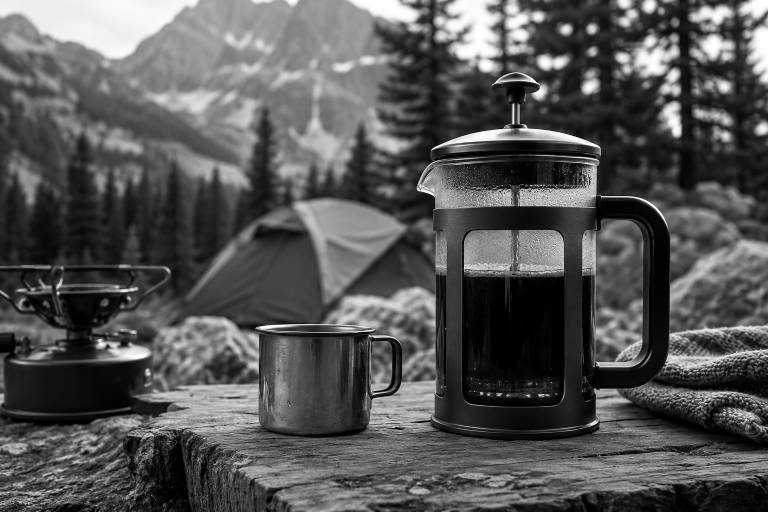
Morning air smells different at a campsite, sharper and cooler, and the first sip of strong coffee tastes better with pine needles underfoot than it ever does at a kitchen counter.
A french press remains one of the simplest, most reliable ways to brew rich coffee outdoors, with no electricity, no paper filters, and no moving parts that break on a rocky trail.
Finding the best french press for camping means matching your brewer to the way you actually travel, whether you car camp with a full cooler or hike every ounce into the backcountry.
Quick Answer
The best french press for camping is a stainless steel or titanium model built to survive drops, temperature swings, and backcountry abuse. For car camping, a double wall insulated press like the Stanley Classic Stay Hot (48 oz, $42 on sale) keeps coffee warm for hours. For backpacking, the Planetary Design Ovrlndr (14 oz empty, 24 oz capacity) or a titanium pot-press combo under 8 oz saves serious pack weight.
Read on for full product breakdowns, brewing instructions for camp conditions, and the grind and water tricks that separate a great cup from a bitter one.
Why a French Press Beats Other Camping Coffee Methods
A percolator recycles boiling water through the grounds over and over, and that repeated extraction at 212°F pulls harsh, bitter compounds that overwhelm the coffee’s natural sweetness.
Pour-over setups make a clean cup, but they demand disposable paper filters, a gooseneck pour, and a steady hand in the wind.
Instant coffee dissolves in 10 seconds and tastes exactly the way that speed implies.
A french press brews by full immersion at a controlled temperature, letting the grounds steep for 4 minutes in water around 200°F before a metal mesh filter separates them.
That immersion method preserves the coffee’s natural oils, giving the cup a heavier, richer body than any drip or percolator can produce.
The brewer needs no electricity, no special attachments, and no consumables you can run out of on day three.
Quick Tip A french press produces zero waste beyond spent grounds, which can be scattered at least 200 feet from water sources per Leave No Trace guidelines.
Your only real cost is the press itself, and a good camping model lasts years of rough trips before anything wears out.
What Separates a Camping French Press from a Home Model
A home french press sits on a countertop, brews into a glass carafe, and never leaves the kitchen.
A camping french press gets tossed into a pack, dropped on gravel, heated with water boiled over an open flame, and cleaned with whatever limited water you have.
Glass shatters on the first fall, so outdoor models swap that fragile carafe for shatter-resistant copolyester or stainless steel.
Insulation matters more at 6,000 feet on a 40°F morning than it does in a heated kitchen, which is why double wall construction exists on nearly every serious camp model.
Weight counts: a 2.5-pound Stanley is nothing in a truck bed but punishing in a 30-liter pack.
Cleanup design separates the good models from the frustrating ones, with removable bottoms and wide mouths making the difference between a 30-second rinse and a 10-minute ordeal.
Handle ergonomics matter more at a campsite than at home, as cold fingers and wet hands make a slippery or thin grip dangerous when pouring near-boiling coffee.
| Feature | Home French Press | Camping French Press |
|---|---|---|
| Carafe material | Borosilicate glass | Stainless steel, titanium, or copolyester |
| Weight | 1.5 to 3 lbs | 0.5 to 2.5 lbs (varies by model) |
| Insulation | Rarely insulated | Double wall or vacuum insulated |
| Durability | Breaks on first drop | Built to survive falls on rock |
| Cleanup | Sink and dish soap | Quick rinse, removable parts, minimal water |
Best French Press Models for Car Camping
Car camping removes the weight constraint, and the best french press for camping at a drive-in site prioritizes brew quality, heat retention, and serving capacity.

- PERFECT YOUR BREW: For best results, use a medium-coarse grind, the proper coffee-to-water ratio…
- MAKE NOW, DRINK LATER: Designed with double vacuum insulation, this French Press not only allows you…

Stanley Classic Stay Hot French Press (48 oz) holds enough coffee for four people and keeps it hot up to 4 hours with double vacuum insulation and an 18/8 stainless steel body.
That 48-ounce capacity means you brew once and pour for the whole group, instead of running multiple batches on a camp stove.
The press weighs 2.5 pounds and measures about 7 by 5 by 9.5 inches, which fits comfortably in a camp kitchen bin or truck bed organizer.
At $42 on sale (regular $70), it costs less per ounce of capacity than most competitors.

- Rich, Full-Bodied Flavor: Brew up to 34 ounces of smooth, bold coffee or tea with a double-filter…
- Perfect for Any Lifestyle: Whether you’re a busy professional, a student, or an eco-conscious…
Secura 34 oz Stainless Steel French Press uses a 3-layer stainless steel filter system that catches fine grounds better than most single-mesh screens.
Double wall construction in 18/10 stainless steel keeps coffee noticeably warmer than single-wall models, holding temperature about 60 minutes longer than a glass press.
The cool-touch handle stays safe to grip right after pouring boiling water inside, and the whole press disassembles for dishwasher cleaning back home.
Common Mistake Never place a standard french press directly on a campfire or stove burner. Only models labeled “stovetop safe” can handle direct flame contact. Putting a non-stovetop model on heat will warp the walls or melt plastic components.
Top Picks for Backpacking and Ultralight Travel
Every gram matters when you carry your shelter, food, and water on your back, and the best french press for camping with a loaded pack looks nothing like a car camping model.

- PATENTED TECHNOLOGY – Planetary Design’s Bru-Stop technology features a tempered steel plate resting…
- KEEP YOUR COFFEE HOT – Featuring a double-wall, vacuum-insulated stainless steel body, and a…
Planetary Design Ovrlndr (24 oz) weighs 14 ounces empty and uses double wall vacuum insulation in 18/8 stainless steel to keep coffee hot for hours on the trail.
The patented Bru-Stop plunger halts extraction the moment you press down, preventing the bitter over-extraction that happens when coffee sits on grounds in a standard press.
A removable bottom twists off, letting you dump spent grounds and rinse the interior in seconds, a major advantage when water is scarce.
At around $58, it costs more than budget steel presses, but the insulation and cleanup design justify the price for frequent trail use.

- Premium Titanium Material: TA1 high quality titanium alloy construction ensures the camping pot will…
- Ultralight and Portable Design: Engineered for backpackers, this 750ml pot weighs only 220g and…
Bestargot 750ml Titanium Camping Pot drops weight to just 220 grams (7.8 oz) and serves triple duty as a french press, cooking pot, and storage container.
Titanium transfers zero metallic taste to your coffee, a real advantage when brewing light roasts that expose every off-flavor.
The pot goes directly over a camp stove flame, so you heat water and brew in the same vessel without carrying a separate kettle.
A 750ml capacity brews roughly 25 ounces, enough for one or two people.

- Vacuum-insulated, double-wall carafe and pour-through lid provide amazing heat retention to keep…
- Silicone ring plunger design virtually eliminates coffee ‘blow-by’ for the most flavorful, mud-free…
GSI Outdoors JavaPress (30 oz) uses a BPA-free, shatter-resistant copolyester carafe wrapped in a ballistic nylon sleeve that adds insulation and grip.
At 10.2 ounces, it sits between titanium ultralight presses and heavier stainless steel models.
The patented silicone ring plunger creates a tight seal against the carafe wall, catching fine grounds that slip through standard metal mesh.
The included nesting mug and sip-through lid make the JavaPress a full coffee system rather than just a brewer.
| Model | Weight | Capacity | Material | Insulated | Stovetop Safe | Price Range |
|---|---|---|---|---|---|---|
| Planetary Design Ovrlndr | 14 oz | 24 oz | 18/8 Stainless Steel | Yes (vacuum) | No | ~$58 |
| Bestargot Titanium Pot | 7.8 oz | 25 oz (750ml) | Titanium | No | Yes | ~$40-50 |
| GSI Outdoors JavaPress 30 oz | 10.2 oz | 30 oz | Copolyester | Partial (sleeve) | No | ~$30-40 |
Stainless Steel or Titanium: Which Material Holds Up Outdoors
Choosing the best french press for camping starts with the material, and stainless steel (usually 18/8 or 18/10 grade) resists rust, survives drops, and costs 40 to 60 percent less than titanium at comparable capacities.
A 34-ounce stainless press runs $25 to $45, putting quality outdoor coffee within reach for casual campers.
The tradeoff is weight: a stainless steel press at 34 ounces of capacity can weigh 1.5 to 2.5 pounds, a load that adds up across a multi-day hike.
Titanium shaves that weight dramatically, with the Bestargot 750ml pot weighing just 7.8 ounces, roughly the same as two granola bars.
That strength-to-weight advantage comes from titanium’s density, about 40 percent lighter than steel at equal wall thickness.
Titanium is chemically inert, so it will not leach flavors into your brew or corrode after years of campfire use.
Prices for titanium presses start around $40 and climb past $60 for models with accessories, making them a bigger upfront investment.
- Choose stainless steel if you car camp, share with a group, or want maximum brew volume at the lowest price
- Choose titanium if you backpack frequently, count ounces in your pack, and brew for one or two people
How Insulation Changes Your Coffee Experience at Camp
Insulation performance can make or break your pick for the best french press for camping, and an uninsulated press on a 45°F morning loses drinkable heat within 20 to 30 minutes.
A double wall insulated press holds temperature noticeably longer, stretching that window to roughly 60 to 90 minutes depending on ambient temperature.
Vacuum insulation, the same technology in a Thermos, pushes that to 2 to 4 hours, meaning you can brew at sunrise and still pour a warm cup after breaking down your tent.
The Stanley Classic Stay Hot model is the clearest example, keeping 48 ounces of coffee at a drinkable temperature for up to 4 hours in real-world outdoor conditions.
That insulation adds weight and cost, so solo hikers covering 15 miles a day may prefer to brew, drink immediately, and carry a lighter non-insulated titanium model.
For car campers, van lifers, and base camp setups, insulation pays for itself the first time you sip a hot second cup 90 minutes after brewing.
The feel of a warm steel mug on a frosty morning is one of those small campsite comforts that turns an ordinary trip into a good one.
Double wall construction adds roughly 3 to 6 ounces of weight over a single wall press of the same capacity, a tradeoff most car campers accept without hesitation.
How to Brew Great French Press Coffee at a Campsite
The campsite brewing process follows the same principles as home brewing, with a few practical adjustments for limited gear and variable conditions.
Heat your water to 200 to 205°F, which is about 30 to 45 seconds off a full boil.
Pouring water at a full rolling boil (212°F) onto the grounds scorches them and pulls bitter, sharp flavors within the first minute of steeping.
Add one rounded tablespoon of coarsely ground coffee per 4 ounces of water, a ratio close to 1:15 by weight.
Pour a small amount of hot water over the grounds first, just enough to wet them, and let them bloom for 30 seconds.
That bloom releases trapped carbon dioxide from the roasting process and prepares the grounds for even extraction.
Fill the press with the remaining water, place the lid on with the plunger pulled up, and wait 4 minutes.
Press the plunger down slowly with steady, even pressure.
If the plunger feels stuck or too tight, lift it slightly to break the vacuum seal and try again with a gentler push.
Pour the coffee into mugs immediately, as brewed coffee sitting on the pressed grounds will continue extracting bitter compounds.
A camp brewing checklist keeps morning chaos under control:
- [ ] Boil water and let it cool 30 to 45 seconds
- [ ] Add coarse grounds (1 tablespoon per 4 oz water)
- [ ] Pour a small bloom, wait 30 seconds
- [ ] Fill the press and steep for 4 minutes
- [ ] Press slowly, pour right away
- [ ] Rinse the press before grounds dry and stick
The Right Grind Size for Best French Press for Camping Coffee
Grind size controls extraction speed, and choosing the wrong size will undermine even the best french press for camping within a single brew.
Coarse grounds, about the texture of coarse sea salt, work best for a 4-minute french press steep.
A finer grind over-extracts in that same 4 minutes, pulling out the harsh, ashy, bitter compounds that hide behind the pleasant flavors.
Fine grounds can pass through the mesh filter screen, leaving a muddy, gritty sludge at the bottom of your mug.
A coarser grind extracts more slowly, which is why you steep for a full 4 minutes instead of the 2 to 3 minutes that a drip-size grind would need.
Pre-ground coffee from a grocery store is almost always medium grind, sized for drip machines, and that grind can still work in a french press with a shorter steep of about 3 minutes.
If you grind your own beans, set your burr grinder to the coarsest setting and adjust from there.
The sound of a hand grinder cranking through coarse-set beans has a satisfying, rhythmic crunch that tells you the particle size is right.
Blade grinders chop beans unevenly, creating a mix of dust and chunks that extracts at wildly different rates in the same brew.
Do / Don’t
Do use a coarse grind resembling coarse sea salt for a 4-minute steep.
Don’t use espresso-fine or drip-fine grounds in a french press, as they over-extract and clog the filter.
Should You Bring a Portable Hand Grinder to Camp
Pre-ground coffee is convenient, but it starts losing aroma and flavor within days of grinding.
Whole beans sealed in an airtight bag stay fresh for weeks, which matters on a 5-day trip where your Day 1 coffee and Day 5 coffee should taste equally good.
A portable hand grinder with a conical burr produces the consistent coarse particles that a french press needs for clean extraction.
Most camping hand grinders weigh between 6 and 12 ounces and fit inside a french press or a pack pocket.
Models like the JavaPresse Manual Grinder offer 18 adjustable grind settings and cost around $25 to $40, adding minimal weight for a major flavor upgrade.
Cleaning Your French Press in the Backcountry
Cleanup is the part of outdoor coffee brewing that nobody enjoys, and it is the step most campers skip or do poorly.
Dump the spent grounds into a trash bag or scatter them at least 200 feet from any water source, following Leave No Trace principles.
Never dump coffee grounds into a stream, lake, or river, as even biodegradable organic matter alters water chemistry in small alpine waterways.
Swirl a few ounces of clean water inside the press to loosen any remaining grounds, pour the slurry into a strainer or trash bag, and rinse again.
A removable-bottom design, like the one on the Planetary Design Ovrlndr, makes this step dramatically easier by letting you twist off the base and push grounds out directly.
If your press has a mesh filter that disassembles, pull it apart after every 3 to 4 uses and scrub with a small camp brush and a drop of biodegradable soap.
Coffee oils build up on stainless steel mesh over time, turning rancid and giving your next brew a stale, sour taste.
On shorter trips with limited water, a dry wipe with a paper towel or bandana removes most grounds and oils until you can do a full rinse back home.
Letting any french press air dry fully before packing it away prevents mold growth inside sealed bags or packs.
Stainless steel filters last about 1 to 2 years with regular camping use before the mesh loosens enough to let grounds through consistently.
Common Mistakes That Ruin Camp French Press Coffee
The most frequent error is pouring boiling water straight from the pot onto the grounds.
Water at 212°F extracts bitter tannins and astringent acids almost instantly, overpowering the smoother, sweeter flavors that emerge at 200 to 205°F.
Waiting just 30 to 45 seconds after a boil drops the temperature into that ideal range.
The second mistake is leaving brewed coffee sitting on the pressed grounds.
Pressed grounds still contact the liquid below the filter, and that continued extraction after 6, 8, or 10 minutes makes the cup progressively more bitter with each passing minute.
Pour all the coffee into a separate container or mugs as soon as you press the plunger down.
Using too fine a grind ranks third, turning the brew muddy and harsh, and the plunger becomes difficult to press down, sometimes enough to crack a glass carafe under force.
Neglecting cleanup comes fourth, as dried coffee oils on the mesh filter carry a rancid flavor into the next brew, no matter how fresh the beans are.
The fifth mistake is using a blade grinder, which creates uneven particles that extract at conflicting rates, producing a cup that is simultaneously sour and bitter.
Skipping the bloom step means trapped CO2 repels water from the grounds, creating dry pockets that never extract fully.
What to Pack Alongside Your Camping French Press
The press alone only solves half the problem.
A camp kettle or lightweight pot heats water on your stove, and a model with a pour spout gives you more control than dumping from a wide-mouthed pot.
Whole beans in a sealed bag or airtight canister hold flavor far longer than pre-ground coffee exposed to air.
A portable burr hand grinder produces the coarse, consistent grounds that a french press needs for a clean extraction.
Pack a small camp brush for scrubbing the mesh filter when grounds get wedged in the screen.
A collapsible silicone strainer catches loose grounds during cleanup, keeping them out of water sources and drains.
A lightweight digital thermometer removes all guesswork about water temperature if you want precision at camp.
A measuring spoon or scoop standardizes your coffee-to-water ratio across every brew, so your Monday morning cup tastes the same as your Friday one.
- Camp kettle with pour spout
- Airtight coffee storage (canister or zip-seal bag)
- Portable burr hand grinder
- Small brush for filter cleaning
- Collapsible strainer for ground disposal
Choosing the Right Size French Press for Your Trip
A solo backpacker brewing one 12-ounce mug needs about 16 to 20 ounces of capacity, since grounds and the plunger take up space inside the press.
A couple sharing morning coffee should look at 24 to 30 ounces, which yields roughly two full mugs per brew.
A group of four or more benefits from a 48-ounce press like the Stanley Classic Stay Hot, which brews enough for everyone without running a second batch.
Larger capacity always means more weight, so backpackers need to weigh the comfort of extra coffee against the reality of carrying those ounces across miles.
The 30 to 34 ounce range hits a sweet spot for most campers, producing 2 to 3 good mugs and keeping weight manageable.
Overfilling any french press past its marked capacity causes water to overflow when you insert the plunger, wasting coffee and making a mess on your camp table.
Packing a small press for solo trips and a larger one for group weekends gives you flexibility without forcing a compromise in either direction.
If weight is your deciding factor, a titanium 750ml press at under 8 ounces delivers enough coffee for two mugs at a fraction of the weight of a 48-ounce stainless model.
Beginner Note A 34-ounce french press does not produce 34 ounces of drinkable coffee. After the grounds and plunger displace water, expect about 24 to 26 ounces of actual brewed coffee per full batch.
Getting the Most From Your Camping French Press
The best camp coffee comes from paying attention to three things: water temperature, grind size, and steep time.
None of those three require expensive gadgets, just a little patience at 6 a.m. when the air is cold and the coffee smell is pulling you forward.
The best french press for camping, whether stainless steel or titanium, matched to your trip style and group size, will outlast cheaper alternatives by years and pay for itself in avoided gas station stops.
Treat the press like any good piece of camp gear: clean it, store it dry, and replace the filter screen when it starts letting grounds through.
Every sunrise deserves a cup that tastes like you meant it, not one that happened by accident.