You bought the good beans, the ones with a real roast date and tasting notes you could actually smell when you opened the bag.
You ground them, brewed them, took that first sip, and got nothing.
No sweetness, no brightness, no depth.
Just warm brown liquid that somehow cost $18 a bag.
When coffee beans taste flat, most people blame the beans and move on to a different brand.
That reaction is almost always wrong.
Flat coffee is a signal, not a death sentence for the bag sitting on your counter.
Something in the brewing process stopped the water from pulling the right flavors out of the grounds, and fixing it rarely costs a dollar.
The most overlooked culprit is a variable you probably set once and forgot: your grind size.
Quick Answer
Coffee tastes flat when water fails to extract enough sweetness and complexity from the grounds, and the most common cause is a grind size that does not match your brew method.
Before switching beans, check your grind setting, bean freshness, water temperature, and coffee-to-water ratio.
Each of these fixes takes less than a minute but can completely change a lifeless cup.
What It Means When Your Coffee Tastes Flat
Flat coffee is different from bitter coffee and different from sour coffee.
Bitter cups hit the back of your tongue with a harsh, drying sensation.
Sour cups pucker the sides of your mouth, sharp and acidic.
Flat coffee does neither.
It sits on your palate with no personality at all, a dull warmth that fades before you can identify a single flavor note.
That empty, papery taste comes from incomplete extraction.
Water dissolves flavor compounds from coffee grounds in a specific sequence: acids first, then sugars and oils, then bitter compounds last.
A balanced cup captures the right proportion of all three stages.
When extraction stalls or gets disrupted, the sugars and oils that give coffee its sweetness, body, and aroma never make it into your cup.
You get the earliest, thinnest compounds without the richer ones behind them.
The result tastes hollow, like someone diluted an already weak brew.
Beginner Note Extraction is not about strength. A strong cup can still taste flat if the right flavor compounds were never dissolved. Extraction is about which flavors made it into the water, not how much coffee you used.
Stale Beans Are the Top Reason Coffee Tastes Flat
Coffee beans start losing aromatic compounds the moment they leave the roaster.
Those volatile molecules, the fruity esters, floral aldehydes, and sweet aromatic alcohols, are the first things to disappear after roasting.
Within two to three weeks, most beans have lost the majority of those compounds regardless of how you stored them.
Ground coffee degrades even faster, losing noticeable flavor within minutes of grinding.
The flavor loss from staleness does not taste sour or bitter.
It tastes like absence, which is exactly why flat coffee is so hard to diagnose by taste alone.
If your bag has no roast date, only a “best by” stamp set six to twelve months in the future, the beans were almost certainly roasted weeks or months ago.
By the time those beans reached the shelf and then your kitchen, the window for peak flavor had already closed.
Look for a roast date on every bag you buy, and aim to brew within 7 to 21 days of that date.
After the 21-day mark, you will start noticing the difference in your cup.
Dark roasts lose freshness faster than lighter roasts, so finish darker bags first if you have more than one open.
| Freshness Window | What You Can Expect |
|---|---|
| Days 1 to 4 after roasting | Beans still releasing CO2, flavor still developing |
| Days 7 to 14 | Peak aroma and sweetest, most complex flavor |
| Days 14 to 21 | Still good, starting to lose brightness |
| Days 21 to 30 | Noticeably flatter, less aromatic, duller finish |
| Beyond 30 days | Most volatile flavor compounds gone |
Store beans in an airtight, opaque container at room temperature, away from sunlight and heat.
Skip the refrigerator and freezer for everyday storage, since temperature swings create condensation that accelerates staleness.
How Your Grinder Quietly Kills the Flavor
A blade grinder does not grind coffee.
It chops beans into random fragments of wildly different sizes, some as fine as dust, others left in coarse chunks.
Those tiny particles extract too fast and turn bitter.
The large chunks extract too slowly and stay sour.
When you combine the two in one cup, the bitter and sour cancel each other out, and the result is a muddy, flat brew that tastes like nothing.
A burr grinder crushes beans between two surfaces set at a fixed distance, producing uniform particles that extract at the same rate.
That consistency is what allows water to dissolve the right amount of sweetness, acidity, and body from every particle in the bed.
Switching from a blade grinder to a burr grinder is the single biggest equipment upgrade most home brewers can make.
Entry-level burr grinders from brands like Baratza, OXO, and Cuisinart start under $50 and will transform your morning cup.
Do / Don’t:
- Do grind beans immediately before brewing for maximum freshness
- Do use a burr grinder for consistent particle size
- Don’t grind an entire bag at once and store the grounds
- Don’t rely on a blade grinder and expect smooth, complex coffee
Why Grind Size Needs to Match Your Brew Method
Every brewing method needs a specific grind size, and a mismatch leads to flat or unpleasant cups every time.
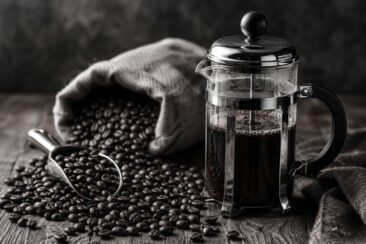
A French press steeps grounds for about four minutes, so it needs coarse particles, roughly the texture of coarse sea salt.
A pour-over filter lets water pass through more quickly, so it needs a medium-fine grind closer to table salt.
An espresso machine forces water through at high pressure in 25 to 30 seconds, so it needs a very fine grind.
When the grind is too coarse for the method, water rushes through without extracting enough sweetness and body, and the cup tastes thin and flat.
When the grind is too fine, water extracts too many bitter compounds, and the cup tastes harsh and dry.
| Brew Method | Grind Size | Texture Reference |
|---|---|---|
| French press | Coarse | Coarse sea salt |
| Cold brew | Extra coarse | Rock salt or raw sugar |
| Drip machine | Medium | Beach sand |
| Pour-over (V60, Kalita) | Medium-fine | Table salt |
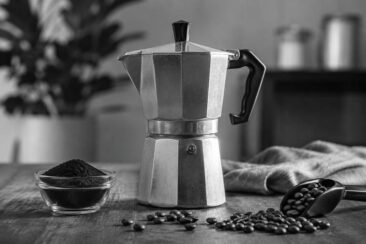
| Moka pot | Fine | Finer than table salt |
| Espresso | Very fine | Powdered sugar |
Quick Tip If your coffee tastes flat, adjust the grind one setting finer. If it tastes bitter or drying, go one setting coarser. Change one variable at a time and brew again before adjusting anything else.
Water Temperature That Creates Lifeless Cups
Water that is too cool cannot dissolve the sugars and oils that give coffee its sweetness and body.
You will hear it immediately: the pour sounds thin and splashy instead of thick and steady.
The resulting cup tastes sour, hollow, and flat, with a watery texture that disappears from your tongue almost instantly.
The Specialty Coffee Association recommends a brewing temperature between 195°F and 205°F (90°C to 96°C) for hot coffee.
Below 195°F, extraction slows so much that the water only pulls the earliest acidic compounds without reaching the sweeter middle stage.
Above 205°F, water starts extracting harsh bitter compounds that overpower subtler flavors and leave a scorched taste.
If you are using a kettle, bring water to a full boil and then let it sit for about 30 seconds before pouring over your grounds.
If you are using a drip machine, check the manufacturer’s specs, since many budget drip machines do not reach 195°F and will consistently produce flat, underwhelming coffee.
Preheating your brewer and your cup before contact with coffee can prevent 10 to 15 degrees of heat loss during brewing.
That lost heat is sometimes the entire difference between a flat cup and a vibrant one.
The Ratio Mistake That Drowns Good Coffee
Too much water relative to the amount of coffee is one of the fastest ways to produce a flat, watered-down cup.
The SCA Golden Cup Standard recommends a starting ratio of 1:15 to 1:18, meaning 1 gram of coffee for every 15 to 18 grams of water.
At 1:18, you get a lighter, more mellow cup.
At 1:15, you get a bolder cup with more body and presence.
Most home brewers who complain about flat coffee are unknowingly brewing at ratios closer to 1:20 or 1:22, which means the water outnumbers the coffee by too much and the cup ends up dilute and empty.
A kitchen scale changes everything here.
Scoops and tablespoons measure volume, not weight, and a tablespoon of light-roast beans weighs differently than a tablespoon of dark-roast beans.
Weighing your coffee and water removes guesswork entirely.
For a single 12-ounce mug (about 340 grams of water), start with 21 grams of coffee at a 1:16 ratio.
Taste the result, and then adjust by 1 to 2 grams of coffee per brew until you find the spot that suits you.
- [ ] Weigh your coffee in grams, not scoops
- [ ] Weigh your water (1 milliliter = 1 gram)
- [ ] Start at a 1:16 ratio for a balanced cup
- [ ] Adjust by 1 gram at a time
- [ ] Write down what works so you can repeat it
How Tap Water Flattens Every Cup You Brew
Your cup of coffee is roughly 98% water.
If the water going in tastes like a swimming pool or carries heavy mineral deposits, the coffee coming out will never taste clean or bright.
Chlorine and chloramine, the chemicals municipalities use to disinfect tap water, produce a dull, papery, or metallic flavor that smothers the delicate notes in specialty beans.
On the other end, completely soft or distilled water lacks the calcium and magnesium ions that help extract flavor compounds during brewing.
Distilled water makes coffee taste thin, lifeless, and slightly acidic, with none of the body or sweetness you would expect.
Filtered water sits in the sweet spot.
A simple activated-carbon pitcher filter removes chlorine, lead, and off-flavors, and it costs less than $25.
That one purchase can transform the clarity of your coffee more than upgrading your brewer.
Common Mistake Using distilled or reverse osmosis water straight from the jug without adding minerals back. Coffee needs some mineral content for proper extraction. If you use RO water, consider mineral packets designed for coffee brewing.
The SCA recommends brewing water with a total dissolved solids (TDS) level around 150 parts per million and a calcium hardness between 50 and 175 ppm.
You do not need lab equipment to test this.
A $10 TDS meter from any home goods store will tell you where your tap water stands.
Dirty Equipment Adds Stale Flavor to Fresh Beans
Old coffee oils cling to every surface they touch: the inside of your brewer, the mesh of your French press filter, the burrs and chute of your grinder.
Over time, those oils oxidize and turn rancid.
Each new brew picks up a thin layer of stale, bitter flavor from the old residue, and the accumulated grime creates a background taste you stop noticing until you clean the equipment and suddenly your coffee tastes different.
Mineral scale from hard water builds up inside water lines and heating elements, adding a chalky, metallic edge to every cup.
Mold can colonize damp spots inside drip machine reservoirs, creating musty off-flavors that are almost impossible to identify by taste alone.
Clean your brewing equipment with warm water after every use, and deep-clean with a dedicated coffee cleaner or a diluted white vinegar solution monthly.
Rinse with two full cycles of clean water after using vinegar to prevent a sour, acidic carry-over.
Do / Don’t:
- Do rinse your brewer, carafe, and filter basket after each use
- Do descale your machine every 4 to 6 weeks if you have hard water
- Do brush out your grinder’s burrs and chute every 2 weeks
- Don’t leave wet grounds sitting in the brewer overnight
- Don’t assume a rinse alone removes old coffee oil buildup
Why Light Roasts Sometimes Taste Flat
Light roasts are denser than dark roasts and require more energy from the water to release their flavor compounds.
If you are accustomed to dark roasts and switch to a light roast using the exact same grind, temperature, and brew time, the cup will almost certainly taste thin, sour, or flat.
That is not a defect in the coffee.
It is a mismatch between the roast profile and your recipe.
Light roasts often benefit from slightly hotter water, around 205°F, and a finer grind that gives water more surface area to work with.
They reward patience and attention to extraction time.
When brewed correctly, light roasts express fruity, floral, and tea-like qualities that dark roasts burn away during longer roasting.
If those delicate flavors are not what you are after, and you prefer chocolatey, nutty, full-bodied cups, a medium or medium-dark roast is a better match for your palate.
That preference is not wrong.
It is just information about what you enjoy.
Quick Tip When trying a new roast level, brew a small test batch before committing your whole morning dose. Grind one or two clicks finer than your usual setting and use water at 205°F. Taste at room temperature, since heat can hide extraction flaws.
How to Diagnose Flat Coffee in Under 60 Seconds
Flat coffee almost always traces back to one of five variables.
Running through them in order takes less than a minute and will point you toward the fix faster than buying a new bag of beans.
Step 1: Check freshness.
Look at the roast date on the bag.
If the beans are older than three weeks, freshness is your most likely problem, and no brewing adjustment will fully restore the flavor.
Step 2: Check your grind.
Look at the particles in the filter or press after brewing.
If you see a wide range of sizes, from dust to chunks, grind consistency is hurting extraction.
Step 3: Check temperature.
If you let your kettle sit for more than two minutes after boiling, the water may have cooled below 195°F.
Cold water means incomplete extraction.
Step 4: Check your ratio.
Weigh the coffee and water on your next brew.
If you are using less than 15 grams of coffee per 250 grams of water, the ratio is too dilute and the cup will taste thin.
Step 5: Check water quality.
Smell your tap water before brewing.
If you detect chlorine or a metallic edge, filtered water will make an immediate difference.
| Symptom | Likely Cause | Quickest Fix |
|---|---|---|
| No aroma, dull flavor | Stale beans | Buy beans with a recent roast date |
| Muddy, confused taste | Inconsistent grind | Switch to a burr grinder |
| Thin, hollow mouthfeel | Water too cool | Let water sit only 30 seconds off boil |
| Watery, fades fast | Too much water | Tighten ratio to 1:16 |
| Papery or chlorine note | Bad water | Use a carbon filter pitcher |
One Fix at a Time Gets You to a Better Cup
The fastest path to better coffee is not buying fancier equipment or chasing single-origin micro-lots.
It is identifying the single weakest link in your current routine and fixing it.
For most home brewers, that link is grind consistency, bean freshness, or water temperature.
Change one variable per brew.
Taste the result.
Adjust again if needed.
That cycle of brew, taste, and adjust is the same process professional baristas use every morning to dial in their shots, and it works at any budget with any equipment.
Flat coffee is not a mystery and it is not permanent.
It is feedback from your cup, telling you exactly where to look next.