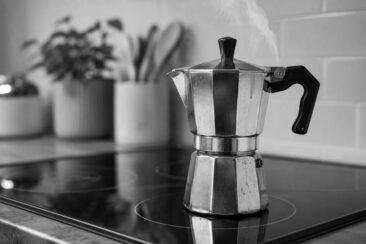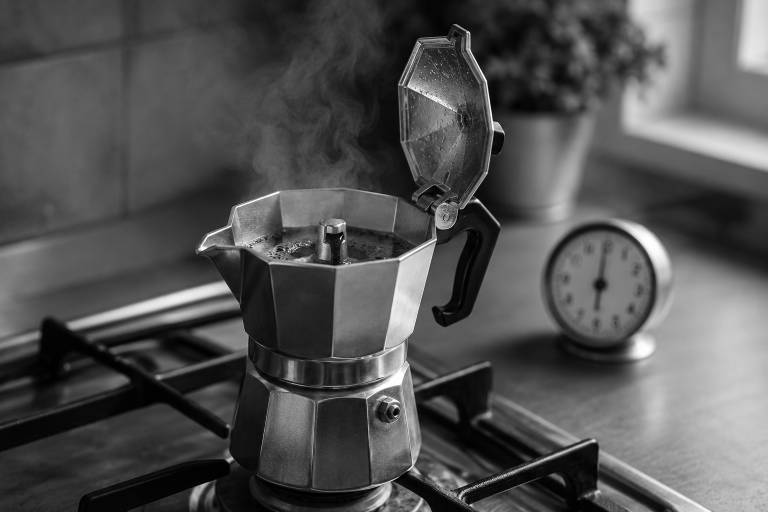
The first time you stand at the stove waiting for a moka pot, it feels like forever.
In real time, moka pot brewing takes 5 to 8 minutes from cold start to that final gurgle.
That window covers most pot sizes and most stoves, with the heating phase taking 2 to 4 minutes and the actual extraction taking 1 to 3.
This guide breaks down what shifts those numbers, the signs your coffee is finished, a few fixes for a sluggish brew, and what happens if you leave the pot on too long.
Brewing Time at a Glance
A standard 3 to 6 cup moka pot finishes in 5 to 8 minutes on medium heat.
Smaller pots brew faster, larger pots take longer, and grind size, stove type, plus starting water temperature each push that window up or down by a minute or two.
The brew ends with a hissing, gurgling sputter from the spout: that sound is the only timer that matters.
The Two Phases of Moka Pot Brewing
Moka pot brewing splits cleanly into two stages, and knowing them shifts you from anxious watcher to confident brewer.
The first stage is the heating phase, which runs roughly 2 to 4 minutes.
Water in the bottom chamber climbs toward boiling, vapor builds pressure, and nothing visible happens up top yet.
The second stage is the extraction phase, lasting 1 to 3 minutes.
Pressure forces hot water up through the coffee bed and into the top chamber, where you see dark coffee start to pool.
When the stream lightens and starts sputtering, you have reached the end of extraction, and steam is starting to push through.
Pull the pot off the heat the moment you hear that sputter, since holding it longer scorches whatever liquid remains.
What Affects Moka Pot Brewing Time
Several variables sit between you and your cup, each shifting the timer by a small amount.
1. Stove Type
The type of stove you brew on shapes how fast the water gets to working temperature.
Gas stoves heat a moka pot quickly since the flame contacts the base directly.
Induction stovetops can need an extra minute or two since the heating element transfers energy through the base in a different pattern.
Stainless steel moka pots heat more evenly than aluminum but soak up heat for slightly longer, adding 30 to 60 seconds to brew time on the same burner.
Adjust your flame size or burner setting to the pot, not the other way around.
2. Moka Pot Size
The size of the pot decides how much water has to heat and how much grounds the water has to pass through.
A 1-cup moka pot finishes in around 4 minutes since there is so little water in the bottom chamber.
A 6-cup pot needs 6 to 7 minutes on medium heat.
An 18-cup pot can take closer to 10 to 12 minutes, since the chambers are larger and the heating phase stretches out.
Match the pot size to your real morning need, since a larger pot brewed for one cup tastes flat and stale on the second pour.
3. Heat Source and Level
Heat level affects brewing as much as stove type.
Medium heat is the safe spot for almost every pot.
High heat shortens brew time by a minute, and pushes the extraction toward bitter, acrid notes since water races through the coffee bed too fast.
Low heat stretches the brew past 9 or 10 minutes, leaving the grounds in contact with rising heat for too long and pulling out the same bitter compounds from the other direction.
Aim for a medium flame that sits within the diameter of the pot’s base.
4. Coffee Grind Size
Grind size has a direct effect on brew time and flavor.
A medium-fine grind, somewhere between drip and espresso, lets water move through the coffee bed at the right pace.
Too fine, and the bed clogs, pressure spikes, brewing slows, and the coffee runs bitter.
Too coarse, and water rushes through under-extracted, leaving a thin, weak cup.
If you use a Comandante grinder, 15 to 20 clicks lands you in the right range.
5. Coffee-to-Water Ratio
The ratio of grounds to water shapes the strength of the brew and the speed of extraction.
A workable starting point is one tablespoon of grounds per 1.5 ounces of water.
Pack the filter basket level with grounds, no pressing, no tamping.
Overfilling slows water flow and stretches brew time past the 8-minute mark.
Underfilling leaves channels for water to bypass the bed, finishing faster but with thin, sour results.
6. Water Temperature
Starting water temperature changes how long the heating phase runs.
Cold tap water means 3 to 4 minutes of heating before extraction begins.
Pre-boiled water poured into the bottom chamber cuts that down to under a minute.
Hot start water protects the coffee from sitting too long over the heating chamber, which is a common source of bitter moka pot coffee.
Average Brewing Times by Moka Pot Size
Brew time scales with pot capacity, and a full chart of moka pot sizes covers the range from 1-cup to 18-cup.
The numbers below assume medium heat and a medium-fine grind.
3-Cup Capacity
A 3-cup moka pot brews in 5 to 6 minutes from cold water.
The heating phase runs about 2 to 3 minutes, with extraction wrapping in another 2.
This size produces roughly 4.5 ounces of strong, espresso-style coffee, enough for one solid cup or a small latte.
It is the size most one-person households reach for, since brew time stays short and waste stays low.
6-Cup Capacity
A 6-cup pot brews in 6 to 7 minutes on medium heat.
It yields about 9 ounces, which works for two cups or one larger drink with steamed milk.
Heating takes 3 to 4 minutes, since the bottom chamber holds more water, and extraction itself stays around 2 to 3 minutes.
This is the most popular size for a reason: brew speed and yield land in a comfortable middle.
The 6-cup is forgiving on grind size and heat level, with a wider margin before you push into bitter territory.
9-Cup Capacity
A 9-cup moka pot brews in 8 to 10 minutes on medium heat.
It yields about 18.5 ounces, which roughly matches a small drip carafe.
The longer brew time comes from a deeper water chamber and a larger coffee bed, which the heat has to work through together.
Plan a slightly coarser grind for the 9-cup, since the larger bed already extends contact time on its own.
Adjust the flame slightly higher than you would for a 6-cup, but stay below the diameter of the base.
Pull the pot off heat the moment you hear sputtering, since the larger volume means more leftover steam wanting to push through the bed.
How to Tell When Your Moka Pot Coffee Is Done
Moka pots give clear cues at the exact moment to pull them off the heat.
Listen for a gurgling, hissing sputter from the spout.
That sound is steam, not coffee, pushing through the bed, and it signals extraction is over.
Watch the color of the stream coming out of the central spout, since rich dark brown shifts to a pale honey color as the brew finishes.
A foamy, slightly bubbling top in the upper chamber tells you the pressure has fully released.
Some brewers cool the bottom chamber under a quick run of cold tap water to stop residual heat in its tracks.
If you wait until the gurgling stops on its own, the coffee already sitting in the top chamber is being scorched from below.
Pull the pot the moment you hear the change.
How to Speed Up Moka Pot Brewing
A few small adjustments shave minutes off your brew without losing flavor.
The biggest levers are water temperature, grind size, and heat control.
1. Preheating Water
Pre-boiling the water in a kettle is the single biggest speed boost.
Pour the hot water (around 70°C / 158°F) into the bottom chamber up to just below the safety valve.
This cuts the heating phase from 3 or 4 minutes down to under 1.
Hot start water protects the coffee bed from prolonged exposure to rising heat, which is the main source of burnt, metallic flavors.
Use a kitchen towel when handling the bottom chamber after filling, since the metal heats fast.
2. Choosing the Right Grind Size
A medium-fine grind brews faster than a fine grind.
Aim for something between drip and espresso, with grounds that feel slightly gritty between your fingers.
Too-fine grounds clog the filter screen, raise pressure, and stretch brew time past 8 minutes with a bitter finish.
Too-coarse grounds let water rush through in under 4 minutes with a thin, watery cup.
Adjust by one or two notches on your grinder rather than guessing, since the moka pot is sensitive to small grind shifts.
If your grinder runs hot or stale, the grind comes out uneven, and brew time gets unpredictable from one batch to the next.
3. Managing Heat Intensity
Medium heat brews fastest without compromising flavor.
Keep the flame inside the diameter of the base on a gas stove, since flames licking up the sides scorch the seal.
On an electric stove, preheat the burner for 30 seconds before placing the pot, since cold coils stretch heating time.
Induction users can run the cooktop slightly higher than gas, but lift the pot off briefly if the bottom chamber gets too hot.
A heat diffuser plate is worth picking up if your stove runs uneven, since it spreads heat across the base without scorching one section.
What Happens If You Brew Too Long
Holding a moka pot on the heat past the gurgle damages the coffee and the pot itself.
The coffee turns burnt and metallic within 30 seconds of the sputter starting, since the grounds get blasted with steam they have no water left to balance.
The rubber gasket on the upper chamber softens and warps under sustained heat, which leads to pressure leaks and a worse seal on the next brew.
Aluminum pots can scorch at the base if the bottom chamber empties fully, leaving heat marks that build up over time.
In rare cases, a clogged safety valve plus excess heat can build dangerous pressure inside the pot.
Move the moka pot to a cool burner or run the base under cold water within seconds of hearing the sputter, every single time.
Fixing a Moka Pot That Brews Too Slowly
A moka pot brewing in 10 minutes or more usually points to one of a few fixable problems.
Reasons Brewing Drags
- Heat is too low. A flame smaller than the diameter of the base, or an induction burner set under medium, stretches the heating phase past 5 minutes.
- Grind is too fine. Espresso-grade grounds compact in the filter basket and choke water flow, doubling the extraction phase.
- The filter basket is overpacked. Pressing or tamping grounds is the most common slowdown, since the moka pot was built for a level, loose fill.
- Water started cold. Cold tap water adds 2 to 3 minutes of heating before extraction starts.
- The gasket or filter screen is dirty. Old coffee oils and fine grounds build up on the upper filter and choke flow.
- The pot is too large for the burner. A 6-cup pot on a small back burner heats unevenly and slowly.
Solutions for Slow Brewing
- Clean every part weekly. Disassemble the pot, scrub the filter basket with a soft brush, and rinse the gasket and upper filter under hot water with no soap.
- Step the grind one notch coarser. Test a single shift on your next brew before changing anything else.
- Level the grounds, never tamp them. A flat fingertip sweep across the top of the basket is enough.
- Pre-boil the water. Pour hot water into the bottom chamber up to just below the safety valve.
- Match the burner to the pot base. A burner the same width as the base heats faster and more evenly.
- Replace the gasket once a year. A worn seal leaks pressure and forces a slower, weaker brew.
- Check the safety valve. A clogged valve disrupts pressure flow and slows extraction, and a quick rinse usually clears it.
Final Thoughts on Moka Pot Brewing Time
The honest answer to how long a moka pot takes to brew is somewhere between 5 and 8 minutes, with most of the variables in your hands.
Heat, grind, pot size, and starting water temperature each move the timer by a minute in either direction.
The gurgle, not the clock, is what tells you the brew is done.
Pull the pot off the heat the moment you hear it, set it down, and pour.
Treat the wait as a built-in pause in the morning instead of a delay to fight against, and the moka pot quietly earns its place in the kitchen.