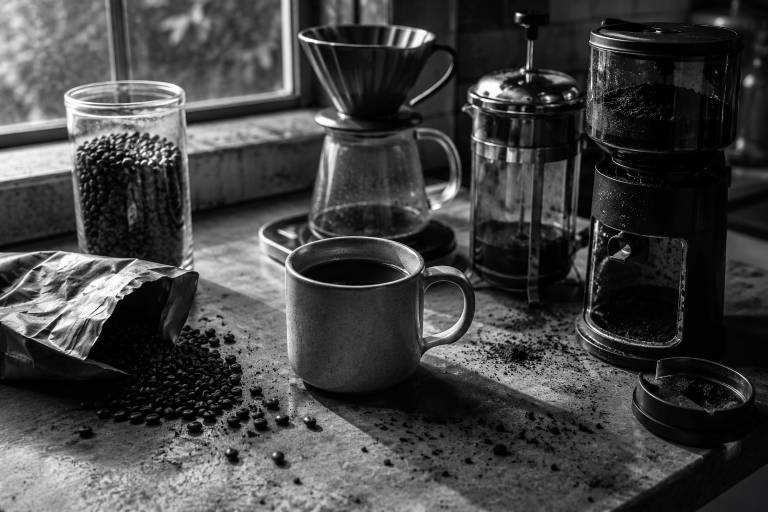
Good coffee rarely fails on purpose.
It fails in small ways: a scoop here, a kettle too hot there, a jar left open on the counter.
Most of these habits feel harmless, even responsible, which is exactly why they slip past most kitchens every morning.
1. Buying Pre-Ground Coffee and Hoping for the Best
Ground coffee starts losing aroma within minutes of leaving the grinder.
By the time that bag reaches your shelf, much of what made the beans interesting has already drifted into the air around it.
A cheap hand grinder fixes more flavor problems than any new machine ever will.
The first morning you grind whole beans, the smell alone tells you what was missing.
2. Pouring Boiling Water Straight Over the Grounds
Water at a full boil scorches the coffee and pulls out the bitter compounds first.
Aim for somewhere between 195 and 205°F, which is roughly thirty seconds off the boil.
If your kettle has no thermometer, lift it off the heat, count slowly to thirty, then pour.
The cup gets sweeter, the bitterness softens, and the beans finally get a fair shot.
You will taste the difference on the first sip.
3. Brewing With Whatever Comes Out of the Tap
A finished cup of coffee is roughly 98 percent water.
Whatever lives in your tap, chlorine, hard minerals, or that faint pool-like aftertaste, ends up sitting in the mug right next to the beans.
Heavily softened water flattens the cup and strips out the brighter notes that made you buy those beans in the first place.
Very hard water swings the other way and leaves a chalky, dull finish behind.
A simple carbon filter pitcher sits in the middle and handles most home setups without any plumbing work.
Try the same beans twice in one morning, once with tap and once with filtered, and the difference stops being theoretical.
4. Eyeballing the Grind Size
Espresso wants fine, pour over wants medium, French press wants coarse, and the gap between them is wider than it looks.
Too fine for the method, and the cup turns harsh and muddy.
Too coarse, and you get sour, watery coffee that tastes half-finished.
Matching the grind to the brewer costs nothing and changes everything in the cup.
Five minutes of dialing in saves months of mediocre mornings.
A burr grinder makes this far easier than a blade grinder ever will.
5. Skipping the Scale
Scoops lie.
Beans vary in size, density, and roast level, so volume measurements drift from one bag to the next.
A kitchen scale and a 1:16 ratio (one gram of coffee for every sixteen grams of water) keeps your cup honest from Monday to Sunday.
The scale costs less than two bags of decent beans.
Most home brewers who try it once never go back to scoops.
Repeatability is what separates a great morning from a lucky one.
The number on the scale takes the guesswork out of the whole routine.
6. Storing Beans in the Fridge or a Clear Glass Jar
Coffee has four enemies: air, light, heat, and moisture.
The fridge offers three of those in one place.
It throws in a bonus problem: the lingering smell of last night’s onions, garlic, and leftovers.
A clear glass jar on the counter looks beautiful on Instagram.
That same jar slowly bleaches the aroma out of every bean inside.
Light strips coffee of its top notes within days, not weeks.
An opaque, airtight container in a cool cupboard keeps the beans tasting like themselves much longer.
Buy smaller bags more often if shelf space is tight at home.
7. Letting the Pot Sit on the Hot Plate
Coffee keeps cooking after it brews, and the hot plate finishes the job in the worst way possible.
Twenty minutes on the warmer is enough to turn a clean morning cup into something bitter and burnt.
Pour what you brewed into an insulated carafe right away, then switch the machine off.
The last cup will taste almost as good as the first, which was the whole point of making it.
A thermal carafe brewer skips this problem entirely from day one.
The fix takes five seconds and pays off every single morning after.
This habit is the smallest one on the list and one of the loudest in the cup.
If you change one thing after reading this article, change this one.
It will quietly give you back the coffee you thought you were already drinking.
The Quiet Fixes Add Up
None of these fixes ask you to spend money or learn a new skill before Saturday.
Pick the two that sting the most, run them for a week, and let your taste buds vote.
By next Sunday, the cup in your hand will taste like something you actually made on purpose.