A French press turns four minutes and a handful of coarse grounds into one of the richest cups you can brew at home.
Knowing how to make coffee in a French press comes down to controlling a few straightforward variables: grind size, water temperature, coffee-to-water ratio, and steep time.
Get those right and your morning cup will taste thick and smooth, layered with the natural oils that paper filters would strip away.
Get them wrong and you end up with a mug of bitter sludge or watery disappointment.
This guide breaks down each variable, walks through the full brewing process, and explains how to troubleshoot the most common problems.
Quick Answer
To make coffee in a French press, add coarsely ground coffee (about 30 grams) to the carafe, pour 450 grams of water heated to 200°F, steep for 4 minutes, then press the plunger down slowly and pour immediately.
The most common mistake is using a grind that is too fine, which causes bitter, muddy coffee.
Keep reading for the exact ratios, temperatures, and step-by-step instructions that produce a clean, full-bodied cup every time.
What You Need Before You Start Brewing
The French press requires less equipment than most brewing methods, which is part of its appeal.
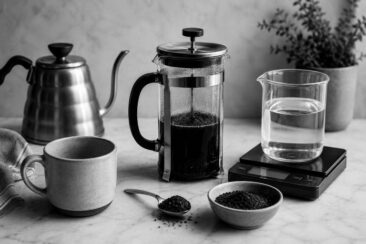
You need a French press (a 32-ounce model is the most popular size and makes about 3 to 4 cups), whole coffee beans, a kettle, and a timer.
A burr grinder produces the even, coarse particles that this brewing method demands, and a decent hand burr grinder costs around $25 to $40.
A kitchen scale accurate to 1 gram removes guesswork from your measurements and delivers consistent results every morning.
Filtered water matters more than most brewers expect, since tap water heavy in chlorine or minerals can muddy the flavor of an otherwise perfect batch.
Beginner Note If you do not own a grinder, ask your local roaster or grocery store to grind the beans on the coarsest setting available.
How to Choose the Right Grind Size for French Press
The grind is the single biggest factor separating a clean cup from a gritty, bitter one.
French press coffee calls for a coarse grind that looks and feels like sea salt or raw breadcrumbs, with particles in the 700 to 1,000 micron range.
Grounds that are too fine slip through the metal mesh filter, deposit sediment in your cup, and expose too much surface area to the water.
That extra surface area speeds up extraction, pulling harsh, astringent compounds into your coffee before you even press the plunger.
A blade grinder chops beans into an uneven mix of dust and boulders, so a burr grinder is worth the investment for anyone who brews with a French press regularly.
If your coffee tastes sour or watery, grind slightly finer to increase the extraction rate.
If it tastes harsh or astringent, grind coarser to slow down how fast the water pulls compounds from the beans.
Pre-ground coffee from the grocery store is almost always ground for drip machines, which means it is far too fine for a French press.
Buying whole beans and grinding them right before brewing preserves the volatile aromatic compounds that disappear within minutes of grinding.
| Grind Size | Texture Comparison | Result in French Press |
|---|---|---|
| Too fine | Powdered sugar or sand | Bitter, muddy, heavy sediment |
| Medium | Table salt | Slightly bitter, some grit |
| Coarse (ideal) | Sea salt or breadcrumbs | Smooth, full-bodied, clean |
| Too coarse | Peppercorns | Thin, sour, under-extracted |
The Best Coffee-to-Water Ratio for a Rich Cup
Getting the ratio right sets the foundation for every other variable in the brew.
The standard starting point is 1:15, which means 1 gram of coffee for every 15 grams of water.
For a typical 32-ounce French press, that works out to roughly 53 grams of coffee (about 8 tablespoons) and 800 grams of water.
If you prefer a bolder, heavier cup, tighten the ratio to 1:14.
For a lighter, more tea-like brew, loosen it to 1:16 or 1:17.
Quick Tip A kitchen scale gives you far more accuracy than scoops or tablespoons, since coarse grounds are fluffy and take up more space than fine grounds at the same weight.
The Specialty Coffee Association recommends a ratio of about 1:18 as a general standard across brewing methods, but most French press brewers find that a tighter ratio near 1:15 produces the full-bodied mouthfeel that makes immersion brewing so satisfying.
What Water Temperature Gives the Best Extraction
Water temperature controls how fast and how completely the flavor compounds dissolve out of the grounds.
The target range is 195°F to 205°F (90°C to 96°C), with 200°F being the sweet spot for most medium roast beans.
Boiling water at 212°F scorches the grounds and pulls out harsh, tannic compounds that leave a dry, bitter aftertaste.
Water below 190°F extracts too slowly, producing a sour and flat cup that lacks body.
The simplest method is to bring water to a full boil, remove it from the heat, and wait about 30 seconds before pouring.
A cold glass carafe can drop the water temperature by 5 to 8 degrees the instant you pour, so preheat your French press with a splash of hot water, swirl it around, and discard it before adding your grounds.
If you own a gooseneck kettle with a built-in thermometer, you can dial the temperature to exact specifications, but most brewers get excellent results with the 30-second rule.
Darker roasts do well at the lower end of the range (around 195°F), where the cooler water prevents the already-developed bitter compounds from dominating the cup.
Lighter roasts benefit from hotter water closer to 205°F, which helps draw out the brighter, more complex flavors trapped inside denser beans.
Step-by-Step French Press Brewing Instructions
These steps work with any standard French press, from a simple glass Bodum to an insulated stainless steel model.
Preheat the carafe by filling it with hot water, swirling for a few seconds, and dumping it out.
Add your measured coffee grounds to the empty carafe, then give it a gentle shake to level the bed.
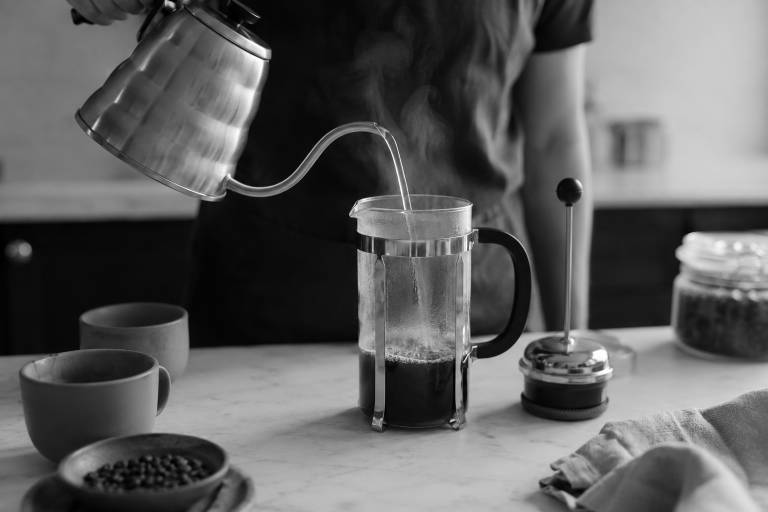
Start your timer and pour about twice the weight of the coffee in hot water (so roughly 60 to 100 grams if you are using 30 to 50 grams of grounds) over the bed in a slow, circular motion.
Let the grounds bloom for 30 seconds, watching for the gentle bubbling and expansion as trapped carbon dioxide escapes from the freshly roasted beans.
After the bloom, pour the remaining water steadily, filling the carafe to the desired level, and give the slurry one gentle stir with a wooden spoon or chopstick.
Place the lid on the French press with the plunger pulled all the way up, and let the coffee steep for 4 minutes.
Press the plunger down slowly and steadily, applying even pressure the entire way, then pour every drop of coffee into your mug or a separate carafe right away.
- [ ] Preheat the carafe
- [ ] Add coarsely ground coffee
- [ ] Pour a small amount of water for blooming (30 seconds)
- [ ] Add remaining water and stir once
- [ ] Place lid and steep for 4 minutes
- [ ] Press plunger slowly
- [ ] Pour all coffee immediately
Why Blooming Your Coffee Grounds Improves Flavor
Blooming is the brief pre-wetting step where hot water hits the grounds and releases a burst of carbon dioxide gas.
That CO2 is a natural byproduct of the roasting process, and it repels water away from the surface of the coffee particles.
When you pour just enough water to saturate the grounds and wait 30 seconds, the gas escapes in a visible puff of bubbles and foam.
Once that barrier is gone, the remaining water can penetrate the grounds more evenly and extract a fuller range of flavors.
Freshly roasted beans (within 1 to 2 weeks of roast date) produce the most dramatic bloom, and you can smell the difference as sweet, caramel-like aromas rise from the carafe.
How Long Should French Press Coffee Steep
Four minutes is the standard brew time that strikes the best balance between strength and smoothness for most roast levels.
Shorter steep times in the 2 to 3 minute range produce brighter, lighter cups with more pronounced acidity, which can work well with light roast beans.
Longer steep times beyond 5 minutes risk tipping into over-extraction territory, where bitter, drying compounds start to dominate the cup.
Common Mistake Leaving coffee in the French press after plunging is one of the fastest ways to ruin a good batch, since the grounds sit in the remaining liquid and keep extracting.
If you brew more coffee than you can drink at once, transfer the full batch into a thermal carafe or insulated mug immediately after pressing.
A timer on your phone removes all guesswork and helps you repeat your best results morning after morning.
The relationship between steep time and grind size works like a seesaw: a finer grind extracts faster, so you need less steep time, and a coarser grind extracts slower, so it benefits from the full 4 minutes.
Common Mistakes That Make French Press Coffee Taste Bad
Most French press failures trace back to one of a few fixable errors.
Using boiling water straight from the kettle pulls out bitter tannins and scorches delicate flavor compounds.
A grind that is too fine turns the coffee into a thick, muddy brew with heavy sediment at the bottom of every cup.
Skipping the preheat step lets the cold glass steal heat from the water, dropping the brew temperature below the extraction zone and producing a flat, sour result.
Pressing the plunger down too fast stirs up settled fines, which makes the finished cup gritty and harsh.
Leaving brewed coffee sitting in the press, even after plunging, allows the liquid to remain in contact with the spent grounds and over-extract for as long as it sits.
Old or rancid coffee oils trapped in a dirty filter can ruin a fresh batch before you even take a sip, so a quick rinse after each use goes a long way.
Do:
- Preheat the carafe before adding grounds
- Wait 30 seconds after boiling before pouring
- Use a coarse, even grind
- Press slowly with steady, gentle pressure
Don’t:
- Pour boiling water directly onto grounds
- Leave coffee in the press after plunging
- Use a blade grinder without sifting out fines
- Skip cleaning the mesh filter
How to Fix Bitter or Weak French Press Coffee
Bitter coffee almost always signals over-extraction, where too many soluble compounds dissolved into the water.
The fix starts with grinding coarser, since larger particles slow down the extraction rate and prevent harsh flavors from reaching your cup.
If the grind is already at the right size, shorten the brew time by 30 seconds and taste the difference.
Weak, sour coffee points in the opposite direction: under-extraction means the water did not pull enough sweetness and body from the grounds.
Adding more coffee (try a 1:14 ratio instead of 1:15), grinding slightly finer, or extending the steep by 30 seconds can each push extraction into a more balanced range.
Adjust one variable at a time so you can pinpoint exactly what changed the flavor, rather than changing grind, ratio, and time all at once.
| Problem | Likely Cause | Adjustment |
|---|---|---|
| Bitter, harsh, dry | Over-extraction | Grind coarser or shorten steep time |
| Sour, thin, watery | Under-extraction | Grind finer or add more coffee |
| Gritty, muddy | Grind too fine | Switch to coarser grind or use a burr grinder |
| Flat, lifeless | Water too cool or beans stale | Check water temp and bean freshness |
Which Coffee Beans Taste Best in a French Press
The French press is an honest brewer: every flaw and every virtue in your beans shows up in the cup.
Medium to medium-dark roast beans tend to perform best in immersion brewing, producing a smooth cup with chocolate, caramel, toffee, and nutty notes that pair well with the full-bodied texture.
Single-origin coffees from Colombia, Guatemala, Brazil, and Sumatra are popular choices for their low acidity and rich sweetness.
Whole bean coffee stays fresh far longer than pre-ground, and the ideal window for peak flavor is 5 to 14 days after the roast date printed on the bag.
Storing beans in an airtight container away from light and heat preserves their volatile aromas for up to 30 days.
Light roast beans can work in a French press, but they tend to produce a more acidic and less forgiving cup that requires precise temperature control.
If you are new to French press brewing, a medium roast from Central or South America is the safest starting point for a balanced, easy-to-enjoy first batch.
Quick Tip Look for bags with a roast date printed on them rather than a “best by” date, since the roast date tells you exactly how fresh the coffee is.
How to Clean and Maintain Your French Press
A clean French press is the difference between tasting your coffee and tasting yesterday’s leftover oils.
After each brew, scoop out the spent grounds with a rubber spatula or wooden spoon and toss them in the compost or trash.
Never dump coffee grounds down the sink drain, since they clump together and cause clogs over time.
Add a small squirt of dish soap and warm water to the carafe, pump the plunger up and down a few times, and rinse until the water runs clear.
Once a week, disassemble the plunger, separate the mesh filter from the cross plate and spiral plate, and scrub each piece individually with warm soapy water.
For stubborn coffee oil buildup, soak the disassembled parts in a solution of equal parts white vinegar and warm water for 15 to 20 minutes, then rinse thoroughly and let everything air dry on a rack.
A baking soda paste works well on stains that have set into the glass, and a gentle scrub with a soft sponge will remove them without scratching the carafe.
Rancid oil buildup is one of the most overlooked causes of off-tasting French press coffee, and a weekly deep clean eliminates it completely.
Replacing the mesh filter screen every 6 to 12 months is a small investment that keeps the plunger pressing smoothly and prevents grounds from sneaking through worn metal.
The ritual of learning how to make coffee in a French press rewards you with something drip machines and pod brewers simply cannot replicate: a thick, aromatic, oil-rich cup you control from start to finish.
Treat the grind, the ratio, the water temperature, and the steep time as dials you can adjust one at a time, and your morning cup will improve with every brew.