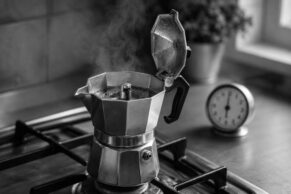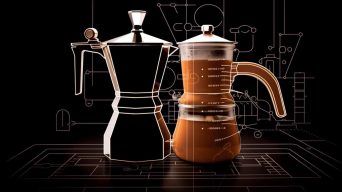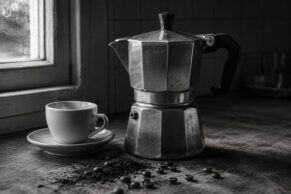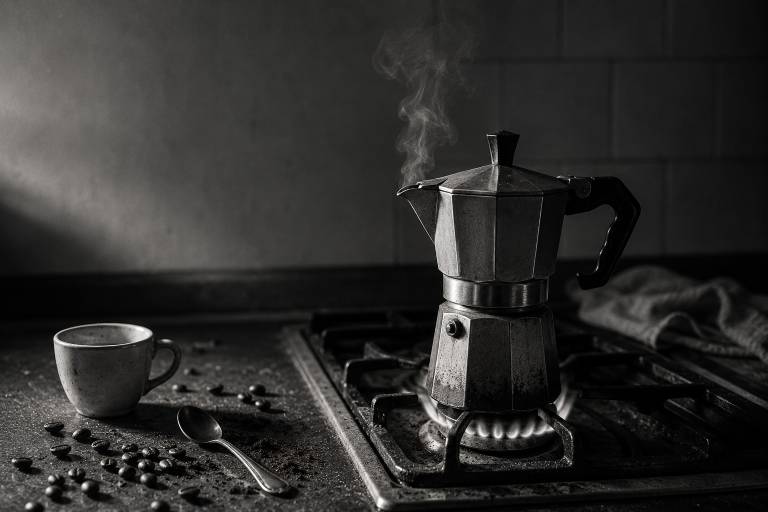
Alfonso Bialetti built the first moka pot in 1933, and the little eight-sided aluminum brewer has barely changed since.
It pulls a dark, syrupy, espresso-adjacent cup straight off your stovetop, no electricity and no pump required.
This guide walks through what the moka pot is, the physics that move water up through the grounds, how it stacks against other brewers, and how to pull a clean cup every morning.
What Is a Moka Pot?
A moka pot is a stovetop brewer invented in Italy by Alfonso Bialetti.
Since 1933 it has become a fixture of Italian kitchens and the cheapest honest route to strong, espresso-style coffee at home.
The design splits into two chambers, using steam pressure and heat to push water through a bed of coffee and produce a dark, concentrated cup.
Most pots are cast from aluminum or stainless steel, and they run on any gas or electric burner, with some newer models built for induction.
Water sits in the bottom, coffee grounds rest in the middle basket, and the finished brew rises into the top chamber for pouring.
The Science Behind Moka Pots
Three forces do the work inside a moka pot: pressure, heat, and the steam that carries water through the coffee.
Get a feel for how they interact and you can read your pot by sound and smell instead of guesswork.
Pressure and Heat Dynamics
Pressure and heat are what drag flavor out of the grounds.
As the water in the bottom chamber, the boiler, turns to steam, the sealed pot builds roughly 1 to 2 bars of pressure.
That pressure has only one escape route: up through the coffee and into the top chamber.
Low, steady heat is the trick here, since it lets pressure build gradually instead of flashing the water to steam and scorching the grounds.
A gas flame with a diffuser, or a moderate induction setting, keeps the bed from burning and turning the cup bitter.
Read the pressure right and you get a strong morning brew with none of the cost of an espresso rig.
Water Vapor and Extraction
Extraction in a moka pot rides almost entirely on water vapor.
Once the boiler heats up, steam forces hot water through the packed layer of medium-coarse grounds.
At 1 to 2 bars, far below the 9 to 15 bars an espresso machine generates, that water still pulls the oils and aromatic compounds that give the cup its body.
The narrow band between temperature and pressure decides everything: enough to draw out the good flavors, gentle enough to leave the harsh, bitter ones behind.
On paper the process looks automatic, yet small choices in grind, heat, and timing turn a flat cup into a great one.
How Does a Moka Pot Work?
A moka pot works by turning water to steam, building pressure, and forcing that hot water up through the coffee into the upper chamber where the brew collects.
Key Components
The pot breaks down into three parts: the lower chamber, the filter basket, and the upper chamber.
- Lower chamber: Holds the cold water up to the safety valve, sits directly on the heat source, and is built from metal.
- Filter basket: Cradles the grounds in a metal cup with small holes in the base that let pressurized water rise through.
- Upper chamber: Catches the finished coffee, carries the pouring spout, and screws onto the base with a lidded metal top.
Some pots add a rubber gasket and a removable filter plate to make cleanup quicker.
Those extras help, though the pot brews fine without them.
The Brewing Process
Here is the sequence from cold water to a full cup:
- Fill the lower chamber with cold, filtered water up to the safety valve, stopping short of overfilling.
- Drop in the filter basket and load it with medium-coarse grounds, leveling the top without pressing down.
- Screw the top chamber on firmly, snug but never forced.
- Set the pot on a burner at medium heat, gas or induction, until the water heats and pressure builds.
- Steam pressure pushes hot water up through the coffee and into the top chamber.
- A gurgling, hissing sound tells you the water has finished its climb and the coffee is done.
- Lift the pot off the heat with a towel or mitt, let it settle for a moment, then pour.
Use grounds suited to a moka pot, keep the water cold to start, and resist the urge to pack the basket or crank the burner.
Those few habits give you a steady cup every time.
Moka Pot Comparisons: Pros and Cons Against Other Brewing Methods
Plenty of brewers compete for counter space, so where does the moka pot land?
Set side by side with the French press, drip, espresso machines, and a few others, its trade-offs come into focus fast.
Moka Pot vs. Espresso Machine
Weighing a moka pot against an espresso machine comes down to pressure, price, and how much fuss you want.
| Moka Pot | Espresso Machine |
|---|---|
| Low pressure near 1.5 bar, producing a strong, espresso-like cup | High pressure of 9 to 15 bar, yielding true espresso with thick crema |
| Affordable and within reach for most home kitchens | Pricier, ranging from budget units to high-end machines |
| Simple to run and quick to clean | More involved to operate, with some models needing regular upkeep |
| Compact and portable, asking only for a heat source | Larger and heavier, claiming a permanent spot on the counter |
| Cannot pull true espresso, but delivers an intense, distinct flavor | Pulls cafe-grade espresso with a broader range of flavor profiles |
| Built for anyone wanting strong coffee without the spend | Suited to those chasing cafe espresso at home |
| Bialetti Moka Express leads the pack | Gaggia, Rancilio, and De’Longhi are common picks |
Moka Pot vs. French Press
The moka pot and French press take opposite routes to the cup, one through pressure and one through patience.
| Criteria | Moka Pot | French Press |
|---|---|---|
| Brewing method | Steam pressure forces hot water through the grounds | Full immersion steeps the grounds in hot water |
| Flavor and texture | Concentrated and bold | Smoother and lighter on the palate |
| Grind size | Medium-coarse | Coarse |
| Brew time | Around 5 to 10 minutes | About 4 minutes of steeping |
| Portability | Travel-ready and compact | Bulkier and easier to break |
| Popular model | Bialetti Moka Express | Bodum Chambord |
Both want fresh, quality grounds dialed to the right size.
The moka pot leans toward strong, espresso-style drinks, while the press rewards a slower, coarser, hands-off approach.
Hot metal and pressurized steam call for a careful hand with either one.
Moka Pot vs. Percolator
A moka pot and a percolator split on ease, cost, and the path water takes through the grounds.
| Factor | Moka Pot | Percolator |
|---|---|---|
| Ease of use | One pass of pressurized water, few parts to track | More components and more babysitting to avoid bitterness |
| Price | Generally cheaper, friendly to most budgets | Often costs more, though fans say the cup earns it |
| Process | Pressure drives water once through the bed for a strong, espresso-like result | Recirculates boiling water through the grounds repeatedly |
| Design | Compact, travel-friendly, distinctly Italian | Bulkier and more utilitarian |
| Function | Best for a strong cup with little effort | Best for a milder brew if you don’t mind the extra time |
Picking between them really tracks your taste and how much time you’ll trade for it.
Each has clear strengths, so match the brewer to what your mornings actually look like.
Moka Pot vs. Aeropress
The moka pot and Aeropress chase different cups entirely, one bold and one clean.
| Aspect | Moka Pot | Aeropress |
|---|---|---|
| Brewing method | Low-pressure steam through the grounds | Manual air pressure through a short steep |
| Flavor and texture | Strong, full, espresso-like | Clean, smooth, lighter in body |
| Recommended coffee | Fresh, medium-ground | Fresh, fine to medium-ground |
| Concentration | More concentrated than drip | Less concentrated than the moka pot |
| Portability | Needs a stovetop, so less mobile | Light, quick to clean, a traveler’s favorite |
| Learning curve | Easy, but watch the heat | Easy, with a forgiving process |
The right choice rides on the cup you want at the end.
Brewing a few rounds on each is the fastest way to find your match.
Moka Pot vs. Drip Coffee
The moka pot and drip coffee sit at opposite ends of strength and convenience.
| Moka Pot | Drip Coffee |
|---|---|
| Steam pressure forces hot water up through the grounds into the top chamber | Gravity pulls hot water down through grounds in a paper or metal filter |
| Takes fresh, quality coffee and a quick hand-wash after each brew | Produces a lighter, milder, more balanced cup |
| Affordable and portable for an espresso-style result | Convenient and automatic, set it and walk away |
| Rewards attention to grind, heat, and fill level | Built-in controls for temperature and timing keep cups consistent |
Moka Pot vs. Pour Over
The moka pot and pour over trade intensity for control.
| Features | Moka Pot | Pour Over |
|---|---|---|
| Brewing method | Pressure-driven through the grounds | Hot water poured by hand over a filtered bed |
| Coffee strength | Strong and full | Lighter and delicate |
| Espresso-like quality | Close, though not true espresso | None |
| Coffee grind | Medium-coarse | Varies with the filter |
| Equipment needed | Pot and a heat source | Dripper, filter, and kettle |
| Cost | Cheap stand-in for an espresso machine | Minimal gear |
| Taste preference | For a robust cup | For a lighter, cleaner one |
Deciding between the two rests on how strong you like your coffee and what gear you’ll buy.
The moka pot gives you cheap, concentrated coffee, and the pour over hands you precision and a softer profile.
Moka Pot vs. Chemex
The moka pot and Chemex differ on taste, technique, and price.
| Moka Pot | Chemex |
|---|---|
| Affordable, sold in many sizes and finishes | Pours a clean, light, low-acid cup |
| Pressure and heat push water through for a bold result | Hot water poured over grounds drips slowly through a thick filter |
| Brews in about 5 to 10 minutes | Brews in 3 to 5 minutes depending on grind and pour |
| Easy to run once you’ve practiced | Asks for a steady pour and a watchful temperature |
| Wants medium-coarse grounds | Wants a medium-coarse grind too |
Choosing here comes down to whether you want a bold cup or a clean, elegant one.
Moka Pot vs. Nespresso
The moka pot and Nespresso split on cost, convenience, and what you put in them.
| Moka Pot | Nespresso |
|---|---|
| Brews from fresh grounds you buy by the bag | Brews from pre-packaged pods |
| Cheap to run and easy to pack for trips | Convenient and tidy, though pods add up |
| Steam pressure drives the brew | High pump pressure pulls coffee from the pod |
| Great for a strong, espresso-style flavor | Great for variety and milk drinks |
| A standing alternative to cafe spending | Can cost more over years of pod buying |
The call here is personal: fresh grounds and pennies a cup, or pods and push-button ease.
Both keep a loyal following for good reason.
The Difference Between Moka Pot Coffee and Espresso
Moka pot coffee runs at lower pressure and a shorter draw than espresso, so it lands thinner in body with a softer crema.
Taste and Texture Comparison
People reach for the espresso comparison because moka coffee hits strong and rich, yet the lower brewing pressure keeps it from being true espresso.
The cup carries its own profile, often reading as chocolate, caramel, and a nutty finish.
Its crema sits thinner than a machine’s, though it still lays a pleasant skin across the surface.
Against drip, moka coffee feels denser and fuller in the mouth.
Brewing method shapes flavor more than most people expect, so sampling a few is the surest way to find your cup.
Caffeine Content
Caffeine is one of the sharper lines between moka and espresso, and the gap surprises people. See the full breakdown here.
A typical moka serving runs 80 to 120 mg of caffeine, where a shot of espresso sits at 40 to 75 mg.
Push the extraction too far and that moka number climbs higher still.
Benefits of Using a Moka Pot
A moka pot earns its counter space three ways: a strong cup, a low price, and almost nothing to maintain.
Rich and Strong Coffee
Moka pots are prized for a dense, espresso-leaning cup.
Steam pressure drives water through the grounds and pulls out more flavor than a gentle drip ever will.
What you get is a concentrated brew with a depth most stovetop methods can’t reach.
Owners describe the aroma as warm and inviting and the taste as heavy but smooth.
Set against weak drip coffee, the moka cup stands out for its punch and its mouthfeel.
Affordability
Brewing at home with a moka pot costs a fraction of a daily cafe habit or an espresso machine.
One purchase up front, and the strong morning cup is yours indefinitely.
It also skips the running cost of paper filters and single-use pods, money that quietly piles up over a year.
Easy to Use and Maintain
Moka pots ask for next to no upkeep.
Fill the base with cold water, spoon grounds into the basket, screw on the top, set it on the burner, and let it run.
When it’s done, twist the chambers apart and rinse them in warm water, keeping your fingers clear of hot metal.
With no electronics, no moving parts to speak of, and no special skill, a moka pot fits a rushed morning or a campsite equally well.
Choosing the Right Moka Pot
Size, material, and brand all shape how a moka pot brews, so weigh each before buying.
A small one-cup pot suits a solo espresso ritual, while a larger model serves a table of guests.
Material, whether aluminum or stainless steel, along with a maker’s track record, shows up directly in the cup.
Size and Capacity
The right size and capacity decide whether the pot fits your routine.
- Match the size to how much coffee you actually drink in a sitting.
- Pots range from a single 50 ml serving up to eighteen.
- A bigger pot brews more at once but overshoots a light drinker’s needs.
- Size affects both brew time and pressure.
- Follow the maker’s guidance for your specific model.
- An oversized pot run half-full can over-extract and turn the cup bitter.
- Pick the size that matches your habit and the pot performs at its best.
Material and Construction
Material and build shape a moka pot’s lifespan, its upkeep, and the flavor in your cup.
- Stainless steel: Stainless pots last longer, clean easier, and hold heat better than aluminum.
- Aluminum: Cheaper up front, though it can corrode over time and ask for more care.
- Copper: Striking to look at and a fast heat conductor, but prone to tarnish and high-maintenance.
- Handles and knobs: Look for heat-resistant Bakelite or silicone so you don’t scorch your hand.
- Size: Range runs from 1-cup to 12-cup, so buy for your usual pour.
- Base shape: A wide base tapering to a narrow top spreads heat evenly.
- Wall thickness: Thicker walls hold heat longer and stretch the brew time.
- Gasket: A snug, sealed gasket stops leaks while the pot is under pressure.
- Extra features: Some pots add a pressure-release valve or a built-in grinder.
Balancing build quality, upkeep, performance, and budget gets you a pot you’ll keep for years.
Treat it as stovetop-only gear and respect the hot surfaces while you brew.
Best Brands and Models
If you want a reliable starting point, these moka pots have earned their reputations:
- Bialetti Moka Express: The original, unchanged in spirit since 1933.
- Alessi 9090/M: A sleek, modern rework of the classic shape.
- Cuisinox Roma: Heavy-gauge stainless steel built to last.
- Primula Stovetop Espresso Maker: Cheap and forgiving, a fine first pot.
- Grosche Milano: Sold in a spread of colors and sizes.
- Bialetti Venus: Durable stainless build with an ergonomic, heat-safe handle.
- Bellman CX-25P: Adds a steaming wand and a pressure gauge for near-cafe results.
Any of these will pour a rich, flavorful cup without the cost or fuss of a full machine.
How to Use a Moka Pot for the Best Results (Step-by-Step Guide)
To pull a clean cup from a moka pot, work through these steps:
- Fill the lower chamber with cold, filtered water to just below the safety valve.
- Spoon medium-coarse grounds into the basket and level the top. Skip the tamp.
- Seat the basket in the base and screw the top on snugly.
- Heat over low to medium until you hear the first gurgle, the sign that brewing has begun.
- Watch closely and pull it off the heat the moment light-brown foam climbs the spout.
- Pour right away so the cup doesn’t sit and turn bitter.
Use fresh beans, keep the pot clean, and tweak your variables until the cup tastes the way you want.
Tips for the Perfect Brew
A few habits separate a flat moka cup from a great one:
- Fresh beans: Recently roasted and ground beans taste noticeably better.
- Right dose: Aim for a 1:7 coffee-to-water ratio.
- Correct grind: Go medium-fine, roughly the texture of garlic powder.
- Preheat: Warm water and a warmed pot pull a more even extraction.
- Low heat: Gentle heat matters, since high heat burns the coffee or risks over-pressurizing the pot.
- No tamping: Leave the grounds loose, packing them chokes the flow.
- Pull it early: At the first gurgle, most of the water has passed and steam is building, so lift it off before the cup scorches.
- Clean often: Regular rinsing stops residue from souring future brews.
- Store beans well: Keep coffee cool, dry, and away from light and air.
Stick to these and the moka pot rewards you with a cup worth slowing down for.
Final Thoughts
The moka pot is a plain, durable tool that brews coffee well above its price.
Its two-chamber design and steam pressure hand you an espresso-style cup without a machine on the counter.
Fresh beans, low heat, and a little patience are all it takes to get there.
Trying different recipes lets you bend the strength and flavor to your own taste.
With so many sizes and finishes on the shelf, there’s a moka pot built for the way you drink your coffee.